

More news on this day
Record passenger volumes, fresh investment and ambitious expansion plans at Spanish airport operator Aena are setting the stage for another year of tourism growth across Europe, Brazil and the UK in 2026 and beyond.
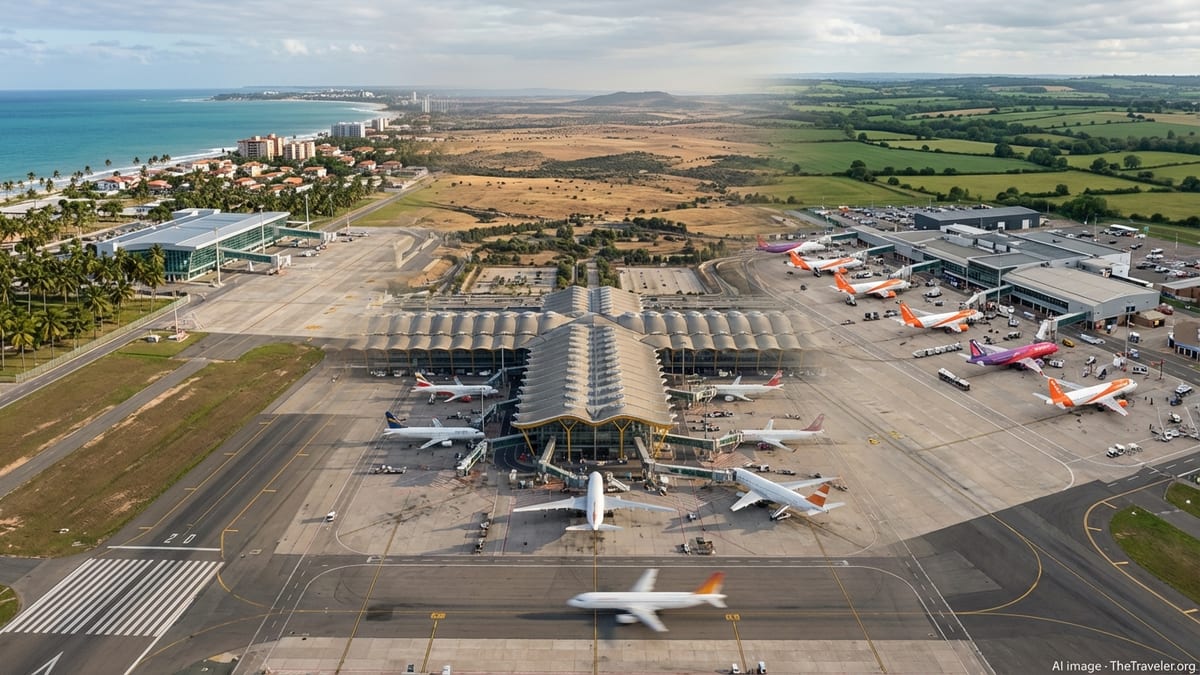
Record 2025 Results Cement Spain’s Tourism Momentum
Aena has reported another year of record figures, underscoring how Spain’s airports remain a cornerstone of Europe’s post-pandemic travel recovery. The company closed 2025 with net profit above 2.1 billion euros, about 10 percent higher than in 2024, supported by steady growth in passenger numbers and strong cash generation.
Across its Spanish network of 46 airports, Aena handled more than 321 million passengers in 2025, with international traffic rising faster than domestic demand. The group’s global network, including its concessions in Brazil and its stake in London Luton Airport, carried nearly 385 million passengers, up just over 4 percent on the previous year. The scale of that growth confirms Spain’s position as one of the world’s busiest and most resilient tourism gateways.
Commercial revenues also surged, with overall commercial income growing at a double-digit rate and retail sales in Spain rising by more than 3 percent, even as they lagged traffic growth. Food and beverage outlets and specialty shops posted some of the strongest gains, highlighting how passengers are spending more time and money in terminals as travel normalises. For Aena, these trends are turning airports into increasingly powerful profit engines that extend well beyond aeronautical charges.
The company’s financial strength is allowing it to propose a higher dividend and keep the Spanish state, which retains a controlling stake, well rewarded, while still committing more than 1 billion euros per year to infrastructure upgrades. That investment pipeline is designed to secure capacity for continued visitor growth into the next decade.
Airport Charges Debate Pits Growth Against Competitiveness
Aena’s robust performance is unfolding against a heated debate over the cost of flying to and from Spain. The company has proposed annual increases in regulated airport charges of around 3 to 4 percent from 2027, arguing that higher fees are needed to fund nearly 10 billion euros in planned investment under the next regulatory cycle.
Airlines, represented by industry bodies such as IATA and Spain’s main carriers’ association, are calling instead for cuts of almost 5 percent per year over the same period. They argue that Aena has historically underestimated traffic, has enjoyed higher returns than originally envisaged by regulators, and can afford to finance its plans while reducing fees. According to airline lobby groups, keeping charges lower would support Spain’s competitiveness as a destination and help sustain the tourism boom.
The dispute highlights a central tension in Europe’s airport sector: how to balance the need for heavy, long-term investment in runways and terminals with the pressure from airlines and travelers for lower costs. For now, passenger volumes suggest that demand for Spain remains robust despite the prospect of higher tariffs. But the eventual regulatory outcome will shape how affordable air travel remains for key tourism markets in northern Europe and beyond.
For regional destinations such as the Canary Islands, Balearics and secondary mainland cities, where tourism is the backbone of local economies, the stakes are particularly high. Any shift in airline capacity in response to higher charges could quickly ripple through hotel occupancy, employment and broader regional growth.
Brazil Network Becomes a Strategic Tourism Bridge
Beyond Europe, Aena is turning its Brazilian operations into a key growth lever that links Latin America’s tourism boom with Spanish and European markets. Through its Aena Brasil subsidiary, the company now operates a large portfolio of airports, including the northeastern group centred on Recife and a second set of concessions known as the Bloco de Onze Aeroportos do Brasil.
These airports handled more than 26 million passengers in 2023, almost double pre‑pandemic levels, and continued to grow through 2024 and 2025. The rapid expansion reflects both Brazil’s recovering domestic market and rising international interest in beach, nature and cultural destinations such as Recife, Maceió and other northeast hubs. For European carriers and tour operators, these gateways offer direct access to some of Brazil’s fastest-growing leisure regions.
Aena is investing heavily in terminal upgrades, commercial areas and airside improvements across the Brazilian portfolio, with several major projects scheduled to be completed by mid‑2026 and further works extending to 2028. The goal is to raise service standards, add retail and hospitality space and unlock capacity for additional routes. That, in turn, should support more long‑haul connectivity between Brazil and Europe, especially via Spain’s main hubs in Madrid and Barcelona.
The strategy aligns with Aena’s long‑stated ambition to make Latin America its “natural market” for international growth. By deepening its presence in Brazil, the company is positioning itself as a bridge between European tourists and South America’s emerging destinations, while diversifying revenue away from its mature home network.
UK Expansion at Luton Underscores European Demand
In the UK, Aena’s stake in London Luton Airport has become another important pillar of its international growth story. Luton contributed close to 18 million passengers to the group total in 2025, with traffic rising faster than the network average as low‑cost carriers added capacity on routes to Spain, eastern Europe and North Africa.
The UK government has cleared the way for a major expansion of London Luton, allowing the airport to lift its annual capacity from around 19 million passengers to roughly 32 million. The multibillion‑euro “Future Luton” plan, led by a consortium in which Aena holds a majority position, includes terminal expansion, a potential new terminal building, improved airfield infrastructure and upgraded transport links.
For the wider tourism industry, the Luton project is significant because it will add substantial low‑cost capacity into the London market in the coming years. That should reinforce the airport’s role as a key gateway for British holidaymakers heading to Spanish resorts and, increasingly, to Brazilian and other long‑haul destinations via connections. The expansion is expected to generate thousands of jobs and large economic spillovers in the surrounding region.
Aena is also eyeing additional growth in the UK, with interest reported in acquiring control of another regional airport. Together with Luton, these moves highlight how the company is seeking to capture outbound leisure demand from one of Europe’s most important source markets for tourism.
Investment Wave Points to Prolonged Tourism Boom
Aena’s current and planned investments across Spain, Brazil and the UK point to a long runway for tourism growth rather than a short‑lived surge. The group expects Spanish passenger numbers to climb further in 2026, edging toward the mid‑320‑million range despite capacity constraints at some major hubs.
At the same time, multi‑year upgrade programs in Brazil and the Future Luton scheme in the UK will progressively unlock new slots and improve the passenger experience. These projects are designed to accommodate not just today’s pent‑up demand but also structural trends such as the rise of middle‑class travelers in Latin America and the enduring appetite in Europe and the UK for sun‑and‑sea holidays.
For destinations across Spain, South America and the British Isles, Aena’s 2025 growth and investment strategy signal that airports will remain catalysts for tourism, trade and employment in the decade ahead. The key question now is how regulators, airlines and local communities manage the environmental and economic trade‑offs that accompany such rapid expansion.