

More news on this day
Aer Lingus has activated its first aircraft equipped with SpaceX’s Starlink satellite connectivity, marking a significant upgrade to the Irish carrier’s in-flight Wi-Fi and positioning it among a growing group of airlines adopting low-Earth-orbit broadband for long-haul travelers.
Get the latest news straight to your inbox!
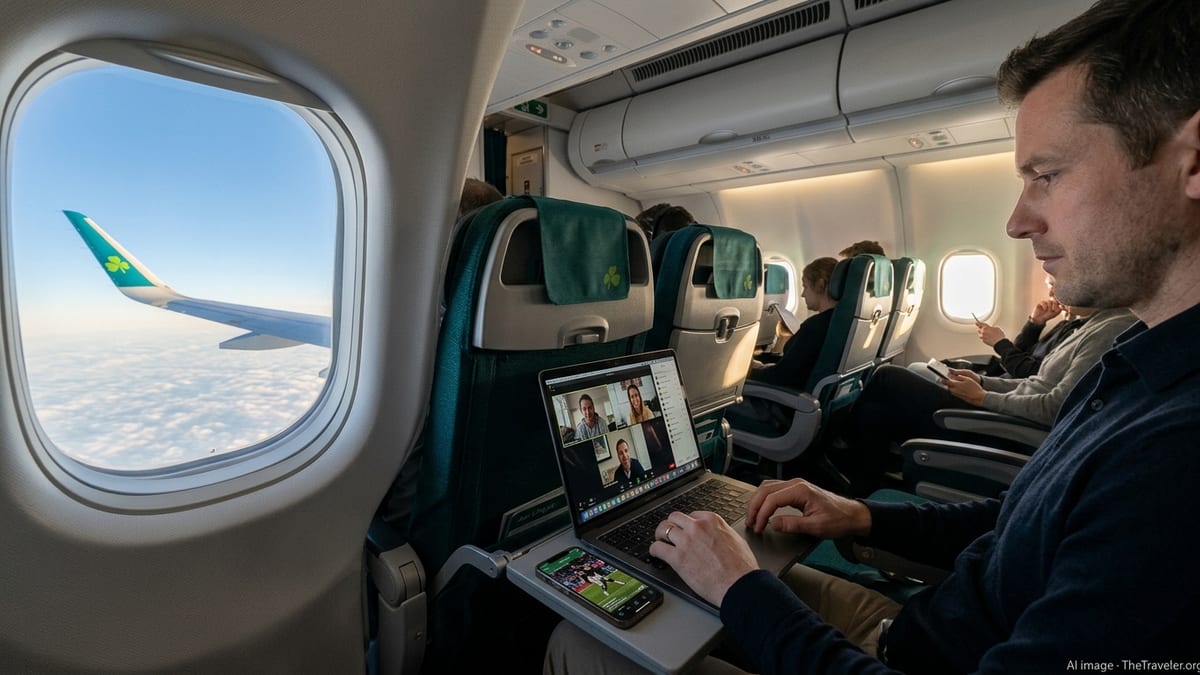
A Milestone in Aer Lingus’s Connectivity Strategy
The activation of the first Starlink-connected aircraft follows earlier indications from Aer Lingus’s parent company, International Airlines Group, that the Irish carrier would introduce the technology on its long-haul fleet in the mid-2020s. Publicly available information shows that IAG selected Starlink to provide high-speed, low-latency broadband across several group airlines, including Aer Lingus, British Airways, Iberia, Level and Vueling.
Reports indicate that Aer Lingus is initially focusing Starlink installations on widebody and transatlantic aircraft, where demand for robust connectivity is highest. The first activated aircraft is expected to operate on key North American routes, giving passengers traveling between Ireland and the United States one of the fastest in-flight Wi-Fi options currently available.
The move aligns Aer Lingus with a broader trend among global carriers that are replacing earlier-generation satellite or air-to-ground systems with constellations operating in low Earth orbit. Starlink’s network, which relies on thousands of satellites, is designed to reduce latency and improve throughput compared with legacy geostationary services.
For Aer Lingus, the switch-on of the first Starlink-enabled aircraft is seen as the operational starting point for a wider rollout that has been signposted in recent investor and technology disclosures. Further aircraft are expected to follow as installations are completed and tested.
What Starlink Means for Passengers on Aer Lingus
For travelers, the most visible change on the first Starlink-connected Aer Lingus aircraft will be the performance of the onboard Wi-Fi service. Published information from other airlines already using Starlink indicates that passengers can expect home-like broadband speeds, improved reliability over oceanic routes and significantly reduced lag on video calls and cloud-based applications.
That level of performance could reshape how Aer Lingus passengers use connectivity on long flights. Activities that were previously unreliable or discouraged, such as high-definition streaming, real-time collaboration tools or large file uploads, are likely to become more practical. The experience should be particularly noticeable on transatlantic sectors where coverage gaps and congestion have traditionally limited service quality.
Aer Lingus has not publicly detailed specific speed guarantees, but Starlink’s aviation materials point to multi-hundred-megabit capacity per aircraft, shared among connected devices. In practice, this can translate to dozens of passengers streaming or working online at the same time without the severe slowdowns associated with older systems.
The introduction of Starlink also gives Aer Lingus additional flexibility in how it packages connectivity. Some carriers have used similar upgrades to offer complimentary messaging tiers, flat-rate passes for the entire flight or bundled Wi-Fi access within premium cabins and loyalty tiers. Observers will be watching to see how the Irish airline structures pricing as more aircraft come online.
Part of a Wider IAG and Industry Shift to Low-Orbit Broadband
The first live Starlink aircraft at Aer Lingus sits within a broader connectivity strategy at International Airlines Group. Publicly available corporate communications show that IAG has committed to deploying Starlink across hundreds of aircraft in the fleets of British Airways, Iberia, Aer Lingus, Level and Vueling, creating one of the largest single-group footprints for the technology.
Within the group, British Airways has already begun operating Starlink-equipped flights, and Aer Lingus now joins as another long-haul carrier transitioning to the same platform. This alignment is expected to generate economies of scale in installation, support and commercial agreements, while also giving passengers a more consistent experience across different IAG airlines.
More broadly, Aer Lingus’s move reflects the aviation industry’s accelerating adoption of low Earth orbit satellite constellations. Starlink is already flying with North American, European and Middle Eastern airlines, and progress reports from the provider highlight rapid growth in the number of certified aircraft types and active installations.
For airlines, the appeal lies in a combination of technical and commercial factors. Low-orbit systems can reduce latency to levels closer to terrestrial broadband, support bandwidth-intensive uses such as live TV and gaming, and offer coverage across polar and oceanic regions where ground-based networks are not available. As more aircraft are fitted, the technology is increasingly seen as a core part of the onboard product rather than a niche add-on.
Installation Program and Fleet Implications
While only one Aer Lingus aircraft has been publicly identified as active with Starlink so far, available filings and industry coverage suggest that this is the first step in a multi-year installation program. The focus is expected to be on widebody aircraft that operate long-haul services, including core transatlantic routes where customer demand for connectivity is strongest and overall flight times are longest.
Retrofitting large commercial aircraft with Starlink involves installing low-profile antennas and associated cabin equipment, integrating the system with existing inflight entertainment and power infrastructure, and carrying out certification and flight testing. These modifications are typically scheduled alongside heavy maintenance checks to minimize aircraft downtime.
As more Aer Lingus aircraft complete the work, the proportion of the long-haul fleet offering high-speed connectivity is likely to rise steadily. This could influence how the airline assigns aircraft to particular routes, with Starlink-equipped jets potentially prioritized on competitive transatlantic markets or services with a high concentration of business travelers.
Over time, a critical mass of connected aircraft may allow Aer Lingus to reshape its digital services strategy in the cabin, from real-time customer support tools to new retail and entertainment options that rely on robust bandwidth.
Competitive Positioning for Ireland’s Flag Carrier
Activating the first Starlink-connected aircraft also has competitive implications for Aer Lingus. The transatlantic market linking Ireland, the United Kingdom, continental Europe and North America is served by a mix of full-service and low-cost carriers, many of which are upgrading their connectivity offers. In this context, high-speed, low-latency Wi-Fi is increasingly viewed as a differentiator, especially for frequent flyers and corporate accounts.
By moving to Starlink, Aer Lingus positions itself alongside other early adopters that have leaned on inflight connectivity as a selling point. Travel industry analyses suggest that reliable Wi-Fi can influence airline choice on longer routes, with passengers often willing to favor carriers that enable them to work or stream content without interruption during multi-hour flights.
The step also reinforces Ireland’s role as a transatlantic hub. With U.S. preclearance facilities at Dublin and Shannon and a network of North American destinations, Aer Lingus already markets itself as a convenient bridge between Europe and the United States. Upgraded onboard connectivity on those flights supports that proposition by extending a more seamless digital experience across time zones.
As installation progresses beyond the first aircraft, Aer Lingus will be judged on how consistently it can deliver the new standard of service across its long-haul network. For now, the activation of the initial Starlink-equipped jet signals that the next phase of its inflight connectivity strategy is underway, and that passengers on selected routes will be among the first to experience the carrier’s new approach to staying online at 35,000 feet.