

More news on this day
Barbados is set for a fresh tourism boost this spring as Aer Lingus launches new direct flights from Dublin to Bridgetown and ramps up its wider Americas network, adding capacity on key routes to the United States, Canada and Mexico just as demand for Caribbean and transatlantic getaways surges.
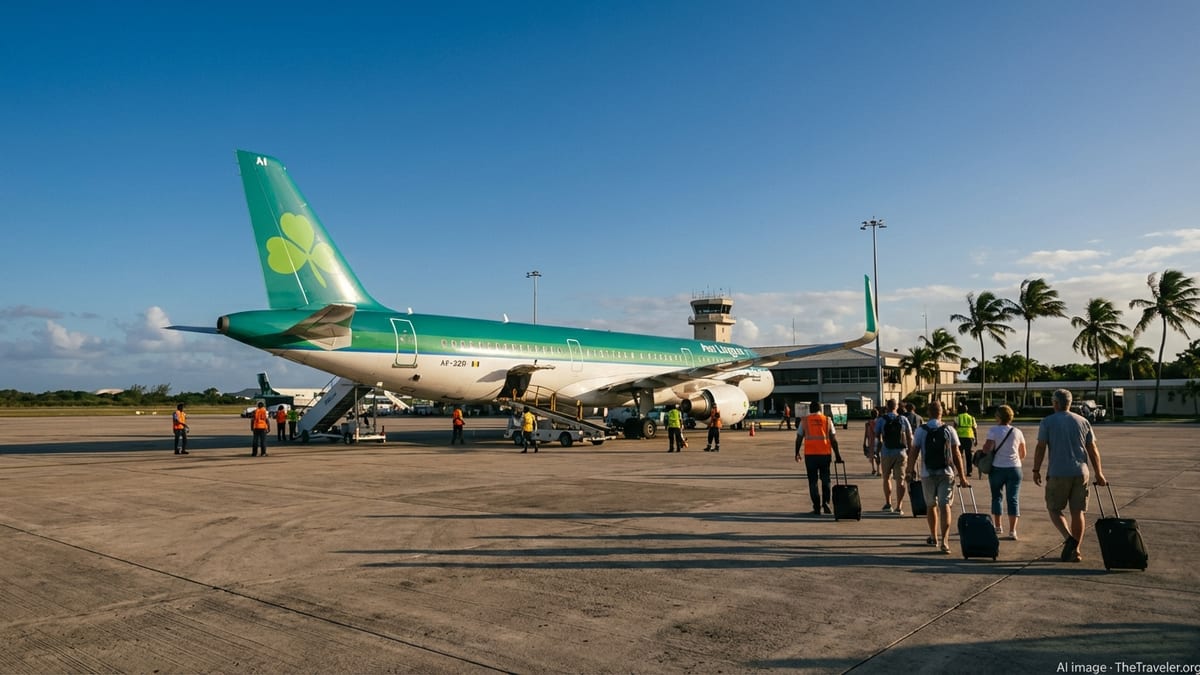
Seasonal Dublin–Barbados Link Fills Gap After Manchester Pullback
Aer Lingus confirmed in mid-February that it will operate a new temporary scheduled service between Dublin and Bridgetown from March 31 to May 31, 2026, providing Irish travelers with a nonstop route to Barbados in time for the late spring holiday period. The three-times-weekly flights will run on Tuesdays, Fridays and Sundays, specifically aimed at maintaining connectivity to the island as the airline restructures its wider long-haul network.
The move comes as Aer Lingus winds down its long-haul base at Manchester Airport, where services to New York, Orlando and Barbados are due to cease by March 31, 2026 after an 18‑month review found the UK operation underperformed its Ireland-based fleet. To protect holidaymakers who had booked Barbados trips from northern England, the carrier is re-accommodating many of them onto the new Dublin link, effectively shifting traffic via its home hub while still delivering much-needed seats into Bridgetown for the key shoulder season.
Industry schedule data show the Dublin–Bridgetown flights will be operated with Aer Lingus’ newest Airbus A321XLR aircraft, configured with both economy and fully flat business-class cabins. While initially conceived as a limited, compensatory operation for Manchester passengers, the addition of an Irish-originating service also strengthens Barbados’ direct access to the European market at a time when the island is competing aggressively with other Caribbean destinations for long-stay, high-spend visitors.
Biggest-Ever Transatlantic Schedule Extends Across the Americas
The Barbados announcement dovetails with a broader Aer Lingus strategy to expand capacity across its Americas network in 2026. Last autumn, the airline unveiled what it described as its biggest-ever transatlantic summer schedule, built around its Dublin hub and tapping into pent-up leisure and VFR demand from Ireland, the United Kingdom and continental Europe to North America and the Caribbean.
Central to that plan is an expansion in the United States, including additional frequencies to major East Coast gateways and a brand-new service to Raleigh–Durham in North Carolina. Extra daily flights to New York JFK and Boston are designed to offer more choice on departure times and better connectivity for passengers feeding in from Aer Lingus’ short-haul network, while also increasing onward options across the U.S. through partnerships with American carriers.
The carrier has also been steadily building its footprint further south, with seasonal and year‑round services into Mexico and broader Latin America feeding the appetite for sun destinations among Irish, British and European travelers. Taken together, the upgrades represent a sweeping reweighting of capacity towards routes and hubs that Aer Lingus sees as structurally stronger, while still supporting core leisure markets such as Barbados through targeted seasonal operations.
Tourism Data Show Barbados Rising in a Competitive Caribbean Market
The timing of the new Dublin flights is favorable for Barbados, which has been quietly rebuilding its tourism base and airlift since the pandemic slump. Official data from Grantley Adams International Airport indicate that total deplanements grew by just over 1 percent in 2025 compared with 2024, with a stronger 4.1 percent surge recorded in December alone. Transit and transfer traffic through the airport has been rising even faster, suggesting Bridgetown is consolidating its role as both a destination and a mini‑hub for the southern Caribbean.
Stopover figures for the first nine months of 2025 show overall arrivals up by more than 5 percent year‑on‑year, driven in large part by a double‑digit increase in U.S. visitors and a substantial 21 percent jump in Canadian arrivals over the same period. While traffic from the United Kingdom dipped slightly, cruise volumes surged, with more than 618,000 cruise passengers visiting between January and September, underlining Barbados’ continued appeal to the wider regional tourism ecosystem.
The Central Bank of Barbados has highlighted how expanded airlift from major North American carriers in 2024 pushed U.S. seating capacity to a record high, which in turn helped lift long‑stay arrivals to well above pre‑pandemic levels. Against that backdrop, even a short seasonal service from Dublin is strategically significant, adding a new European origin point at a moment when the island is diversifying beyond its traditional reliance on the UK and North American markets.
Canada and Mexico Shift Leisure Demand Toward Sun Destinations
Aer Lingus’ Americas push is unfolding as Canadian and European travelers increasingly look south to the Caribbean and Mexico instead of the United States for their long‑haul holidays. Recent Canadian statistics show a notable decline in trips to the U.S. by both air and land in late 2025, even as Canadian travel to non‑U.S. destinations by air rose by nearly 10 percent across the first eleven months of the year. That swing reflects both economic pressures and changing preferences, with travelers favoring beach escapes and all‑inclusive stays in countries such as Mexico, the Dominican Republic and Barbados.
Tourism analytics across the region point to robust growth in key resort hubs like Punta Cana, where visitor numbers from Canada and the U.S. have been climbing, alongside solid hotel occupancy levels. For islands and coastal destinations able to secure additional airlift, the payoff has been clear: higher stopover counts, more cruise calls and a stronger pipeline of repeat visitors, many of whom are choosing Caribbean and Mexican resorts for multi‑week stays rather than shorter breaks in traditional U.S. city markets.
By reinforcing its services to major U.S. gateways, ramping up flying to Mexico and adding a new link into Barbados, Aer Lingus is positioning itself to capture more of this shifting demand from Europe and Ireland. The airline’s network design effectively turns Dublin into a bridge between secondary European cities and North American and Caribbean holiday hotspots, mirroring strategies employed by other transatlantic carriers but with a particular focus on leisure flows.
U.S. Capacity Gains Feed Barbados and Wider Caribbean Growth
Barbados’ improving airlift story is intertwined with the broader recovery of U.S.–Caribbean aviation. By the end of 2024, Barbados recorded U.S. seating capacity nearly 12 percent above its previous 2019 peak, thanks to sustained growth from American Airlines, JetBlue, Delta, United and low‑cost entrants. That expansion delivered record‑breaking long‑stay arrivals from the U.S. in 2024 and laid a foundation for further progress through 2025 and 2026.
For Barbados, each new or expanded route directly supports government efforts to increase higher‑value tourism, attract investment and diversify the island’s economic base. Policymakers have been keen to emphasize the importance of “airlift diplomacy,” using route incentives, marketing partnerships and bilateral agreements to ensure that carriers view Bridgetown as a resilient, year‑round market rather than a purely seasonal beach destination.
The addition of Aer Lingus as a direct European operator aligns with that strategy, complementing existing services from British, European and North American airlines. Even as Aer Lingus closes its Manchester long‑haul base, the redeployment of capacity through Dublin keeps the island visible in airline scheduling discussions and could, if the trial proves successful, set the stage for more regular or longer seasonal operations in future years.
Reshaping Long-Haul Strategy: From Manchester to Dublin Hub
The closure of Aer Lingus’ Manchester transatlantic base marks a pivotal shift in the airline’s long‑haul strategy. Opened in 2021 under the Aer Lingus UK banner, the base was conceived as a way to tap northern England’s catchment area and compete with established rivals on routes to New York, Orlando and Barbados. However, higher crewing costs, weaker connecting flows and mounting competition have eroded its profitability, prompting a phased withdrawal that begins with the end of New York services on February 23, 2026 and culminates in the last Orlando and Barbados flights on March 31.
By concentrating wide‑body and long‑range narrow‑body operations in Dublin, Aer Lingus aims to leverage the Irish capital’s strong European feed and U.S. preclearance facilities, which allow passengers to clear American immigration and customs before boarding. That hub‑and‑spoke model has already underpinned the airline’s most profitable years on the North Atlantic and provides a more efficient platform for deploying its growing A321XLR fleet on thinner, leisure‑focused routes such as Barbados.
For Barbados and other Caribbean destinations, the shift underscores an industry‑wide trend: airlines are increasingly channeling long‑haul leisure flying through a small number of powerful hubs where they can maximize connections, rather than trying to sustain multiple point‑to‑point bases. While that can mean the loss of direct links like Manchester–Bridgetown, hub‑based services from cities such as Dublin may ultimately deliver more consistent capacity over time if they successfully tap broader demand across Europe.
Economic Stakes High as Airlift Drives Visitor Spending
Barbados’ policymakers have repeatedly stressed the connection between airlift, long‑stay visitor numbers and overall economic growth. Tourism remains the island’s primary foreign exchange earner and a major source of employment, with spillover effects across construction, food and beverage, transport and cultural industries. When airlines add seats and destinations, the benefits are quickly felt in hotel occupancy, restaurant bookings and local tour operations.
Central Bank analysis of recent seasons shows that higher seating capacity from core markets, particularly the United States, has directly contributed to record visitor spending, cushioning the economy from external shocks and helping to fund infrastructure upgrades. However, that same analysis warns that source markets face their own headwinds, from higher interest rates and cost‑of‑living pressures to geopolitical uncertainty, all of which could soften demand if airfares or travel-related costs climb too quickly.
The new Aer Lingus flights offer a timely boost under these conditions, diversifying the island’s source markets and tapping into relatively resilient segments of European demand. If the Dublin–Bridgetown service performs well in its initial two‑month run, it could strengthen Barbados’ case for additional European links, whether from Ireland, secondary UK cities or mainland continental gateways, further spreading the economic risks associated with dependence on any single origin country.
What Travelers Can Expect on the New Route
For passengers, the Dublin–Barbados service will showcase Aer Lingus’ latest-generation long‑range narrow‑body aircraft, the Airbus A321XLR. The jet offers a two‑class configuration with fully flat business‑class seats and a refreshed economy cabin featuring upgraded inflight entertainment, larger overhead bins and improved cabin acoustics for a quieter ride. Flight times are scheduled to allow for same‑day connections from multiple Irish and European cities into Dublin, opening up Barbados to a wider catchment than ever before.
Early fare information indicates that Aer Lingus is positioning the route competitively within the broader Caribbean market, with one‑way economy tickets advertised from just over 200 euros including taxes and charges. Travel agents in Ireland and the UK report strong interest from both package holidaymakers and independent travelers, particularly those seeking an alternative to more crowded resorts elsewhere in the region or looking to combine a Barbados stay with cruises and multi‑island itineraries.
Local tourism officials in Bridgetown are preparing marketing campaigns to capitalize on the increased visibility that comes with a new European flag carrier serving the island, emphasizing Barbados’ blend of beach, heritage and culinary experiences. While the schedule is currently limited to spring 2026, stakeholders on both sides of the Atlantic will be watching load factors and booking patterns closely to see whether this latest chapter in the island’s airlift story becomes a recurring feature of the transatlantic season.