

More news on this day
Aer Lingus has introduced a major change to its travel document policy on routes between the United Kingdom and the Republic of Ireland, with passengers on busy corridors such as London–Dublin now required to present a valid passport or Irish passport card to fly.
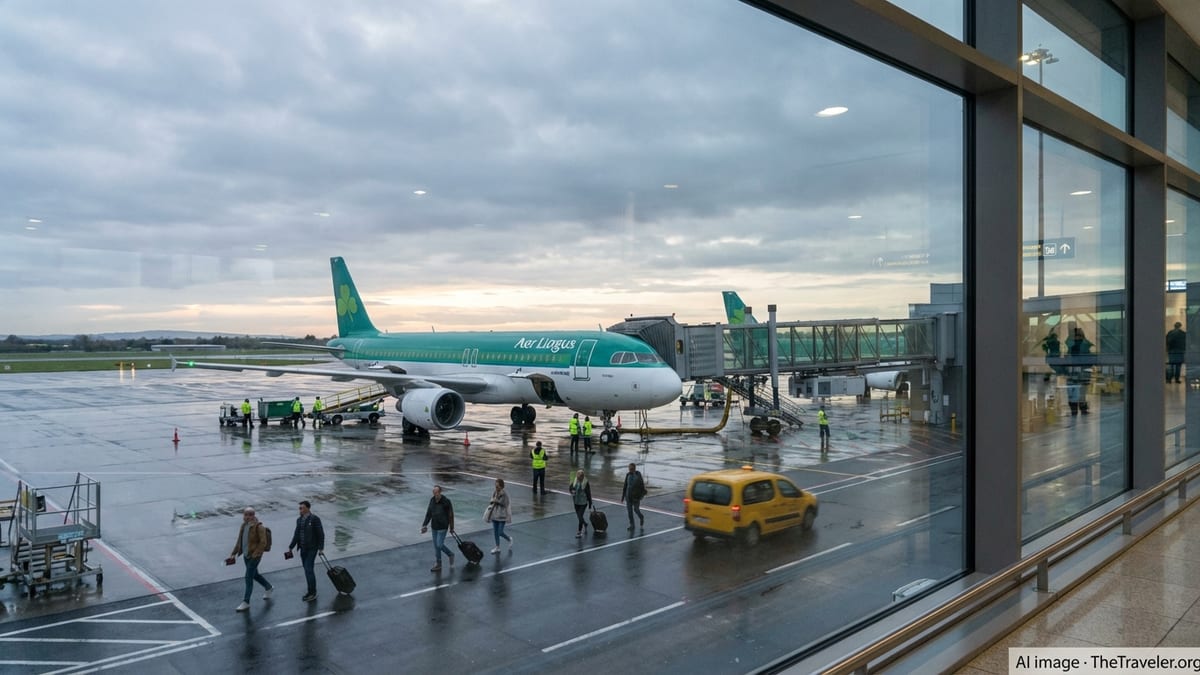
New Passport Rules Take Effect on Key UK–Ireland Routes
The new requirement, which took effect on 25 February 2026, ends the long-standing practice of allowing alternative photo identification for Aer Lingus services between Great Britain and the Republic of Ireland. The airline confirmed that only a passport or Irish passport card is now accepted on these routes, covering all Aer Lingus and Aer Lingus Regional flights linking cities such as London, Manchester, Edinburgh and Cardiff with Dublin, Cork, Shannon and other Irish airports.
The rule applies to every traveller, including Irish and British nationals and all children and infants, who must each have their own valid document. Previously, many regular passengers relied on driving licences, student cards or workplace IDs when flying within the Common Travel Area, a flexibility that has now been withdrawn for these services.
Aer Lingus has framed the move as part of a wider effort to standardise documentation requirements across its network and reduce disruption at the gate. The airline had been an outlier among major carriers on the corridor, and the change brings it into line with rivals that already insist on passports for UK–Ireland flights.
What It Means for London, Dublin and Belfast Travellers
For travellers on the flagship London–Dublin route, the busiest air corridor between the UK and Ireland, the practical impact is clear. Anyone booked on Aer Lingus from London Heathrow, London Gatwick or other British airports to Dublin must now produce a passport or Irish passport card at both check-in and boarding. A driving licence, even one with a photograph, will no longer be enough to travel.
The picture is more nuanced for Belfast, which sits inside the UK but close to the land border with the Republic. Aer Lingus Regional services that operate as domestic UK flights from Belfast to other British cities remain exempt, and those passengers can continue to use a wider range of photo ID as before. However, where a flight crosses the border between Northern Ireland and the Republic, the new passport-based rules apply in line with other UK–Ireland sectors.
Passengers commuting frequently between London and Dublin, or connecting onwards via Aer Lingus’ transatlantic network, are being urged to double-check their documentation ahead of departure. Travel agents have also warned that confusion could arise where codeshare arrangements exist, particularly as some partner airlines still permit alternative ID on certain Common Travel Area routes.
Common Travel Area Freedoms vs Airline Policy
The tightening of Aer Lingus rules does not reflect a change to the legal framework of the Common Travel Area, the long-standing arrangement that allows Irish and British citizens to move freely between the UK, Ireland, the Isle of Man and the Channel Islands without routine passport checks. Governments on both sides continue to state that there is no legal requirement for those citizens to carry a passport solely to cross the border.
However, carriers have wide discretion over what they accept as proof of identity at boarding, and Aer Lingus is using that flexibility to insist on passports or Irish passport cards on its UK–Ireland services. In practice, this means that while a traveller’s right to enter either jurisdiction may not have changed, their ability to board a particular flight now depends on holding the correct document.
Other operators are taking different approaches. Some airlines serving London–Dublin continue to accept a broader range of photographic ID on their own services, and ferry companies on the Irish Sea still allow alternative documents such as driving licences. As a result, the experience for travellers may vary significantly depending on the mode of transport and the carrier they choose, even though they are moving within the same Common Travel Area.
Interaction With New UK ETA and Visa Rules
The Aer Lingus changes are landing just as the UK tightens its own entry procedures for many foreign nationals. From late February 2026, most visitors who are not Irish or British citizens and who can normally travel to the UK without a visa are being brought into the new Electronic Travel Authorisation system, a digital pre-clearance that must be obtained before boarding transport.
Aer Lingus is advising customers that, in addition to carrying a passport or Irish passport card on UK–Ireland flights, eligible non-British and non-Irish nationals must ensure they hold an approved UK ETA or the appropriate visa where required. The airline has warned that passengers who arrive at the airport without both the correct travel document and any necessary authorisation may be denied boarding.
According to industry briefings, the ETA is generally processed quickly, but authorities recommend applying several days before travel to avoid last-minute problems. For Irish residents of other nationalities who have grown used to spontaneous weekend trips to cities such as London, Manchester or Glasgow, the combination of stricter airline ID checks and digital pre-clearance adds an extra layer of planning to what once felt like a simple hop across the Irish Sea.
Advice for Affected Passengers and Future Bookings
With the new policy already in force, Aer Lingus is encouraging travellers who hold bookings on UK–Ireland routes but do not yet have a passport to contact its customer support teams. The airline has set up dedicated phone lines and email channels to discuss options, which may include refunds, credit vouchers or rebooking for a later date once passengers have obtained the necessary documents.
Travel industry bodies are also recommending that anyone who regularly flies between Britain and Ireland treats a passport as essential, regardless of carrier, arguing that requirements are likely to tighten rather than loosen over time. Families are being reminded that each child must have their own valid passport for Aer Lingus flights, even if they previously travelled on the strength of a parent’s ID.
For now, the shift underscores a broader trend in European short-haul aviation: carriers are prioritising uniform document checks in the name of security and operational reliability, even on routes where border controls remain relatively light. On the high-traffic corridors linking London, Dublin and Belfast, that means the era of boarding an Aer Lingus flight with nothing more than a driving licence or student card has abruptly come to an end.