

More news on this day
Aer Lingus is preparing to introduce free, high-speed Starlink Wi-Fi across its short haul and long haul network, with installation work scheduled to begin on its Airbus A330 widebody fleet in early 2026 as part of a wider connectivity upgrade under the International Airlines Group umbrella.
Get the latest news straight to your inbox!
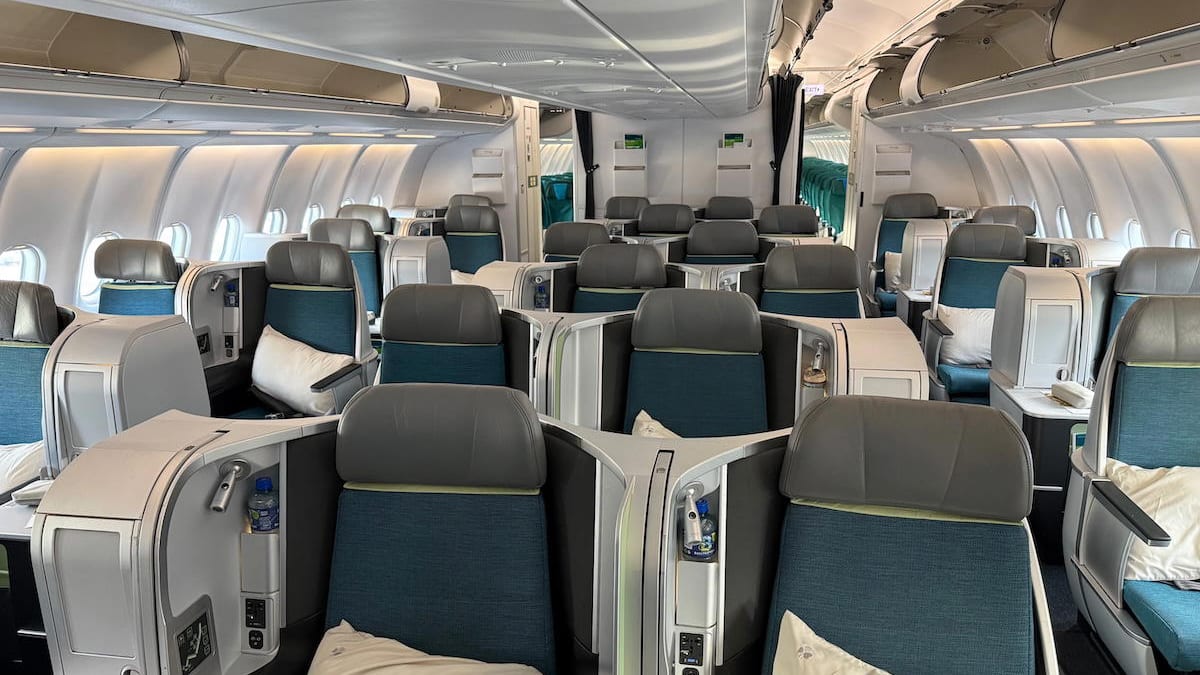
Image by One Mile at a Time
From Paid Packages To Free High-Speed Connectivity
Publicly available information from Aer Lingus and International Airlines Group indicates that the Irish carrier is transitioning from its current paid connectivity model to a fully complimentary Wi-Fi offer powered by Starlink. The airline already provides onboard Wi-Fi on its Airbus A330 and A321neo aircraft, typically sold in data-based packages, with limited free access in premium cabins on some routes. That model is now set to be overhauled as low Earth orbit satellite connectivity becomes central to the group’s digital strategy.
In a recent group report, International Airlines Group highlighted a commitment to make Wi-Fi, powered by Starlink, available free of charge on both long haul and short haul services across participating airlines, including Aer Lingus. The document states that the first Aer Lingus aircraft equipped with Starlink is expected to enter service in early 2026, with a staged rollout following across the fleet. The A330, which anchors Aer Lingus transatlantic operations, is slated to be among the first aircraft types to receive the new system.
The decision positions Aer Lingus alongside a growing cohort of carriers moving to free, high-capacity inflight connectivity as a core part of the product rather than an ancillary revenue stream. Other airlines, such as United Airlines, Emirates, Alaska Airlines and Air New Zealand, have publicly outlined similar Starlink-powered strategies, signaling a broader shift in passenger expectations regarding internet access at cruising altitude.
For Aer Lingus, the change is expected to enhance its competitiveness on North Atlantic routes, where Wi-Fi speed and cost have become increasingly important differentiators. With Dublin serving as a major connecting hub between North America and Europe, improved onboard connectivity is likely to feature prominently in the airline’s marketing as installation progresses.
A330 Installations Mark The Start Of A Wider Rollout
Starlink’s aviation progress reports show that hardware approvals already cover a range of Airbus widebody types, including the A330, which clears a regulatory path for Aer Lingus to begin installation on its long haul fleet. Industry coverage indicates that the first Aer Lingus aircraft fitted with Starlink should be operational in early 2026, with the A330 platform acting as an early test bed for service reliability and passenger uptake.
The focus on A330s reflects the aircraft’s central role in Aer Lingus network planning. These widebodies connect Dublin with key North American destinations such as New York, Boston and Chicago, markets where competing carriers have been racing to upgrade onboard connectivity. By prioritizing the A330, Aer Lingus aligns the first phase of Starlink deployment with routes that carry a high proportion of business travelers and long haul leisure customers who are more likely to use data-intensive applications during flight.
Once the A330 installations are underway, the program is expected to extend to other aircraft types in the fleet. The airline already operates A321neo long range narrowbodies on transatlantic services, and these are strong candidates for subsequent Starlink upgrades given existing Wi-Fi infrastructure and their role on thinner long haul routes. Short haul Airbus narrowbodies are also expected to be brought into scope over the following years to support the group’s goal of complimentary Wi-Fi across both long haul and short haul networks.
While specific monthly installation rates and completion dates for each fleet segment have not been publicly detailed, the wider International Airlines Group Starlink program targets several hundred aircraft across Aer Lingus, British Airways, Iberia and other subsidiaries by the latter part of the decade. That timeline suggests a progressive, multi-year modification effort spanning base maintenance windows and dedicated retrofit lines.
What Passengers Can Expect From Starlink On Aer Lingus
Starlink’s low Earth orbit network is designed to deliver lower latency and higher throughput than traditional geostationary satellite systems, which typically suffer from noticeable lag during real-time applications. Published technical information and early user reports from other airlines suggest passengers can expect broadband-like performance suitable for video streaming, cloud-based work tools, social media and messaging, often on multiple devices per traveler.
Aer Lingus, through International Airlines Group disclosures, has committed to making this connectivity free of charge once Starlink is available on board. That represents a significant shift from the current model where passengers often pay for time- or data-capped packages, particularly on long haul flights. The move to complimentary access is expected to remove friction from the user experience, encouraging more travelers to log on and potentially increasing engagement with the airline’s digital services and ancillary sales platforms.
The exact portal design, login process and any potential tiering between basic and premium speeds have not yet been outlined in public documentation specific to Aer Lingus. However, examples from other carriers using Starlink indicate that connection usually begins shortly after takeoff, with gate-to-gate availability becoming more common as regulatory clearances expand. Devices typically connect via standard Wi-Fi settings, with simplified sign-on flows tailored to minimize time to first page load.
For business travelers, the upgrade could reduce the trade-off between time spent in the air and productivity, supporting activities such as virtual meetings, collaborative document work and large file transfers that have historically been difficult using legacy inflight systems. Leisure passengers are likely to notice the difference most clearly in uninterrupted streaming and social media use, particularly on overnight transatlantic sectors where entertainment options play a major role in perceived value.
Part Of A Global Race To Upgrade Inflight Wi-Fi
Aer Lingus’s Starlink initiative sits within a global wave of airline connectivity investments as carriers respond to mounting customer expectations for on board internet that mirrors ground-based experiences. SpaceX’s Starlink has emerged as a prominent supplier in this space, with its own progress reports listing multiple airlines on several continents that have either begun installations or publicly committed to adopting the system.
In recent years, airlines such as United Airlines, Emirates, Alaska Airlines, Air New Zealand and others have described plans to deploy Starlink or have already activated the service on portions of their fleets, often paired with announcements of free or heavily simplified Wi-Fi pricing structures. Published coverage shows that these moves are reshaping passenger perceptions of inflight connectivity from a premium, limited-use product to a standard feature similar to seatback power or personal screens.
For Aer Lingus and its parent group, participation in this trend may be particularly significant in the European and transatlantic markets, where competition from both full-service and low cost carriers has intensified. High-speed, no-cost Wi-Fi can serve as a differentiator for connecting traffic through Dublin, especially when travelers compare options across multiple hubs such as London, Amsterdam and Frankfurt.
At the same time, airlines are closely watching operational, safety and regulatory considerations as they scale up use of low Earth orbit satellite systems. Public reports have documented instances where carriers temporarily adjusted or suspended new connectivity offerings on specific aircraft types while investigating technical questions. As installation begins on Aer Lingus A330s, the airline is expected to work within established certification frameworks to ensure the new equipment integrates smoothly with existing avionics and cabin systems.
Timeline And Implications For The Aer Lingus Fleet
According to recent International Airlines Group reporting, the first Aer Lingus aircraft equipped with Starlink is projected to enter service in early 2026, followed by a phased rollout across the long haul fleet through 2027. With A330s at the forefront of this effort, a substantial share of transatlantic passengers could see the new free Wi-Fi offering within the first years of deployment, depending on how retrofit capacity and maintenance schedules are allocated.
As additional aircraft types are brought into the program, Aer Lingus will move closer to offering a consistent connectivity experience across its network. Over time, this may influence how the airline designs its onboard product, from entertainment content strategies to digital retailing and loyalty engagement. A future in which most customers connect during flight could support expanded use of personalized offers, destination content and real-time service recovery tools delivered through the airline’s app or web portal.
For now, travelers booked on Aer Lingus flights in 2026 and 2027 are likely to encounter a mixed environment, with some aircraft offering the legacy paid Wi-Fi system and others featuring the new Starlink service once installations ramp up. Observers expect the airline to update its public-facing channels as more Starlink-equipped aircraft enter service, helping customers understand what level of connectivity they can anticipate on specific routes and dates.
As the program progresses, Aer Lingus will join a growing list of carriers repositioning inflight Wi-Fi as a standard, complimentary amenity. The decision to start with the A330 fleet underscores the strategic importance of long haul connectivity in the airline’s wider network and signals how central digital services have become to competition for passengers across the North Atlantic corridor.