

More news on this day
Afghanistan has rolled out a new electronic visa platform for foreign visitors, positioning the system as a key pillar of efforts to revive its long-fractured tourism sector and make entry procedures more predictable for international travellers.
Get the latest news straight to your inbox!
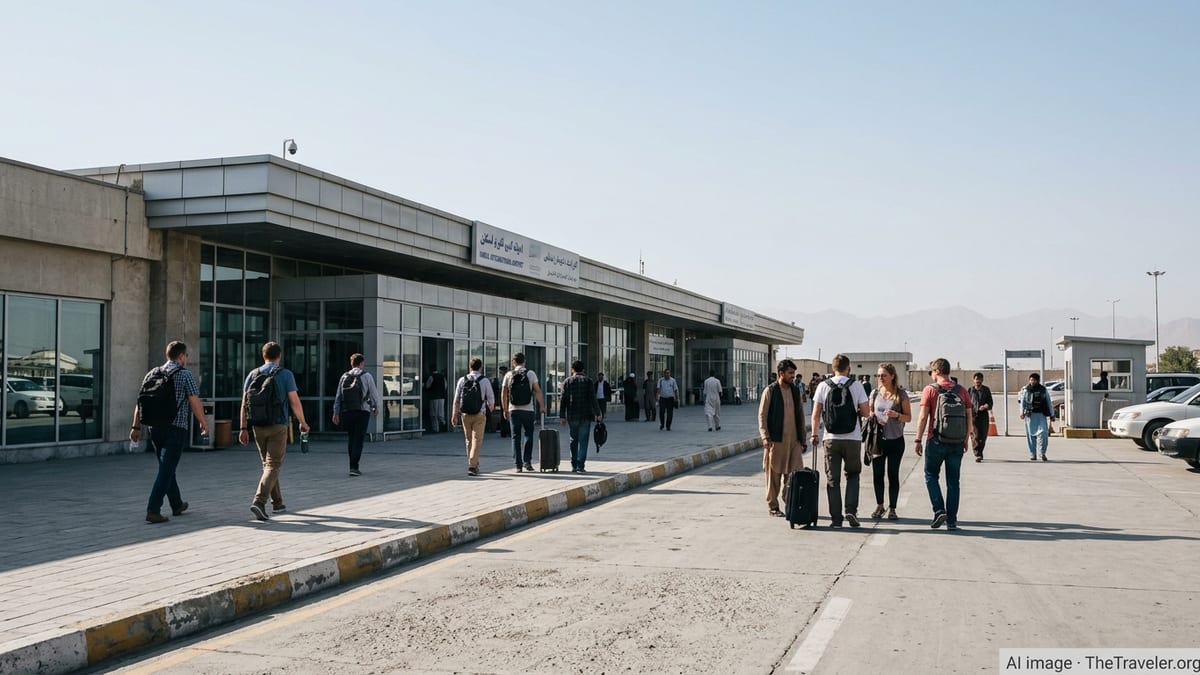
Digital visa rollout aims to modernize border controls
Publicly available information from Afghanistan’s Ministry of Foreign Affairs indicates that consular and visa services are being centralized through an online e-consulate portal, where applicants can submit documentation and track visa requests remotely. The new platform is designed to replace fragmented, paper-based procedures that previously varied by diplomatic mission and often required multiple in-person visits.([econsulate.mfa.gov.af](https://econsulate.mfa.gov.af/?utm_source=openai))
According to recent ministry reports, authorities have implemented what is described as a unified and centralized visa issuance system connecting Afghan diplomatic posts abroad with decision makers in Kabul. This infrastructure underpins the move toward an e-visa model by enabling applications and approvals to be processed through one digital channel rather than through separate mission-level workflows.([gmic.gov.af](https://gmic.gov.af/storage/document/annual_report/15__en.pdf?utm_source=openai))
The online portal groups different visa categories, including tourist and business travel, into a single interface where users can upload scans of passports and supporting documents. For travellers, this promises clearer requirements and the ability to complete most formalities before departure, a shift that aligns Afghanistan with regional trends in electronic border management and visa liberalization.([econsulate.mfa.gov.af](https://econsulate.mfa.gov.af/?utm_source=openai))
Technical documentation related to Afghanistan’s broader national e-service strategy suggests that the visa portal is intended not only to digitize forms, but also to provide step-by-step guidance in multiple languages, helping visitors understand entry rules and security regulations before they arrive. This focus on user experience mirrors approaches seen in other emerging destinations that have turned to e-visas to offset infrastructure and staffing gaps at consulates and border posts.([mcit.gov.af](https://mcit.gov.af/sites/default/files/2018-09/tor_of_national_portal-_5th_september_2018.pdf?utm_source=openai))
Tourism ambitions face security and perception challenges
The shift toward e-visas comes as Afghanistan seeks to position itself as a niche destination for heritage tourism, adventure travel and pilgrimage to historic Islamic sites. Official summaries of foreign policy and economic goals emphasize tourism as a potential contributor to job creation and local revenue, particularly around cultural landmarks, national parks and recently rehabilitated infrastructure projects.([mofa-af.com](https://mofa-af.com/?utm_source=openai))
However, international travel advisories continue to warn of significant security risks across much of the country, including threats to public gatherings, government buildings, hotels and transportation facilities. Many governments still advise their citizens against all travel or all non-essential travel to Afghanistan, presenting a major headwind to any tourism revival regardless of how streamlined visa processes become.([travel.state.gov](https://travel.state.gov/content/travel/en/international-travel/International-Travel-Country-Information-Pages/Afghanistan.html/%22%20%2B%20%20%20%20%20x?utm_source=openai))
Perceptions of political instability and limited consular support also weigh heavily on tour operators and insurers, which often rely on risk assessments and insurance underwriters before offering trips. While a digital visa platform can lower procedural barriers, travellers may still encounter restrictions from airlines, tour companies or insurers unwilling to service routes perceived as high-risk, slowing the impact of the new system on visitor numbers.
Reports focusing on regional mobility patterns note that visa policy alone rarely transforms demand in isolation. Instead, countries that have successfully leveraged e-visas to grow arrivals generally pair them with coordinated campaigns involving safety messaging, route development and investment in tourism infrastructure. Observers are watching to see whether Afghanistan’s new electronic system will be matched by similar efforts in aviation, accommodation and destination marketing.([govinfo.gov](https://www.govinfo.gov/content/pkg/FR-2025-06-10/pdf/2025-10669.pdf?utm_source=openai))
Centralized data and service delivery seen as key benefits
Afghanistan’s move to an e-visa framework is closely linked with broader initiatives to digitize civil registration and foreigner records. The country’s statistics and information authority, which already maintains national identity and registration databases, is collaborating with foreign affairs officials to integrate visa and entry data into a centralized system. This linkage is intended to improve record-keeping, reduce duplication and support more accurate migration statistics.([en.wikipedia.org](https://en.wikipedia.org/wiki/National_Statistics_and_Information_Authority?utm_source=openai))
Annual reporting by the foreign ministry highlights recent gains in administrative capacity, including the issuance of tens of thousands of visas and a significant expansion of passport services over the past year. By embedding these processes in a single online environment, authorities aim to monitor application volumes in real time, identify bottlenecks and shift staffing where needed, an approach that could shorten processing times for tourists during peak seasons.([gmic.gov.af](https://gmic.gov.af/storage/document/annual_report/15__en.pdf?utm_source=openai))
Centralized electronic records also have implications for border security and compliance. With e-visas tied to digital identity profiles and travel histories, border officials at Kabul’s international airport and land crossings can theoretically verify visitor status more quickly and flag inconsistencies. International experience suggests that such systems can reduce document fraud and overstay rates, though they also require robust data protection standards to safeguard personal information.([travel.state.gov](https://travel.state.gov/content/travel/en/international-travel/International-Travel-Country-Information-Pages/Afghanistan.html/%22%20%2B%20%20%20%20%20x?utm_source=openai))
Travel industry commentary from other destinations shows that when implemented effectively, e-visa systems can cut administrative costs for governments and make consular services more resilient during crises. Online platforms remain accessible even when on-the-ground operations are disrupted by security incidents or natural disasters, allowing visa processing to continue and providing a communication channel for travellers whose plans are affected.([gmic.gov.af](https://gmic.gov.af/storage/document/annual_report/15__en.pdf?utm_source=openai))
International travellers weigh access against risk
For potential visitors, the arrival of an Afghan e-visa introduces a clearer, more standardized entry path at a time when global travellers have become accustomed to digital permissions for many destinations. In principle, adventure tourists, documentary filmmakers and diaspora visitors now face fewer logistical surprises around paperwork, fees and documentation, provided they can navigate the online system and meet security-related requirements.
Yet travel planning resources continue to emphasize that accessibility on paper does not automatically translate into advisable travel in practice. Many trip planners, insurers and corporate travel departments rely heavily on government advisories and news coverage, which still detail ongoing security incidents and limited emergency support for foreign nationals. This cautious stance means that only a small subset of highly experienced or purpose-driven travellers is likely to consider Afghanistan in the short term, despite the streamlined visa process.([travel.state.gov](https://travel.state.gov/content/travel/en/international-travel/International-Travel-Country-Information-Pages/Afghanistan.html/%22%20%2B%20%20%20%20%20x?utm_source=openai))
Travelers who do proceed are being urged by guidebook publishers and online travel communities to adopt unusually thorough preparations, including flexible routing, contingency planning and heightened attention to local regulations. Discussions on travel forums about e-visa platforms in various countries underscore common concerns about website authenticity, online payment security and sudden rule changes, factors that can be magnified in environments where official communication channels are still evolving.([reddit.com](https://www.reddit.com/r/travel/comments/1g6lj3i/all_the_legit_evisa_and_gov_websites_look_like/?utm_source=openai))
As Afghanistan’s electronic visa system beds in, analysts expect a period of adjustment during which technical glitches, inconsistent implementation at borders and shifting policy guidance are likely. The extent to which the new e-visa becomes a genuine catalyst for tourism will depend not only on the functionality of the portal itself but also on improvements in security conditions, air connectivity and the availability of reliable, up-to-date information for foreign visitors.
Regional context and competition for visitors
Afghanistan’s digital visa push unfolds against a regional backdrop in which neighboring and nearby states have been aggressively rolling out their own e-visa platforms to compete for international tourists. Countries across South and Central Asia have invested heavily in online portals that allow visitors to apply, pay fees and receive approvals without visiting consulates, often pairing these changes with broader tourism promotion campaigns.([english.aaj.tv](https://english.aaj.tv/news/330392954/thailand-launches-e-visa-service-for-foreign-nationals-for-pakistan-afghanistan?utm_source=openai))
In this context, Afghanistan’s reforms can be seen as an effort to avoid being left behind in a marketplace where ease of entry is an increasingly important factor in destination choice. Travellers comparing options for trekking, cultural exploration or overland journeys will frequently select routes through countries where entry formalities are transparent, predictable and fully digitized. An Afghan e-visa, if perceived as reliable and user-friendly, could make it more feasible to include the country in multi-stop itineraries that span the wider region.
At the same time, Afghanistan faces distinctive obstacles that its competitors do not. While other destinations can rely on established air routes, extensive hotel capacity and mature travel industries, Afghanistan is still rebuilding basic infrastructure and institutional capacity after years of conflict and political upheaval. The e-visa initiative thus functions as an initial step toward re-engaging with global tourism networks rather than a sign that the sector has fully recovered.
Observers of regional tourism policy note that sustained progress will likely depend on how consistently the new system is maintained and updated, including the clarity of public information available in major world languages. For now, the launch of an e-visa platform signals Afghanistan’s intention to re-open the door to foreign visitors in a more structured way, even as the realities on the ground require travellers to approach any trip with exceptional care and preparation.