

More news on this day
Afghanistan is promoting a streamlined e-visa system for foreign visitors, presenting the online platform as a way to revive tightly constrained tourism and steer fresh revenue toward the country’s historic cities and cultural landmarks.
Get the latest news straight to your inbox!
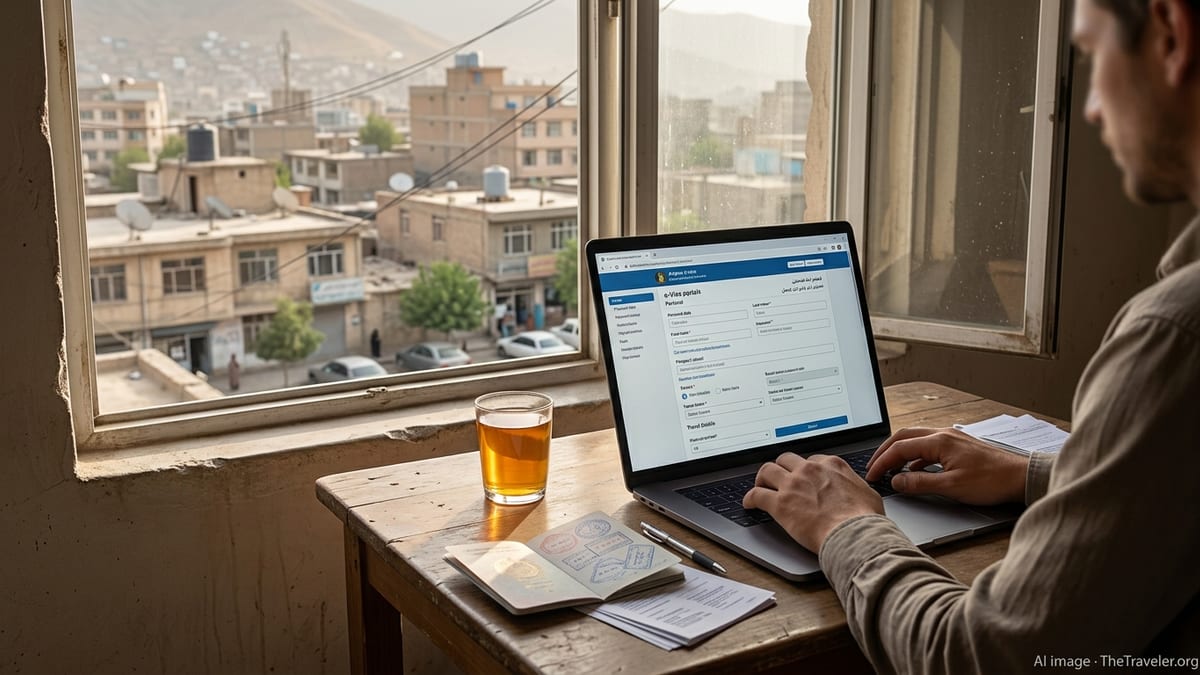
Digital Gateways Replace Paper Trails
Publicly available information indicates that Afghan authorities have consolidated visa processing into a central online portal, allowing travelers to initiate applications digitally rather than through fragmented paper-based procedures at individual embassies. The system is described as a single entry point where applicants submit basic personal data, passport scans and travel details before finalizing their request at designated diplomatic missions.
According to travel advisories and independent visa assistance services, the platform supports several visa categories, including tourism, business and family visits. Processing times reported by travel planners generally range from a few days to a couple of weeks, a marked improvement on previous practices that could require repeated in-person visits and lengthy waits at consulates.
The e-visa process still depends on in-person verification at Afghan embassies or consulates, but the pre-registration step online is seen as a significant shift toward digitization. It reduces the paperwork carried by travelers, standardizes the data collected by consular offices and makes it easier for visitors to track the status of their applications before committing to flights.
While technical details of the back-end system are not widely disclosed, anecdotal accounts from tour organizers and visa facilitators suggest the portal has become the default route for travelers whose trips are approved, replacing the ad hoc arrangements that emerged after many embassies scaled back their operations in 2021.
A Bid to Reignite Tourism and Spur Local Economies
Tourism in Afghanistan remains extremely limited, but niche operators and regional analysts describe the e-visa reforms as part of a broader effort to draw in small numbers of adventure travelers, heritage enthusiasts and diaspora visitors. By making visa applications more predictable and partially online, the authorities appear to be targeting higher-spending, pre-arranged trips that can channel money directly into local guesthouses, drivers and guides.
Travel-planning guides published in early 2026 note that organized tours now typically bundle visa support with accommodation, transport and local security assessments. In this model, an approved e-visa becomes a key checkpoint in an itinerary that is often fully prepaid, offering Afghan businesses firmer revenue expectations while giving visitors a clearer sense of costs before departure.
For communities around established tourism hubs such as Kabul, Herat and Bamiyan, any growth in foreign arrivals has the potential to revive sectors that once depended on visitors, including small hotels, handicraft markets and local transport. Even modest increases in international tourism can have an outsized impact in areas where alternative employment is limited and seasonal.
Economic observers caution, however, that the scale of tourism will likely remain modest so long as stringent security warnings persist from many foreign governments. The e-visa system is therefore seen less as a mass-tourism catalyst and more as a tool for gradually rebuilding a specialized visitor base while capturing better data on who is entering the country and for what purpose.
Showcasing Historic Cities and Cultural Landmarks
Afghanistan’s heritage sector, from Islamic architecture to ancient Buddhist sites, features prominently in travel materials that describe the potential of the new e-visa framework. Guides and tour companies emphasize that easier pre-clearance for entry could support renewed interest in historic centers such as Herat, with its celebrated Friday Mosque, and the old city of Kabul, where traditional bazaars and hillside neighborhoods still draw regional visitors.
In central Afghanistan, the landscapes around Bamiyan continue to be presented as a focal point for cultural tourism. Although the monumental Buddha statues were destroyed in 2001, the cliffside niches, surrounding valleys and lakes remain central to itineraries marketed by specialist operators. The e-visa system is portrayed as removing at least one layer of uncertainty for travelers contemplating these long-haul journeys.
Smaller destinations, including caravan towns along former Silk Road corridors and remote mountain villages, are also cited in promotional material that links streamlined entry with community-based tourism. Organizers argue that reliable visa procedures make it easier to schedule multi-stop trips that bring homestay income to households outside the major cities.
Museums, shrines and craft workshops in urban centers are similarly tied to the narrative of a more accessible Afghanistan. With online visas reducing the need for last-minute consular visits, visitors who do proceed with their trips are freer to focus on itinerary planning that highlights historic architecture, textiles and traditional music.
Balancing Opportunity With Security and Travel Warnings
Despite the promise of the e-visa portal, most Western governments, including the United States, continue to advise against travel to Afghanistan because of security risks, limited consular support and constrained medical facilities. Public travel warnings emphasize threats such as terrorism, kidnapping and crime, and they highlight the difficulty of providing emergency assistance to foreign nationals.
Insurance providers and risk consultancies echo these concerns, often requiring additional clearances or imposing higher premiums for travelers headed to Afghanistan. As a result, the emerging tourist profile skews heavily toward highly experienced adventure visitors, regional travelers accustomed to complex environments and diaspora communities with family ties across the country.
Specialist tour operators have responded by building more comprehensive risk-management measures into their packages. These can include detailed route planning, close coordination with local partners and contingency arrangements for transport and accommodation. Industry commentary suggests that the existence of a standardized e-visa procedure makes it easier to integrate such safeguards into booking timelines, reducing last-minute uncertainty.
Analysts note that Afghanistan’s efforts to digitize entry processes are unfolding in parallel with a wider global shift toward electronic visas and travel authorizations. In this context, the country’s platform is seen as both a practical tool for managing who enters and a symbolic signal that it wants to remain connected to international travel flows, even as security and political conditions continue to shape who ultimately decides to visit.
Regional Visitors and Diaspora Drive Early Uptake
Reports from visa assistance agencies and regional carriers suggest that early users of Afghanistan’s e-visa pathway are primarily travelers from neighboring and nearby countries, along with members of the global Afghan diaspora returning for family visits or business. For these groups, familiarity with local conditions can offset some of the perceived risks that deter first-time tourists from further afield.
Certain nationalities have been able to benefit from temporary or limited visa exemptions and simplified procedures, according to regional travel coverage, although these policies are often time-bound and subject to change. Even when exemptions apply, the existence of an e-visa infrastructure provides a framework that can be expanded or tightened as political and security circumstances evolve.
For the Afghan diaspora, the online system can ease logistical challenges that previously required navigating consular services in third countries. By allowing applications to be initiated from abroad and completed at specific missions, the platform reduces travel and paperwork for those seeking to visit relatives, maintain property or explore investment opportunities.
Observers of regional mobility trends suggest that the long-term impact of Afghanistan’s e-visa initiative will depend on how consistently it operates, how clearly requirements are communicated and how closely it is aligned with evolving security assessments. For now, the system is emerging as a cautiously welcomed tool for the small but significant segment of travelers who remain determined to experience the country’s historic landscapes and urban heritage firsthand.