

More news on this day
African airlines are issuing increasingly stark warnings that a convergence of jet fuel volatility, aircraft parts shortages and geopolitical shocks is putting regional air connectivity and trade flows at growing risk.
Get the latest news straight to your inbox!
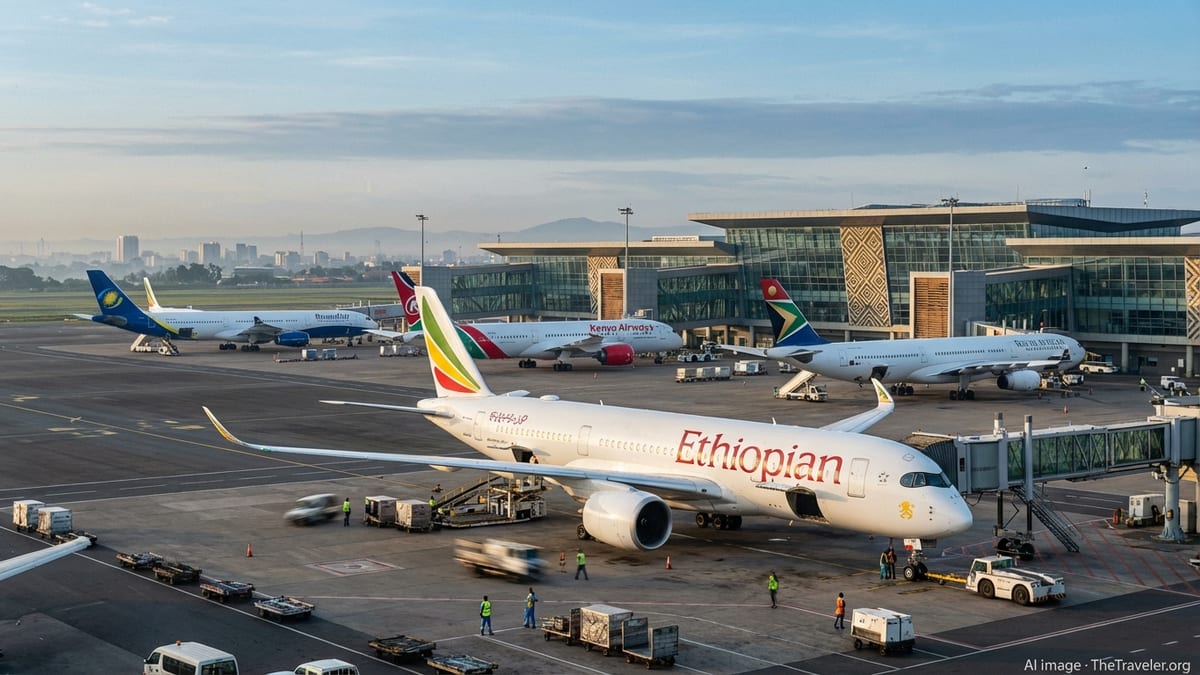
Fuel Market Turmoil Raises Risk of Route Cuts
Published coverage across Africa indicates that recent turmoil in global oil markets is filtering quickly into aviation, with airlines warning that sustained pressure on jet fuel supplies could force schedule reductions. The war involving Iran and disruptions around the Strait of Hormuz have pushed benchmark crude prices sharply higher, tightening supplies of refined products that are critical to African hubs reliant on imported fuel.
Reports from Nairobi and other regional centers describe airlines facing shorter planning horizons for fuel procurement, with some airports operating on thinner stock buffers. Industry analysts cited in regional business outlets say that carriers with limited hedging capacity and weaker currencies are particularly exposed, since they must pay for fuel in dollars while generating most of their revenue in local currencies.
Recent commentary from travel and aviation specialists has highlighted Kenya as one of the most vulnerable markets, given the importance of Nairobi’s Jomo Kenyatta International Airport as a transfer hub for East and Central Africa. Local media have reported warnings that a tightening jet fuel balance could disrupt services just as peak tourism and business travel seasons approach, potentially affecting connections across the continent and beyond.
Airlines and airport operators are responding by exploring contingency measures such as increased fuel uplift at alternative airports, tactical schedule adjustments and closer coordination with suppliers. However, industry observers note that if geopolitical tensions remain elevated through 2026, African carriers may have limited room to shield passengers from network disruptions and higher fares.
Spare Parts Bottlenecks Ground Aircraft and Squeeze Finances
Beyond fuel, persistent shortages of aircraft spare parts and maintenance slots are emerging as a key source of disruption for African airlines. Sector analyses released over the past year show that global supply chain problems, which began during the pandemic and were compounded by subsequent conflicts, continue to delay deliveries of engines, components and avionics.
Kenya Airways has become a prominent example of how these pressures translate into operational and financial strain. According to the carrier’s 2025 financial filings and accompanying commentary reported by Kenyan business outlets, multiple widebody aircraft have been grounded for extended periods because of delayed engine overhauls and parts availability. Publicly available information shows that these groundings, combined with higher maintenance costs, contributed heavily to the airline slipping back into losses despite solid demand.
Similar concerns have been raised in industry coverage about other African carriers, including airlines that had been planning fleet expansions or refurbishments to capture rising passenger numbers. With manufacturers and maintenance providers facing their own backlogs, African operators often find themselves at the back of the queue compared with larger global airlines that place higher-volume orders and wield greater bargaining power.
Analysts following the region note that grounded aircraft effectively remove capacity from already thinly served markets, constraining trade and tourism. Airlines must then deploy older, less fuel-efficient jets for longer than intended, which further increases fuel burn and undercuts efforts to improve cost structures and environmental performance.
Network Reliability Under Pressure at Key African Hubs
Operational upheavals at major African hubs are adding another layer of risk to regional supply chains. Nairobi’s main airport has experienced a series of recent disruptions, including labor actions and weather-related incidents that have led to significant delays and diversions. Publicly available reports show that a workers’ strike earlier this year caused hours-long delays and cancellations, while severe flooding in March disrupted flight operations and forced rerouting to coastal airports.
For airlines that use Nairobi as a connecting hub for cargo and passengers, such incidents have spillover effects across their networks. Missed connections can delay the movement of time-sensitive freight, including pharmaceuticals, perishables and high-value manufacturing inputs that rely on predictable air links. Travel media and regional logistics publications indicate that freight forwarders have begun advising clients to build in greater time buffers and consider alternative routings where possible.
Other hubs face comparable vulnerabilities. Reports from Southern and West Africa point to congestion, infrastructure constraints and sporadic fuel or staffing issues that can quickly cascade into multi-day backlogs. Aviation analysts caution that while individual events may appear localized, the cumulative effect is to erode the reliability that global shippers expect from modern logistics chains.
In response, airlines are experimenting with more point-to-point services that bypass the most congested hubs, as well as strengthening interline and codeshare arrangements to provide backup routings. However, these workarounds can increase complexity and cost, and they do not fully offset the impact when a primary hub experiences protracted disruption.
Global Supply Chain Strains Hit African Carriers Hardest
Recent research and industry reports suggest that African airlines are bearing a disproportionate share of the fallout from global aviation supply chain strains. A study released by the International Air Transport Association in partnership with a consultancy firm estimated that worldwide disruptions to aircraft manufacturing and parts supply would cost airlines billions of dollars in 2025, with emerging-market carriers among the most affected.
The African Airlines Association, in its latest annual reporting, notes that member carriers continue to grapple with constrained access to new aircraft, engine slots and critical components. The association’s public commentary stresses that while air travel demand across the continent has largely recovered from the pandemic, the capacity needed to meet that demand is lagging because fleets cannot be expanded or modernized as quickly as planned.
Observers point out that these headwinds come on top of long-standing structural challenges, including limited access to affordable financing, fragmented regulatory regimes and infrastructure gaps at smaller airports. Combined, these factors mean that when global supply chains falter, African airlines have fewer buffers and limited leverage to secure priority treatment from manufacturers and suppliers.
Some carriers are seeking to mitigate these risks by investing in in-house maintenance capabilities, diversifying supplier bases and joining regional pooling arrangements for spare parts and technical expertise. Industry coverage also highlights growing interest in dedicated African maintenance, repair and overhaul events and partnerships, which aim to shorten lead times and keep more aircraft in service.
Implications for Trade, Tourism and Regional Integration
The warning signals from African airlines have implications that reach far beyond the aviation sector. Air transport is a critical backbone for the African Continental Free Trade Area, cross-border investment and fast-growing tourism corridors. Any sustained degradation in reliability or capacity threatens to slow economic integration efforts and raise the cost of doing business across borders.
Logistics specialists quoted in regional business media note that sectors such as horticulture, pharmaceuticals and technology are especially exposed. These industries rely on predictable air freight to move temperature-sensitive goods, medical supplies and high-value electronics. If airlines are forced to trim frequencies, downgrade aircraft or reroute via longer paths because of fuel and spare parts constraints, shipment times lengthen and costs rise.
Tourism boards across East and Southern Africa are also watching developments closely, as potential schedule cuts during peak seasons could limit arrivals and strain already tight hospitality capacity in some destinations. Travel industry reports suggest that tour operators are increasingly building contingency plans that include flexible routing, additional transit time and stronger communication with clients about the possibility of sudden schedule changes.
Policy discussions in aviation and trade circles are turning toward resilience measures, including strengthening regional fuel storage, accelerating investment in local refining and jet fuel production, and expanding collaborative frameworks for maintenance and training. While such initiatives will take years to fully materialize, analysts argue that the current wave of disruptions has made clear that African airlines, and the economies they serve, can no longer afford to treat supply chain resilience as a secondary issue.