

More news on this day
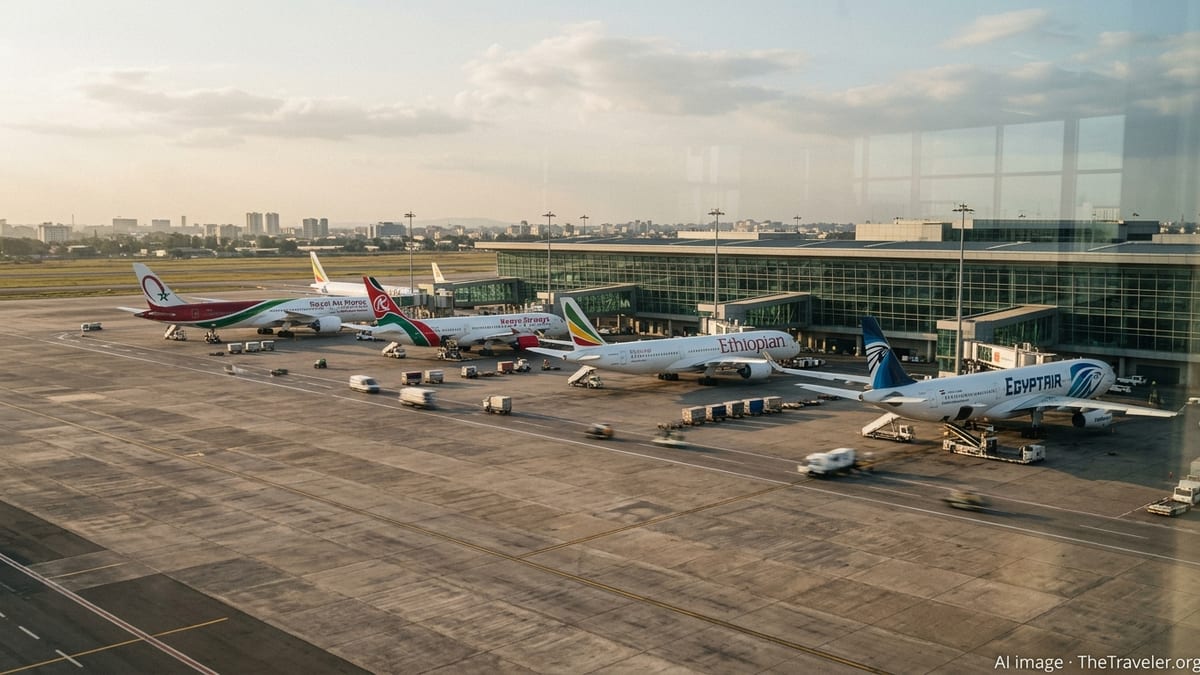
Key African aviation markets are accelerating fleet expansion and route growth as the continent edges toward fuller implementation of the Single African Air Transport Market, setting the stage for a post-liberalisation travel boom led by carriers in Morocco, South Africa, Kenya, Ethiopia, Egypt and Tanzania.
Get the latest news straight to your inbox!
South Africa Moves Closer to the Liberalisation Core
South Africa’s decision to align more closely with the Single African Air Transport Market is reshaping expectations about future travel flows in the southern cone of the continent. Publicly available policy updates and regional aviation analyses indicate that the government has been edging toward a more open-skies posture after years of cautious engagement, encouraged by a rebound in international arrivals and pressure from tourism and trade lobbies to cut travel times within Africa.
Industry data for 2024 and 2025 show that South Africa remains one of Africa’s top three passenger markets by volume, alongside Egypt and Morocco, with more than 20 million passengers moving through its airports annually. Reports from African airline associations highlight that Johannesburg and Cape Town continue to function as major regional gateways, even as rival hubs in Addis Ababa, Nairobi and Cairo gain ground. The prospect of deeper SAATM alignment is therefore viewed by analysts as a way to protect South Africa’s hub status while integrating more seamlessly with pan-African networks.
South African Airways, regional carrier Airlink and low-cost operators have been gradually rebuilding networks after restructuring and pandemic-era contractions. Observers note that a more liberalised regime would make it easier for these airlines to expand intra-African links, feed long-haul services and pursue code-share arrangements with Royal Air Maroc, Kenya Airways, Ethiopian Airlines and EgyptAir, all of which are sharpening their focus on cross-continent connectivity.
Royal Air Maroc Extends Morocco’s Reach Across the Continent
Morocco has emerged as one of the continent’s most assertive aviation players, with Royal Air Maroc at the centre of government-backed growth plans. According to recent airline and industry reports, the carrier handled more than 7 million passengers in 2024 and has outlined a long-term objective to quadruple its fleet to around 200 aircraft by the mid-2030s, supported by state investment and airport expansion to lift national capacity toward tens of millions of passengers per year.
Summer season schedules and 2025–2026 planning updates show Royal Air Maroc ramping up seats across more than 90 destinations on four continents, with Africa singled out as a strategic priority. Capacity to African destinations has risen by double digits compared with pre-pandemic baselines, helped by new routes and frequency increases from Casablanca and Marrakech into West, Central and Southern Africa. Additional widebody and single-aisle aircraft, including new-generation Boeing 737 variants and chartered Airbus A320s, have been deployed to absorb demand spikes linked to major events and year-end travel peaks.
Analysts describe Morocco’s strategy as an effort to consolidate its role as a North African bridge between West Africa, Europe and the Americas. As SAATM progresses and more traffic rights are liberalised, this positioning could allow Royal Air Maroc to capture flows that might otherwise route through Gulf or European hubs, particularly for journeys between francophone West Africa, South Africa and emerging tourism destinations in East Africa.
Kenya Airways and Ethiopian Airlines Deepen East African Hub Power
East Africa’s two biggest network carriers, Kenya Airways and Ethiopian Airlines, are widely viewed by route planners as central beneficiaries of a post-SAATM travel boom. The latest schedules and seat data place both airlines among Africa’s top performers by one-way departing seats, with Ethiopian Airlines typically leading the continent and Kenya Airways ranking within the top tier of carriers during peak seasons.
Nairobi’s Jomo Kenyatta International Airport and Addis Ababa Bole International Airport function as high-frequency connecting hubs linking southern Africa, the Indian Ocean islands, West Africa, Europe, the Middle East and Asia. Industry reports indicate that both carriers have continued to open new intra-African routes and add capacity on trunk sectors such as Nairobi–Johannesburg, Addis Ababa–Cape Town and Addis Ababa–Cairo, tightening a web of links that allows passengers to make one-stop journeys across regions that previously required backtracking through Europe.
Fleet investment has underpinned this growth. Ethiopian Airlines has continued taking delivery of widebody and narrowbody aircraft, while Kenya Airways has focused on optimising its Boeing 787 and Embraer narrowbody fleets to balance long-haul services with high-frequency regional flying. Aviation analysts argue that as more African states fully embrace SAATM principles, these two carriers are positioned to funnel additional traffic through their hubs, particularly business and conference tourism as continental trade initiatives gain traction.
EgyptAir and North–South Flows Through Cairo
Egypt’s aviation sector has posted some of the continent’s highest passenger numbers in recent years, and EgyptAir has responded with a measured but steady increase in capacity. Regional traffic data for 2024 show Egypt leading Africa by total passenger throughput, with Cairo International Airport acting as a mega-hub that connects North Africa, the Middle East, Europe and Asia. EgyptAir’s expanding African footprint is becoming more evident in schedules that add frequencies and new points south of the Sahara.
Connections from Cairo to Nairobi, Addis Ababa, Johannesburg and key West African capitals have been strengthened in successive timetable seasons, improving same-day travel options for both business and leisure passengers. Publicly available information shows that EgyptAir has also been integrating African routes more deeply into its alliances and partnerships, enabling ticketing across a larger network that includes Royal Air Maroc, Kenya Airways and Ethiopian Airlines as both competitors and occasional partners.
Industry observers note that Egypt stands to benefit significantly from a more liberalised African market. As SAATM unlocks additional fifth-freedom opportunities on transcontinental routes, Cairo’s geographic position at the crossroads of Africa, Europe and the Middle East could turn EgyptAir into an even more prominent north–south connector for travelers bound for East and Southern Africa, including South Africa’s main cities and Tanzania’s tourism gateways.
Tanzania and Regional Players Ride Rising Safari and Beach Demand
Tanzania, though smaller in fleet size than the continent’s largest carriers, has been gaining attention as a fast-rising tourism hotspot whose air connectivity is improving. Publicly available traffic figures show sustained growth through Kilimanjaro, Dar es Salaam and Zanzibar airports, driven by safari tourism in the north and beach tourism along the Swahili coast and islands. New and expanded services from Kenya Airways, Ethiopian Airlines and EgyptAir, as well as Royal Air Maroc’s broader African connectivity, are making multi-country itineraries easier to plan.
Several carriers have announced additional frequencies to Tanzania over the past two years, particularly during the Northern Hemisphere winter and peak safari seasons. Observers point to increased non-stop and one-stop options from Johannesburg, Nairobi, Addis Ababa and Cairo as evidence that airlines are betting on continued demand for combined city, beach and wildlife trips spanning Morocco, Egypt, Kenya, Ethiopia, Tanzania and South Africa.
As African airline associations report gradual increases in intra-African seat capacity, even modest gains on routes into Tanzania are seen as strategically important. They give network carriers more flexibility in designing circular routings and help distribute tourist flows more evenly across the continent, rather than concentrating them solely in long-established hubs.
A Continent-Wide Capacity Surge Sets Up a New Competitive Phase
Across the continent, African Airlines Association updates and independent capacity analyses underline a broader trend: African carriers are collectively adding seats and reopening or launching routes at a pace that now surpasses many pre-pandemic benchmarks. Data for 2024 and 2025 show strong growth in both capacity and demand for airlines such as Royal Air Maroc, Kenya Airways, EgyptAir and Ethiopian Airlines, which are regularly cited among the fastest-growing by available seat kilometres.
While overall African capacity has fluctuated month to month, intra-African connectivity has gradually increased, helped by new fifth-freedom routes and greater deployment of narrowbody jets on medium-haul sectors. Industry assessments suggest that as more states, including South Africa, align policies with SAATM, pent-up demand for faster, more direct travel within Africa could unlock a fresh wave of growth for carriers already scaling up.
Analysts caution that challenges remain, including infrastructure bottlenecks, high operating costs and fragmented regulation. Yet the combined expansion plans of Royal Air Maroc, Kenya Airways, Ethiopian Airlines and EgyptAir, together with renewed strategic focus from South Africa and Tanzania, indicate that African airlines intend to capture a larger share of the continent’s own travel market in the post-SAATM era, rather than leaving that opportunity to foreign competitors.