

More news on this day
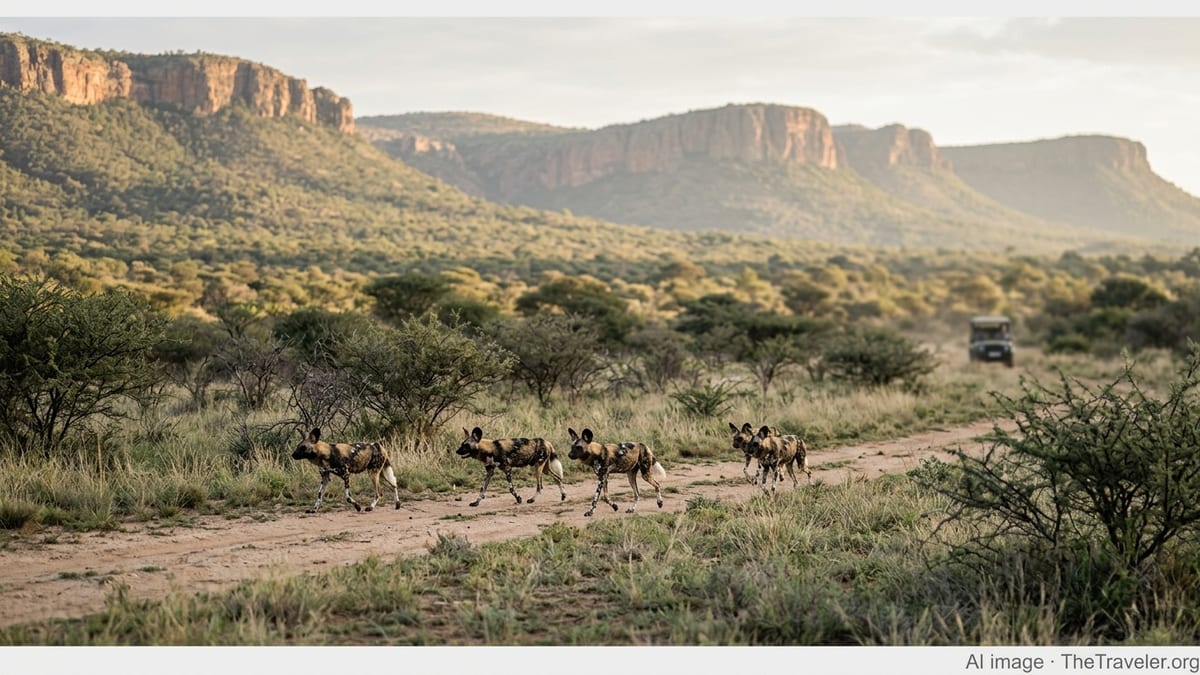
A rare, free-roaming population of African wild dogs in South Africa’s Waterberg region is emerging as a powerful draw for wildlife safari tourism, as new conservation and ecotourism initiatives turn one of the country’s most threatened predators into a headline attraction for nature-focused travelers.
Get the latest news straight to your inbox!
Endangered Predator Finds Refuge in the Waterberg
The African wild dog, also known as the painted dog, is classified as Endangered and survives in scattered subpopulations across the continent, with only a few thousand individuals remaining. In South Africa, publicly available conservation assessments describe the species as the country’s most threatened large carnivore, with just a few hundred animals spread across formal reserves and a handful of free‑roaming packs.
Within this broader picture, the Waterberg in Limpopo Province has taken on outsized importance. The region holds one of South Africa’s last free‑roaming wild dog populations outside major state parks, ranging across a mosaic of private game reserves, mixed wildlife ranches and livestock farms. Conservation organizations active in the area describe the packs as a vital top predator shaping the Waterberg’s ecosystems and as a key link in the wider southern African wild dog metapopulation.
Recent conservation reporting highlights the Waterberg as a critical stronghold for the species, even after setbacks such as the widely publicized poisoning of several animals on a private property in the district in late 2023. Despite such incidents, monitoring data and field updates point to a resilient population that continues to den, hunt and disperse across the plateau’s mountains, valleys and river systems.
Community-Based Conservation Underpins Wild Dog Recovery
The Waterberg’s wild dogs persist almost entirely on private and communal land, rather than in a single large national park. Publicly available information from regional conservation initiatives indicates that this landscape presents both a challenge and an opportunity: the same properties that lose valuable game or livestock to predators are also those that can benefit economically from wildlife tourism.
To navigate this tension, local projects have focused on intensive monitoring, rapid conflict response and financial incentives tied to ecotourism. Collaring programs using satellite and VHF technology are described as central tools, allowing conservation teams and landowners to track pack movements, issue early warnings when dogs approach calving herds, and adjust management practices before damage occurs.
Education and outreach have also become core strategies. Reports from Waterberg-based initiatives describe regular engagement with landowners, farm managers and lodge staff to improve understanding of wild dog behavior, reduce indiscriminate snaring and promote non-lethal deterrents. These efforts are often framed as part of a broader shift in the region from traditional livestock and hunting-based economies toward nature-based tourism and conservation-compatible land use.
According to recent conservation summaries, this community-focused model is gradually reframing wild dogs from perceived “problem animals” to high-value wildlife assets. While conflict has not disappeared, the growing recognition of their tourism potential is helping to build broader support for their survival.
Safari Demand Rises for “Bucket List” Wild Dog Sightings
On the tourism front, African wild dogs are fast becoming a signature species for the Waterberg. Travel and industry coverage notes that sightings of the strikingly patterned canids are a major selling point for regional reserves and lodges, particularly for repeat safari visitors who have already seen the Big Five and now seek rarer encounters.
Several properties in the greater Waterberg landscape, including well-known private reserves, now promote the chance of seeing wild dogs during game drives, especially in the dry winter months when visibility is high and denning activity concentrates the animals in certain areas. Travel trade reports indicate that some operators are building specialist itineraries around wild dog viewing, combining traditional big game experiences with targeted tracking of the packs.
Denning season, typically mid-year, is emerging as a particularly sought-after period. Conservation-led ecotourism projects facilitate tightly controlled visits to den sites, with strict viewing protocols designed to minimize disturbance while generating income for participating landowners and conservation work. Pre-booking systems and limited daily access are used to manage demand and protect the animals, but the popularity of these experiences suggests significant appetite among high-end safari travelers.
Industry analysts observe that wild dog-focused marketing is helping to diversify South Africa’s safari offer beyond iconic destinations such as the Kruger area. The Waterberg’s malaria-free status and its relative proximity to Johannesburg add to its appeal for family and short-break travelers seeking a different sort of wildlife story.
Economic Benefits Spread Across the Waterberg Landscape
As interest in wild dog sightings grows, the economic ripple effects are increasingly visible across the Waterberg. Recent regional tourism development documents describe a steady expansion of small lodges, tented camps and guiding operations catering to visitors drawn by the area’s carnivores and rugged scenery.
Unlike in single large protected areas, tourism revenue linked to wild dogs in the Waterberg is spread over many landholdings. Game reserves that host den sites or regular hunting ranges gain direct benefits through increased occupancy, premium wildlife activities and conservation levies. Neighboring livestock and mixed-use farms can participate indirectly by joining conservation agreements, allowing safe passage for the dogs and benefiting from the broader destination branding that lifts property values and local employment.
Researchers focusing on tourism economics have noted that rare species such as wild dogs can significantly raise the perceived value of a safari region. In the Waterberg, this effect is compounded by the presence of other sought-after wildlife, including elephants, rhinos and large predators, making the animals an important part of a wider nature-based economy that supports jobs from guiding and hospitality to craft production and conservation services.
Local planning and conservation strategies increasingly reference wild dogs when promoting the Waterberg as a distinctive, conservation-led tourism destination. This positioning, supported by growing international awareness of the species’ plight, is helping to channel visitor spending toward initiatives that keep the landscape intact and hospitable for wide-ranging predators.
Balancing Tourism Growth With Long-Term Species Survival
Despite the positive momentum, conservationists emphasize that the Waterberg’s wild dogs remain acutely vulnerable. Fragmented habitat, ongoing human-wildlife conflict and the ever-present risk of disease outbreaks mean that a handful of packs cannot be considered secure without continued, coordinated management across the region.
Publicly available conservation plans stress the need to maintain and expand safe movement corridors between properties, reduce the use of indiscriminate snares and poisons, and ensure that tourism activities are tightly regulated around dens and key hunting areas. There is also growing recognition that climate variability, including hotter, drier conditions, could alter prey dynamics and intensify competition with other predators over time.
Many of the Waterberg’s current initiatives are therefore framed as part of a broader, adaptive approach that links tourism, science and community engagement. Monitoring data from collared animals, visitor feedback and landowner experiences all feed into decisions about where to focus anti-snaring patrols, how to structure ecotourism activities and which properties to prioritize for new conservation agreements.
For travelers, this evolving story adds a compelling dimension to a wild dog sighting. Seeing a pack trot along a red-sand track or gather at a den is not only a rare wildlife moment but also a glimpse into a delicate conservation partnership that relies on informed tourism to keep one of Africa’s most endangered predators thriving in a shared landscape.