

More news on this day
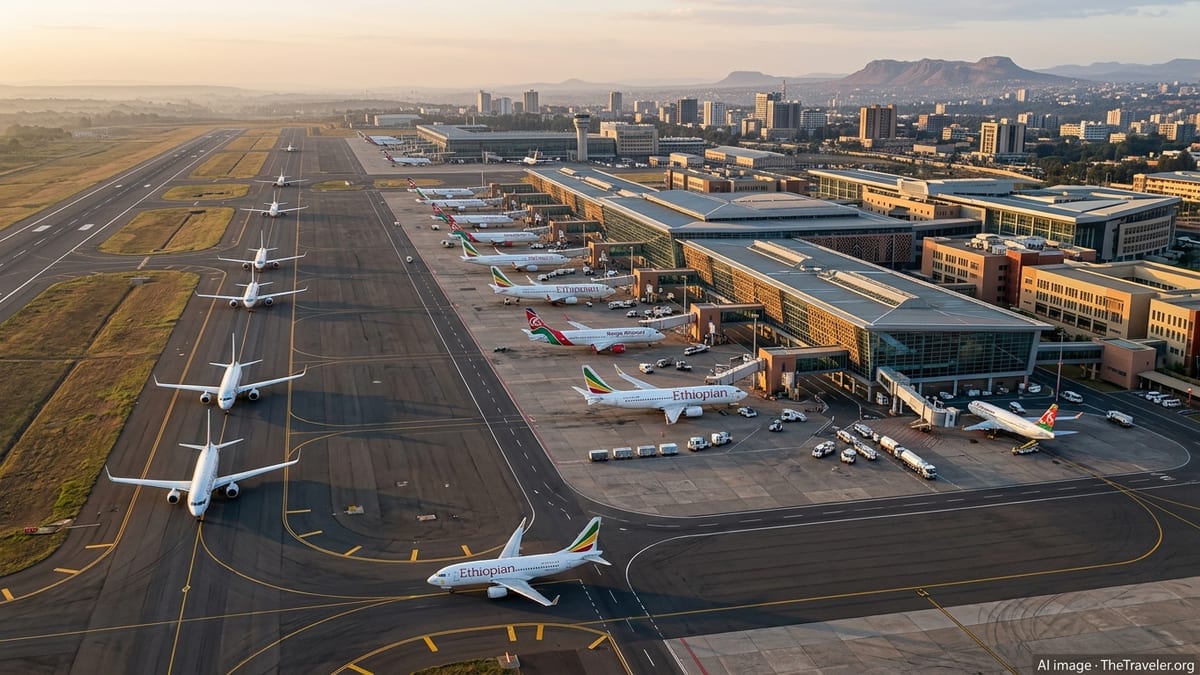
Long seen as a marginal player in global aviation, Africa is now emerging as one of the fastest-growing air travel markets, with fresh forecasts suggesting the continent could be among the most influential regions shaping global passenger flows by 2040.
Get the latest news straight to your inbox!
Forecasts Point to Explosive Passenger Growth
Recent industry outlooks from major aircraft manufacturers and aviation bodies highlight Africa as a standout growth story over the next two decades. Boeing’s latest regional projections indicate that passenger air traffic to, from, and within Africa is set to expand at around 6 percent annually through the mid-2040s, a pace that would more than triple total traffic compared with pre-pandemic levels. Similar analyses from Airbus point to sustained growth in the 4 to 5 percent range, with African airlines expected to require more than 1,000 new aircraft by the early 2040s as fleets expand and modernize.
Estimates compiled in recent IATA economic reports suggest that Africa will post the world’s third-fastest passenger market growth rate over the next 20 years, potentially surpassing 400 million annual travelers by the mid-2040s. While the continent still accounts for a small share of global traffic today, the combination of high growth rates and a low starting base means its relative weight in global aviation is set to rise steadily toward 2040 and beyond.
Underlying these numbers is a powerful demographic engine. Africa has the world’s youngest and fastest-growing population, with hundreds of millions of people expected to enter the workforce and the middle class over the next two decades. As disposable incomes rise and economies diversify, demand for business and leisure air travel is forecast to surge, lifting both domestic and international traffic.
New Routes, New Airports and the Rise of Regional Hubs
Infrastructure and network developments across the continent are reinforcing this trend. Publicly available information shows a steady pipeline of airport expansions and new terminals from West to East Africa, designed to relieve congestion and position cities as regional hubs. In Angola, for example, a new international airport serving Luanda opened in late 2024, built as a multibillion-dollar hub for passenger and cargo services and aimed at capturing more traffic between southern Africa, Europe, and the Americas.
Manufacturers’ studies also highlight how much of Africa’s potential remains untapped. An Airbus analysis released in 2024 identified dozens of unserved or underserved intra-African routes that could support profitable scheduled service, particularly linking fast-growing secondary cities. The report argues that filling these gaps, often with fuel-efficient single-aisle jets, could significantly boost connectivity and unlock new tourism and trade flows.
Airline networks are starting to respond. Established carriers such as Ethiopian Airlines and regional players in markets like South Africa, Nigeria, Kenya, and Morocco continue to add capacity and refine hub strategies. New or relaunched national airlines in countries including Sierra Leone and Somalia are entering the market with modern aircraft, often targeting regional routes first before reaching further afield. Analysts note that as more airports upgrade runways, air traffic control, and passenger facilities, these carriers gain additional options to build north-south and east-west corridors across the continent.
Policy Liberalization and the Push for a Single African Sky
Beyond aircraft orders and new terminals, policy reform is seen as crucial to sustaining Africa’s aviation boom. The African Union’s flagship Single African Air Transport Market, or SAATM, aims to liberalize air services among participating states and create a continent-wide open sky. According to African Union and aviation agency updates, nearly 40 countries have now signed on to SAATM, representing the majority of Africa’s aviation activity.
Progress has accelerated in recent years, with additional states such as Malawi joining the initiative and technical handbooks issued to guide implementation. At industry gatherings, officials from the African Civil Aviation Commission have called for faster alignment of national regulations with SAATM principles and urged governments to complete necessary legal changes by the middle of this decade. The goal is greater intra-African connectivity, more competition on key routes, and lower fares for passengers.
Advocates argue that an integrated African airspace could be transformative by 2040, allowing airlines to operate more like pan-continental carriers rather than being constrained by bilateral agreements. This would support denser networks between medium-size cities, reduce reliance on connections through non-African hubs, and strengthen the continent’s bargaining power in global aviation. Analysts point out that similar liberalization in other regions, such as Europe, has historically led to rapid growth in low-cost carriers and a sharp increase in travel volumes.
Economic Stakes: Tourism, Trade and Jobs
The projected aviation boom carries major economic implications. Studies by manufacturers and industry bodies estimate that sustained air traffic growth could support millions of additional jobs across Africa by the 2040s, not only within airlines and airports but also in tourism, logistics, manufacturing, and services tied to the wider aviation ecosystem. Airbus forecasts, for example, suggest that Africa will need tens of thousands of new pilots, technicians, and cabin crew over the next two decades to support expanding fleets.
Improved air connectivity is also closely linked to trade and investment. IATA research on air connectivity and economic growth indicates that more frequent and direct flights can boost foreign direct investment and export performance, especially for high-value or time-sensitive goods. In Africa, better links between inland production centers and coastal gateways could strengthen regional value chains in sectors from agribusiness to pharmaceuticals.
Tourism stands out as another major beneficiary. Many African destinations, from East Africa’s safari circuits to island states in the Indian Ocean, rely heavily on air access. As more routes open and aircraft technology allows longer non-stop flights, tourism boards anticipate new source markets in Asia, the Middle East, and the Americas. Observers note that by 2040, several African countries could position themselves as key stopover or multi-center holiday hubs in global itineraries, particularly if visa and border policies are aligned with aviation reforms.
Persistent Challenges Could Shape the Trajectory
Despite the upbeat forecasts, Africa’s path to aviation dominance by 2040 is far from guaranteed. Industry briefings from IATA and regional regulators emphasize that airline profitability across the continent remains fragile, with thin margins and exposure to currency volatility, high fuel costs, and infrastructure fees. In several markets, airlines also face difficulties repatriating revenues due to foreign exchange shortages and capital controls, which can deter investment and fleet decisions.
Infrastructure gaps remain another constraint. An aviation infrastructure gap analysis prepared for African stakeholders in recent years points to deficiencies in airport capacity, air navigation systems, and safety oversight, particularly outside major hubs. While many governments are investing in upgrades, implementation can be slow, and financing large-scale projects is challenging. If infrastructure fails to keep pace with demand, congestion and reliability issues could cap growth.
There are also questions about how quickly policy ambitions will translate into day-to-day operational freedoms. While SAATM has gained wide political support, practical liberalization in areas such as traffic rights, competition rules, and charges still varies from country to country. Academic research into intra-African connectivity suggests that many airlines remain focused on their home markets, with limited cross-border cooperation, which can limit network efficiency.
Even with these headwinds, the broad direction of travel appears clear. Africa starts from a low base compared with more mature regions, but a confluence of demographics, economic development, policy reform, and infrastructure investment is now pulling its aviation sector into the global spotlight. If current projections hold, by 2040 the continent will not only be one of the fastest-growing aviation markets but also a central player in shaping how and where the world flies.