

More news on this day
African carriers are staging one of the fastest comebacks in global aviation, with Ethiopian Airlines, Kenya Airways and South African Airways spearheading a surge in passenger traffic as restored routes to Asia, Europe and the Middle East help push the continent’s growth well ahead of the world average.
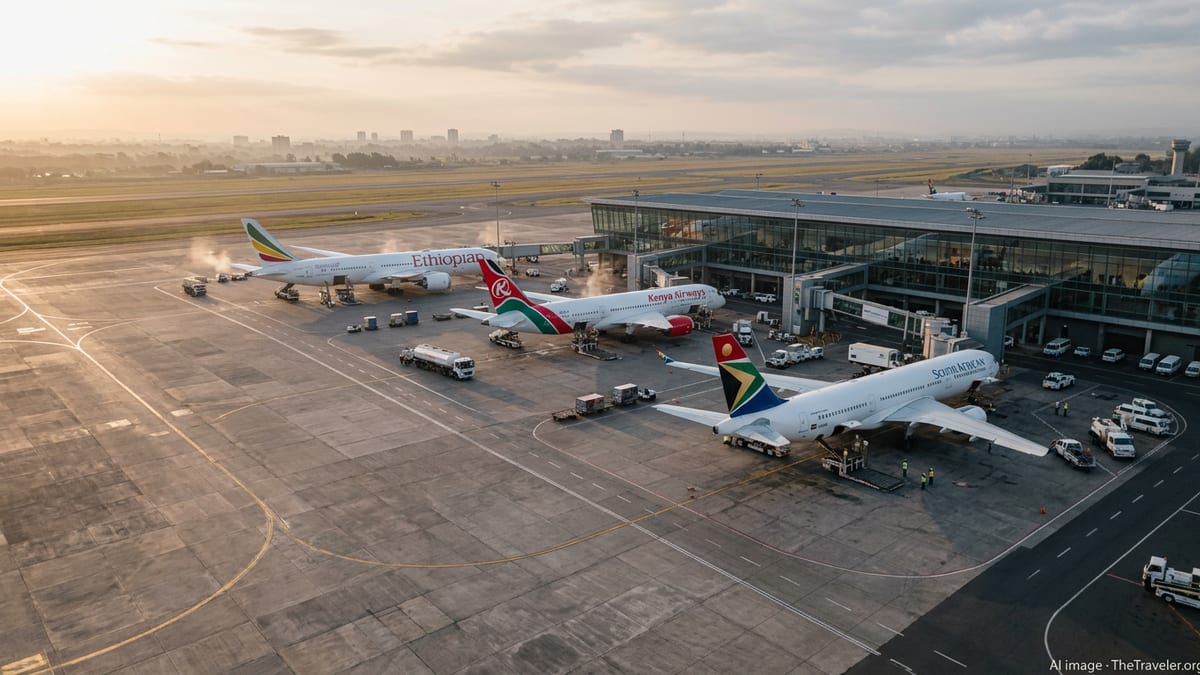
African Carriers Outpace Global Passenger Recovery
Latest traffic snapshots from industry bodies point to Africa as one of the world’s fastest growing air travel regions, with international passenger demand for African airlines expanding at a pace that significantly outstrips the global average. While worldwide passenger numbers are climbing steadily, African growth has been running in high single to double digits, helping to drive what analysts describe as an effective 17.9 percent leap in global passenger volumes attributable to African carriers’ resurgence and network rebuilding.
In 2025, African passenger demand reached record levels, with revenue passenger kilometres rising faster than capacity as airlines filled more seats and pushed load factors to new regional highs. That momentum is continuing into early 2026, supported by a combination of pent-up leisure travel, rebounding business links and a structural shift toward Africa as a connecting hub between East and West.
Despite accounting for a modest share of global traffic, Africa’s contribution to incremental growth has become disproportionately large. Aviation consultancies note that, as North American and European markets mature, much of the marginal expansion in global passenger numbers now comes from regions such as Africa where liberalisation, investment and fleet renewal are unlocking suppressed demand.
Ethiopian Airlines Bets Big on Global Hub Ambitions
Ethiopian Airlines remains the continent’s standard-bearer, consolidating its position as Africa’s largest carrier by passenger numbers while pressing ahead with an aggressive long-haul strategy. Its Addis Ababa hub has been rebuilt as a key crossroads between Africa, Europe, the Middle East and Asia, offering one-stop connections between cities such as Lagos and Guangzhou, Nairobi and Istanbul, or Kilimanjaro and Paris.
The airline is also investing heavily in future capacity. In January 2026, Ethiopia broke ground on the long-planned Bishoftu International Airport, a mega-hub southeast of Addis Ababa designed to handle up to 100 million passengers a year once fully developed. Officials present the project as central to Ethiopian’s ambitions to compete with established Gulf and European giants for transfer traffic linking Asia, Africa and Europe.
On the network side, Ethiopian has been steadily rebuilding and expanding routes cut during the pandemic, bringing back widebody services to major Asian gateways and adding frequencies into Europe and the Middle East. New and restored flights into destinations such as Beijing, Mumbai, Dubai and key European capitals are feeding more connecting traffic through Addis Ababa, broadening travel options for African passengers and strengthening the carrier’s role as a global connector.
Industry analysts say Ethiopian’s growth illustrates how African airlines can leverage geography and scale. Sitting near the centre of the Africa–Europe–Asia triangle, the carrier can operate efficient one-stop itineraries that rival Middle Eastern hubs, particularly for secondary African cities that previously relied on foreign airlines for long-haul links.
Kenya Airways Rebuilds Its Long-Haul Network
Kenya Airways, which has undergone a prolonged restructuring, is now pivoting back to growth with a focus on restoring long-haul connectivity and deepening partnerships. Nairobi’s Jomo Kenyatta International Airport has re-emerged as an important gateway for East and Central Africa, offering onward links to Europe, the Middle East and parts of Asia.
Over the past year, the airline has reintroduced and strengthened services to European cities and Gulf hubs, capitalising on resurgent tourism to Kenya and rising trade flows with the Middle East and India. The carrier has also been active in regional diplomacy and aviation initiatives, operating high-profile flights within Africa that support events and policy drives aimed at liberalising intra-African skies.
At the same time, Kenya Airways is positioning itself as a test bed for sustainable aviation fuels and next-generation operations on the continent. Working with international alliances and local partners, the airline has committed to building local SAF production capacity by 2026, a move that could help insulate African carriers from volatile global fuel markets while supporting climate goals.
By knitting together regional and long-haul routes, Kenya Airways is helping to funnel more African travellers into intercontinental networks, contributing to the broader continental uplift in passenger numbers and reinforcing Nairobi’s role as a strategic stopover between Africa, Europe and the Gulf.
South African Airways Returns to the Long-Haul Stage
South African Airways, once a symbol of the continent’s aviation struggles, is cautiously reclaiming its place on the international stage after a deep restructuring. Having relaunched core regional services in Southern Africa, the carrier has moved to restore long-haul links that are critical for both tourism and trade.
The airline has already resumed flights to key intercontinental destinations including Sao Paulo and parts of the Middle East, with Johannesburg acting as the main hub. These restored services reconnect South Africa to major economic partners while also creating one-stop options into the wider African network via Johannesburg and Cape Town.
Codeshare and interline agreements have been central to SAA’s strategy, allowing the airline to plug back into global distribution systems and offer passengers access to onward flights across Europe, Asia and North America. Enhanced cooperation with Gulf carriers in particular is rebuilding the flow of visitors and business travellers between South Africa, the Middle East and South and East Asia.
Although still smaller than before its restructuring, South African Airways is contributing to the continent’s rapid growth in international passenger demand, providing much-needed capacity on trunk routes while gradually restoring confidence in the country’s flag carrier brand.
New Routes to Asia, Europe and the Middle East Transform Connectivity
Across the continent, restored and newly launched flights to Asia, Europe and the Middle East are reshaping how Africans travel and how international visitors reach the continent. Ethiopian Airlines has reinstated and expanded services to major Asian hubs, while Kenya Airways and South African Airways have stepped up frequencies to European capitals and Gulf gateways that serve as onward bridges to South and East Asia.
This restoration of long-haul capacity is particularly visible on corridors linking East Africa to the Gulf, North and Southern Africa to Europe, and pan-African hubs to India and China. New and resumed flights have reduced journey times, cut the need for multiple stopovers and opened up more competitive fares on routes that were once dominated by a handful of foreign carriers.
The ripple effects are being felt in tourism, trade and investment. Beach destinations along the Indian Ocean coast, safari circuits in East and Southern Africa and business centres such as Nairobi, Addis Ababa and Johannesburg are all reporting higher international arrivals. Improved air links are also supporting the growth of Africa’s technology and services sectors, which depend on fast, reliable connections to markets in Europe, the Gulf and Asia.
As airlines respond to demand, governments and airport operators are racing to upgrade infrastructure, from runway extensions and terminal refurbishments to entirely new hub projects. With African passenger traffic forecast to more than double over the next two decades, the current surge in routes and capacity is widely seen as the early phase of a longer-term aviation revolution that is pulling the continent closer into the mainstream of global air travel.