

More news on this day
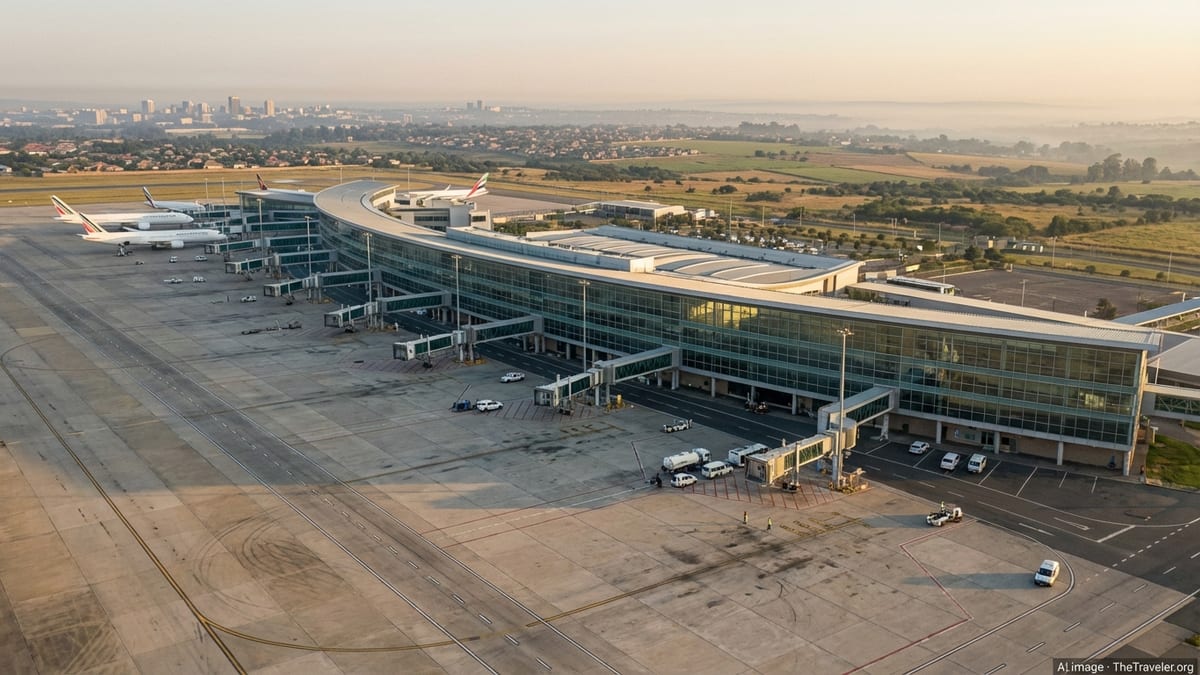
Across Africa, billions of dollars have been poured into new terminals and runways meant to announce the continent’s arrival as a rising aviation powerhouse. Yet from Lagos to Nairobi and Durban, many of these airports are operating at barely half their designed capacity, a stark mismatch that is reshaping debates over economic growth, regional integration and the future of air travel in one of the world’s fastest-growing regions.
A Post-Pandemic Recovery That Misses the Runway
Global air travel has roared back from the pandemic, with passenger volumes worldwide now close to, and in some cases above, 2019 levels. But Africa remains a stubborn outlier. The continent accounts for just over 2 percent of global air passenger traffic, and in many markets volumes are still well below pre-Covid benchmarks. Industry analysts estimate that, on average, African international and domestic terminals are handling roughly half of the passengers they were built to accommodate, leaving check-in halls conspicuously spacious and runways quieter than their designers anticipated.
Passenger data released by the International Air Transport Association underscores the problem. While global traffic in late 2023 was at roughly 99 percent of November 2019 levels, African carriers recorded significantly lower load factors than every other region. Planes serving African routes were, on average, around 70 percent full, compared with more than 80 percent in North America and Europe. That weaker demand feeds directly into the underuse of airport infrastructure across the continent, undermining the business case for ambitious expansion projects that governments and investors once saw as symbols of modernity and national pride.
The imbalance is not uniform. Busy hubs such as Addis Ababa, Cairo and Johannesburg have seen steady traffic growth and are again nudging toward capacity constraints during peak hours. But away from these giants, a long list of regional and secondary airports, from Port Harcourt and Enugu in Nigeria to Kisumu in Kenya and secondary cities in South Africa, are cycling through days where only a handful of scheduled flights arrive and depart. The result is an aviation map where a few nodes are congested while the broader network languishes, leaving huge pockets of the continent effectively under-connected by air.
Industry executives warn that without a stronger rebound in intra-African travel and trade, this lopsided recovery could harden into a structural drag. Airports that were conceived as engines of growth risk becoming expensive fixed costs, drawing scarce public funds for maintenance and security while delivering only a fraction of their intended economic return.
Overbuilt or Underserved: How the Capacity Gap Emerged
The current crisis traces back to an investment wave that began well before the pandemic. Throughout the 2000s and 2010s, African governments embraced airport construction as a visible marker of development. New terminals rose in cities such as Dakar, Accra, Kigali and Maputo, often financed through a combination of sovereign borrowing, public-private partnerships and concessional loans from foreign lenders. Forecasts at the time projected sustained growth in passenger numbers, buoyed by rising middle classes, tourism and regional integration efforts.
In reality, those forecasts collided with persistent structural obstacles. High ticket prices, driven by taxes, airport charges and limited competition on many routes, kept air travel out of reach for large segments of the population. Slow progress on implementing continent-wide initiatives to liberalize skies and harmonize regulations curbed the expansion of competitive intra-African routes. The pandemic then delivered a sudden demand shock that many airports have yet to fully recover from, leaving terminals that were designed for millions of passengers handling only modest flows.
The result can be seen in the utilization ratios of airports large and small. Modern facilities in Nigerian cities such as Abuja and Lagos have capacity for far more daily movements than they currently host, while upgraded regional fields in countries from Tanzania to Angola report long stretches of their schedules unfilled. In South Africa, secondary airports that saw strong growth in the mid-2010s are still climbing back from the collapse in traffic during lockdowns, even as passenger numbers gradually rise again. Across the continent, planners are quietly revising timelines for expansion phases that once seemed urgent.
Critics argue that some of these projects were overbuilt from the start, guided by political timing rather than robust demand modeling. Supporters counter that African policymakers had little choice but to build for the future, given the long lead times required for aviation infrastructure and the continent’s youthful demographics. The tension between these views is now playing out in budget negotiations as finance ministries weigh whether to allocate fresh money for airport upgrades or to focus on getting better use out of the capacity already in place.
Economic Promise Stalled in Half-Empty Terminals
For many African cities, an airport is more than a transport facility. It is a planned catalyst for investment zones, logistics corridors and tourism clusters. When terminals run at fifty percent of their design capacity, those broader development visions also stall. Duty-free shops and food outlets see fewer customers than expected, undermining the commercial revenue streams that airport operators rely on. Hotel projects conceived around anticipated passenger flows are delayed or scaled back, and business parks envisioned on airport peripheries struggle to attract tenants.
The opportunity cost is especially acute in regions that hoped to leverage airports as multimodal logistics hubs. Africa’s share of global air cargo remains small, and underutilized passenger terminals often mean underused belly-hold capacity on aircraft, making it harder to establish reliable supply chains for high-value exports such as fresh produce, pharmaceuticals and electronics. Where planned cargo terminals sit largely idle, exporters turn back to slower and less reliable surface routes, eroding the competitiveness gains that air logistics were meant to provide.
Local employment is also affected. While airport construction spikes jobs in the short term, sustainable employment depends on ongoing operations and ancillary services. When passenger numbers lag, airport authorities are forced to streamline staffing levels, and private concessionaires delay hiring. Young people trained for aviation and tourism careers find fewer openings than promised, exacerbating frustrations in cities where unemployment is already high.
Yet the underuse of capacity also represents a latent asset. Economists point out that unlike congested hubs in Europe or Asia, many African airports have room to accommodate sharp growth without significant additional capital spending. If policy reforms and targeted investments can unlock demand, the existing network could quickly support higher volumes of passengers and cargo, generating the kind of economic spillovers that planners originally envisioned.
Regional Connectivity and the Slow Path to a Single African Sky
The crisis of half-empty airports is intimately tied to the continent’s fragmented air routes. Intra-African connectivity remains patchy, with passengers in many countries still forced to route via hubs in the Middle East or Europe to reach neighboring states. An ambitious effort to liberalize air services among African Union members, long promoted under the Single African Air Transport Market initiative, has advanced unevenly. A limited number of states have fully opened their markets, while others maintain restrictive bilateral agreements that limit competition and keep fares high.
Without more liberal skies, airlines lack the freedom to match capacity flexibly to demand, and new route development is slow. That in turn constrains the role that airports can play as regional connectors. Instead of acting as vibrant nodes in a continental network, many fields function primarily as spokes feeding one or two international destinations, leaving boarding gates empty for large parts of the day. This is particularly evident in landlocked countries, where airports were meant to offset the disadvantages of geography but have yet to realize that promise.
The absence of dense point-to-point connectivity has broader implications for regional integration. Business travelers face longer journey times and higher costs, discouraging cross-border investment and collaboration. Tourists find it easier to book package holidays to Europe or the Middle East than to neighboring African destinations. For landlocked economies that depend on efficient access to ports and regional markets, thin air links can blunt the impact of broader trade initiatives, including the African Continental Free Trade Area.
Industry stakeholders argue that accelerating air liberalization could quickly change the picture. Carriers that are allowed to operate more freely across borders could design route networks that make better use of existing airport capacity, turning today’s quiet terminals into vital transfer points. That would require not only political will but also regulatory harmonization and infrastructure upgrades in areas such as air traffic management and safety oversight.
Rethinking Business Models in a High-Cost Environment
Even where regulatory barriers are easing, the economics of African air travel remain challenging. Operating costs for airlines across the continent are significantly higher than in many other regions, reflecting factors such as fuel prices, maintenance costs and limited economies of scale. Airports, facing their own financial pressures from underutilization, often charge relatively high fees to airlines and passengers, further inflating ticket prices.
This cost spiral has direct consequences for capacity use. When fares are out of reach for a large share of potential travelers, demand remains concentrated among business passengers and higher-income leisure segments. That thins out load factors on many routes, prompting airlines to cut frequencies or deploy smaller aircraft, which in turn keeps terminal utilization low. It is a feedback loop that traps both carriers and airports in a low-volume, high-cost equilibrium.
To break that cycle, some operators are experimenting with new approaches. A handful of African low-cost carriers are expanding domestic and regional networks, betting that simplified service models and more efficient fleets can stimulate demand and make better use of existing infrastructure. Airport authorities, for their part, are exploring differentiated pricing, offering discounts or incentives to airlines willing to open new routes or shift operations to off-peak hours. The success of such strategies, however, will depend on parallel efforts to streamline ground handling, security and border processes so that any cost savings are not lost in procedural delays.
Financial resilience is also at stake. Airports overwhelmingly rely on a mix of aeronautical charges and non-aeronautical revenues such as retail and parking. With passenger volumes depressed, both streams are under strain, raising questions about how long some facilities can cover operating and debt-service costs. Analysts warn that without careful restructuring, some underused airports may need to be recapitalized or even partially privatized, reshaping ownership models that have traditionally been heavily state dominated.
From Underuse to Innovation: New Roles for African Airports
While underutilization is a problem, it is also prompting creative thinking about how airports can serve broader roles in their communities. In several countries, authorities are looking at ways to leverage spare capacity for training, maintenance and technology testing. Quiet terminals and runways provide ideal conditions for aviation academies, drone operations and emergency-response drills, all of which can build local capabilities and generate incremental revenue.
Another frontier is the integration of airports into regional logistics and manufacturing chains. As investors scout locations for light assembly plants and distribution centers, airports with available land and capacity can pitch themselves as multimodal hubs linked to road and rail. The expansion of e-commerce across African markets is reinforcing this opportunity, with demand rising for reliable, time-sensitive freight channels that underused cargo facilities are well positioned to provide, if regulatory and customs bottlenecks are addressed.
There is also growing interest in using existing airport infrastructure to advance sustainability goals. Some operators are installing large-scale solar arrays on terminal roofs and unused land, aiming to cut energy bills and demonstrate environmental leadership. Others are rethinking ground transport access, improving public transit links and setting aside space for electric-vehicle charging in a bid to reduce the carbon footprint of passenger journeys. These initiatives may not immediately fill empty departure halls, but they help position airports as future-ready infrastructure in an era of climate-conscious travel.
Longer term, as technology reshapes aviation, African airports with available capacity could become test beds for innovations such as advanced air mobility, unmanned cargo flights and smarter terminal operations. By engaging with manufacturers and regulators early, operators hope to ensure that today’s quiet gates become tomorrow’s gateways for cutting-edge services rather than relics of an over-optimistic building spree.
Future Air Travel Potential and the Race to Catch Up
Despite today’s challenges, few in the industry doubt Africa’s long-term aviation potential. Demographic trends point toward a rapidly growing middle class and expanding urban centers, creating a large pool of future travelers if incomes rise and ticket prices fall. Tourism ministries across the continent are actively marketing new destinations, from coastal resorts to wildlife reserves and cultural heritage sites, all of which depend on reliable air links. Trade frameworks under negotiation aim to deepen intra-African commerce, which in turn would generate more business travel and air freight demand.
The key question is whether policy and investment decisions made over the next decade will position African airports to capture that growth or leave them lagging. Recovering from the current capacity mismatch will require a coordinated push on multiple fronts: accelerating air liberalization, improving the financial sustainability of airlines and airports, modernizing air traffic management and ensuring that security and border controls are efficient yet robust. Training and retaining skilled aviation professionals will be equally vital, from air traffic controllers and maintenance engineers to route planners and airport managers.
Some governments are already recalibrating their strategies. Instead of announcing new flagship terminals, they are focusing on optimizing existing assets, upgrading technology, and improving passenger experience through faster check-in, digitized processes and better integration with ground transport. In a continent where many travelers still face long journeys just to reach an airport, investments in roads, rail and urban transit are increasingly seen as inseparable from aviation policy.
Ultimately, Africa’s half-empty airports symbolize both a warning and a window of opportunity. They highlight the risks of building ahead of demand without fully tackling underlying barriers to air travel, but they also offer a ready-made platform for a more connected future. If governments, regulators and industry leaders can align around reforms that unlock affordable, reliable air services, today’s underused terminals could yet become the launchpads for a new era of regional mobility and economic integration.