

More news on this day
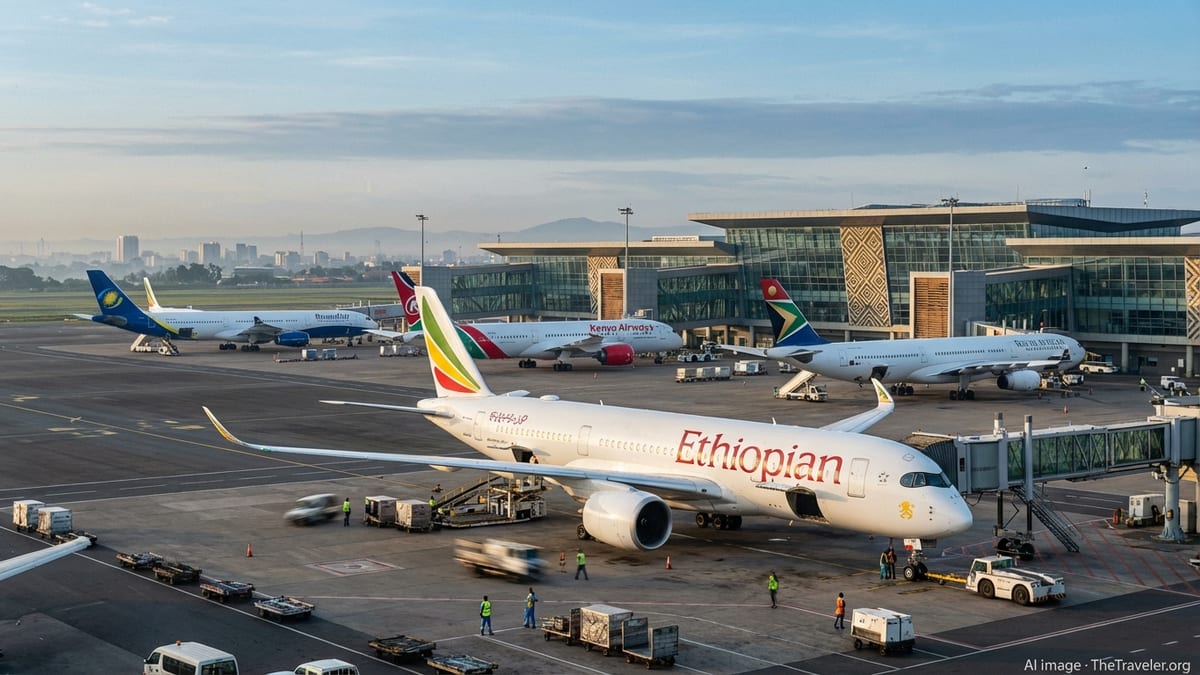
After years of turbulence triggered by the pandemic and long-standing structural challenges, Africa’s air transport industry is experiencing a powerful revival, with passenger numbers surging, new airports breaking ground and flag carriers finally returning to profit.
Passenger Traffic Surges Past Pre-Pandemic Benchmarks
Across the continent, airlines are reporting sustained growth in passenger demand as Africans and international visitors return to the skies in record numbers. Data from the African Airlines Association shows its member carriers transported more than 66 million passengers in 2024, with international routes outpacing domestic services and accounting for nearly seven in ten journeys. The rebound signals not just a recovery from the pandemic collapse but a structural shift as African carriers deepen their presence on long-haul and regional networks.
International traffic has been the standout driver of this comeback. In 2024, roughly 43 percent of passenger journeys on African airlines were on intercontinental routes, underscoring the importance of connections between African hubs and markets in Europe, the Middle East and Asia. Major aviation markets such as Egypt, Morocco and South Africa together handled more than 90 million passengers in 2024, cementing their status as gateways for both tourism and trade.
Yet the recovery is not uniform. While load factors for African airlines have climbed to the mid-70 percent range, they still lag the global average, highlighting both lingering capacity inefficiencies and the untapped potential of the continent’s growing middle class. Industry analysts say continued demand growth, if matched by smarter route planning and competitive pricing, could push African carriers closer to global performance benchmarks over the next few years.
Flag Carriers Turn the Corner on Profitability
The financial health of Africa’s airlines, long a sore point for governments and investors, is also beginning to improve. Kenya Airways, once a symbol of the sector’s fragility, has reported a dramatic turnaround, posting its first full year of net profit in more than a decade for 2024 after years of heavy losses. The carrier credits a disciplined turnaround strategy focused on operational efficiency, smart capacity deployment and a sharper focus on profitable regional and intercontinental routes.
Ethiopian Airlines, already the continent’s largest carrier by passenger numbers, has continued to consolidate its position as a global hub player, expanding frequencies to key markets and using its Addis Ababa hub to funnel traffic from across Africa to Europe, the Gulf and Asia. North African operators such as EgyptAir, Royal Air Maroc and Air Algérie have also posted strong growth in both capacity and demand, reflecting a resurgence of tourism and renewed business travel to their home markets.
These gains, however, remain fragile. Many airlines still carry heavy debt burdens from the pandemic era and earlier missteps, and several smaller national carriers remain reliant on state support. Industry consultants warn that without continued restructuring, strategic partnerships and, in some cases, privatization or consolidation, some operators may struggle to compete as traffic patterns evolve and foreign carriers increase their presence on lucrative routes.
Mega-Airport Projects Redraw the Continent’s Aviation Map
A new generation of large-scale airport projects is emerging as a physical symbol of Africa’s aviation ambitions. In Ethiopia, construction has begun on Bishoftu International Airport, a multibillion-dollar hub southeast of Addis Ababa that is designed to become Africa’s largest and one of the world’s busiest airports. The first phase, targeted for completion around 2030, is expected to handle tens of millions of passengers annually, with multiple runways and a vast terminal intended to support Ethiopian Airlines’ long-term growth plans.
Elsewhere, governments are racing to expand capacity and modernize infrastructure to match rising demand. In Somalia, work is under way on a new international airport northeast of Mogadishu, conceived to relieve pressure on the city’s constrained existing facility and provide a safer, more expandable gateway for humanitarian, business and diaspora traffic. In West and North Africa, major terminals from Dakar to Cairo have been expanded or refurbished in recent years, with upgraded runways, improved security systems and more efficient passenger processing.
Backers of these projects argue that modern airports are essential to unlocking wider economic benefits, from tourism and cargo logistics to business investment and regional integration. Critics caution that mega-hubs carry financial and environmental risks if projected traffic fails to materialize or if governance and procurement fall short. For now, though, the cranes, new runways and terminal shells rising from the ground suggest governments and investors are betting heavily on long-term demand for African air travel.
Open Skies Policies Edge Forward, But Barriers Remain
Policy reform is advancing, albeit slowly, alongside the physical building boom. The African Union’s flagship Single African Air Transport Market initiative, which aims to create a liberalized, continent-wide air services market, has continued to gain new signatories, with Malawi among the latest countries to commit. Together with earlier adopters such as Kenya, Ethiopia, Nigeria and South Africa, participating states now represent the bulk of Africa’s aviation traffic and are under pressure to translate high-level commitments into concrete regulatory changes.
Advocates say a genuinely open market could be transformative, enabling airlines to launch new routes more freely, increase frequencies and lower fares by boosting competition. Studies commissioned by industry bodies suggest that even limited liberalization among a core group of African states could generate hundreds of thousands of new jobs and add billions of dollars to collective gross domestic product through increased trade and tourism.
On the ground, however, progress is uneven. Many African travelers still face high fares, circuitous routings and complex visa regimes that make it easier to transit via Europe or the Middle East than to fly directly between African capitals. Recent reporting has highlighted cases of artists and entrepreneurs forced into costly detours or denied boarding despite valid documentation, underlining how visa policy, consumer protection rules and airline practices can undermine the promise of seamless intra-African mobility.
Regulators and industry groups acknowledge that implementing open skies requires more than signing protocols. It demands harmonized safety and competition frameworks, investment in air navigation services and a willingness by governments to allow market forces to play a greater role, even when that puts pressure on national carriers.
New Routes, Partnerships and the Future of African Connectivity
As demand rises and policies gradually open, network maps across Africa are shifting. Gulf and European carriers are expanding services to secondary African cities, while African airlines increase intra-African frequencies and probe new point to point connections. Recent route launches linking Addis Ababa with Gulf hubs, for example, are designed to tap into growing flows of tourists, migrant workers and business travelers moving between East Africa, the Middle East and Asia.
Partnerships and alliances are becoming central to strategy. Code sharing agreements between African airlines and global network carriers are helping to fill aircraft, improve connectivity and offer passengers through-ticketing options that were once rare on the continent. Low cost and hybrid models are also spreading, particularly for short haul and regional routes, though high operating costs and airport charges still limit the scope for truly budget fares in many markets.
Looking ahead, industry leaders are cautiously optimistic. Africa’s young and increasingly urban population, rising digital adoption and expanding middle class all point to sustained long-term demand for air travel. If governments follow through on commitments to open skies, streamline visas and invest in safety and infrastructure, the current revival could mark the start of a new era in which African carriers and airports play a much larger role in global aviation. For now, the signs in departure halls from Casablanca to Nairobi suggest that more Africans are flying, more often, and that the continent’s skies of opportunity are finally beginning to open.