

More news on this day
Twenty years after the Airbus A380’s first flight in April 2005, the world’s largest passenger jet continues to leave a physical imprint on global hubs, driving costly upgrades and influencing how new airports are drawn on the drafting table.
Get the latest news straight to your inbox!
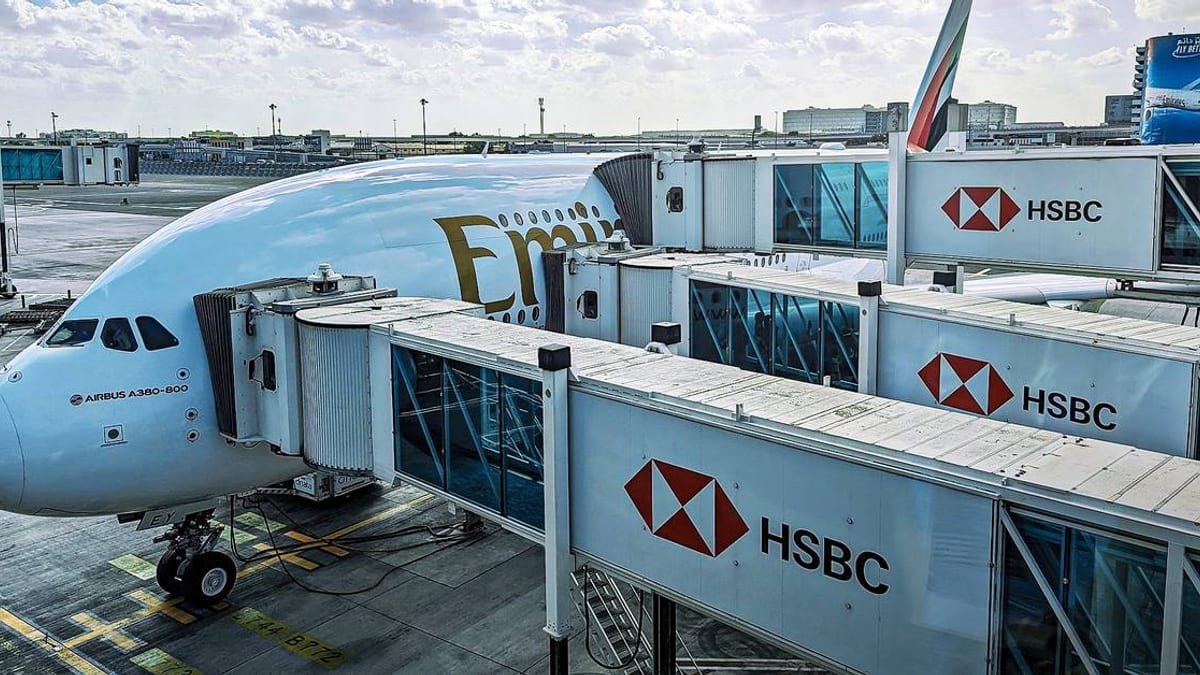
Image by simpleflying.com
From First Flight to Long-Lasting Footprint
The A380 took to the skies for the first time in 2005 and entered commercial service with Singapore Airlines in October 2007. Although Airbus ended production in 2019, publicly available fleet data indicates that well over 180 aircraft remain in service with carriers such as Emirates, British Airways, Qatar Airways and Singapore Airlines. The jet’s operational footprint, concentrated on a relatively small number of trunk routes, continues to shape the way airports think about very large aircraft.
While passenger numbers on the type are modest compared with smaller twin-engine widebodies, reports indicate that the A380 has carried hundreds of millions of travelers on long-haul routes linking global hubs. Those flows have reinforced a hub-and-spoke model at major connecting airports, even as point-to-point services expanded elsewhere with more efficient twin-jet aircraft.
As a Code F aircraft in International Civil Aviation Organization terminology, the A380 set a new bar for runway, taxiway and apron design. Guidance developed over the past two decades for Code F operations remains embedded in design manuals and master plans, affecting airport projects that may never actually see an A380 on the ramp.
Terminals Stretched and Reinforced for the Superjumbo
To handle the A380’s dual passenger decks, many airports rebuilt or extended terminal piers, adding multiple jet bridges and reinforcing structures to carry higher loads and larger boarding lounges. London Heathrow’s investments included new and modified piers that provide dual and triple airbridge access, allowing concurrent boarding and disembarkation from both levels of the aircraft and reducing ground times for heavily loaded flights.
At Los Angeles International Airport, modernization of the international terminal created a bank of widebody-capable gates, several of which were specifically configured to serve the A380 with three contact bridges. Publicly available planning documents show that electrical systems, passenger circulation, and hold-room capacity were all scaled up to cope with peak loads from aircraft carrying 500 or more travelers at once.
Similar adjustments occurred across the Middle East and Asia-Pacific. In Dubai, a dedicated concourse was developed primarily around Emirates’ A380 operations, with multiple upper-level boarding points, extensive lounge space and high-capacity retail and dining areas. At Singapore Changi, stand layouts and terminal connections were refined to route large passenger volumes efficiently between security, immigration and departure gates timed to A380 waves.
Inside terminals, the aircraft’s boarding profile has pushed designers toward wider corridors, larger waiting areas and more flexible seating zones. Even airports that later reduced or suspended A380 operations have retained these enlarged spaces, which are now being repurposed for a new generation of long-haul jets and denser cabin configurations.
Runways, Taxiways and the Code F Ripple Effect
The A380’s 79.8-meter wingspan and higher maximum takeoff weight also translated into demands on airfield geometry. International guidelines for Code F aircraft called for wider runways and greater separation between taxiways and other infrastructure. Early government assessments in markets such as the United States highlighted the costs of widening taxiways, reinforcing pavements and upgrading lighting and signage to accommodate the aircraft’s outer dimensions.
In some cases, airports undertook targeted projects to allow the A380 to operate along defined routes across the airfield, rather than upgrading the entire network. Engineering briefs and airport master plans from the past decade show examples of selective taxiway realignments, shoulder widening and fillet redesigns to maintain clearance when the superjumbo turns at intersections or passes close to terminal buildings.
New-build hubs have been designed with these standards from the outset. Planning documents for major greenfield airports published over recent years commonly reference Code F or equivalent categories, specifying runway lengths, widths and rapid-exit taxiways capable of handling the A380 along with other very large aircraft. Even where local traffic forecasts do not assume regular A380 service, designers often retain the option, reasoning that a single daily operation by a large jet should not be ruled out for political, commercial or emergency reasons.
These requirements have had a knock-on effect on construction budgets and land-use planning. Wider pavements and greater separation distances consume more land, while heavier pavement structures demand additional materials and more complex drainage and utility arrangements. The influence of the A380 is therefore visible not only in terminal façades but also in the geometry of taxiway networks and runway safety areas.
Hubs Still Betting on Very Large Aircraft
Despite the end of production, several airlines have doubled down on the A380 since the pandemic, returning stored aircraft to service as long-haul demand recovered faster than expected. Publicly available schedules show that Dubai, London Heathrow and Singapore remain among the busiest airports for the type, with high-profile routes linking Europe, the Middle East, Asia and Australia.
For these hubs, the aircraft continues to justify earlier investments in Code F gates, high-capacity baggage systems and dual-level boarding. In particular, Emirates’ network strategy relies heavily on the A380 to aggregate demand through Dubai, filling large aircraft several times a day on corridors such as Dubai to London and Dubai to Sydney. That model rewards airports that can simultaneously stage multiple superjumbos without overwhelming security checkpoints, customs halls or curbside traffic.
Other carriers, including Qatar Airways and Qantas, have selectively restored A380 operations on routes where slot constraints and high demand favor larger aircraft. Their decisions help sustain specialized infrastructure at airports in Europe and Asia-Pacific, where a small but steady flow of A380 movements maintains the case for Code F stands even as newer, smaller widebodies dominate order books.
This resurgence has tempered early predictions that A380-specific facilities would be quickly repurposed or left underused. Instead, many airports now treat the superjumbo as part of a broader fleet mix, scheduling it at peak times while using the same heavy-duty gates and piers for high-density twin-jets at other hours.
Legacy Lessons for the Next Generation of Airports
The experience of accommodating the A380 has left a lasting mark on airport design philosophy. Industry studies and technical reports suggest that planners are now more cautious about tailoring infrastructure too closely to a single aircraft type, emphasizing flexibility so that gates, piers and taxiways can handle a range of widebody sizes with minimal reconstruction.
At the same time, the standards and engineering practices established for the A380 have effectively raised the floor for what constitutes a long-haul capable hub. Provisions such as dual-level boarding options, larger baggage halls and more robust airfield pavements are increasingly seen as baseline features for major international terminals, even when day-to-day operations are dominated by smaller jets.
Emerging airport master plans to 2040 and beyond continue to cite Code F compatibility, often alongside sustainability and digitalization as core design drivers. The underlying assumption is that aviation may again produce outsize aircraft, whether passenger or cargo, and that infrastructure built today should not preclude their use tomorrow.
Two decades after its first flight, the Airbus A380’s commercial future is narrower than its creators once imagined, but its architectural and engineering legacy at the world’s airports remains broad. From widened taxiways to towering glass-walled concourses, traces of the superjumbo are likely to shape how travelers experience major hubs for many years to come.