

Agios Prokopios Beach on the Cycladic island of Naxos has a reputation that precedes it. Regularly listed among Greece’s top beaches, this long golden strip combines Caribbean-style water with a relaxed village atmosphere, backed by tavernas, small hotels and low dunes.
Whether you are planning a lazy beach week or a quick day trip from Naxos Town, knowing what to expect before you arrive can make the difference between a good holiday and a great one.
Getting Oriented: Where You Are and What It Feels Like
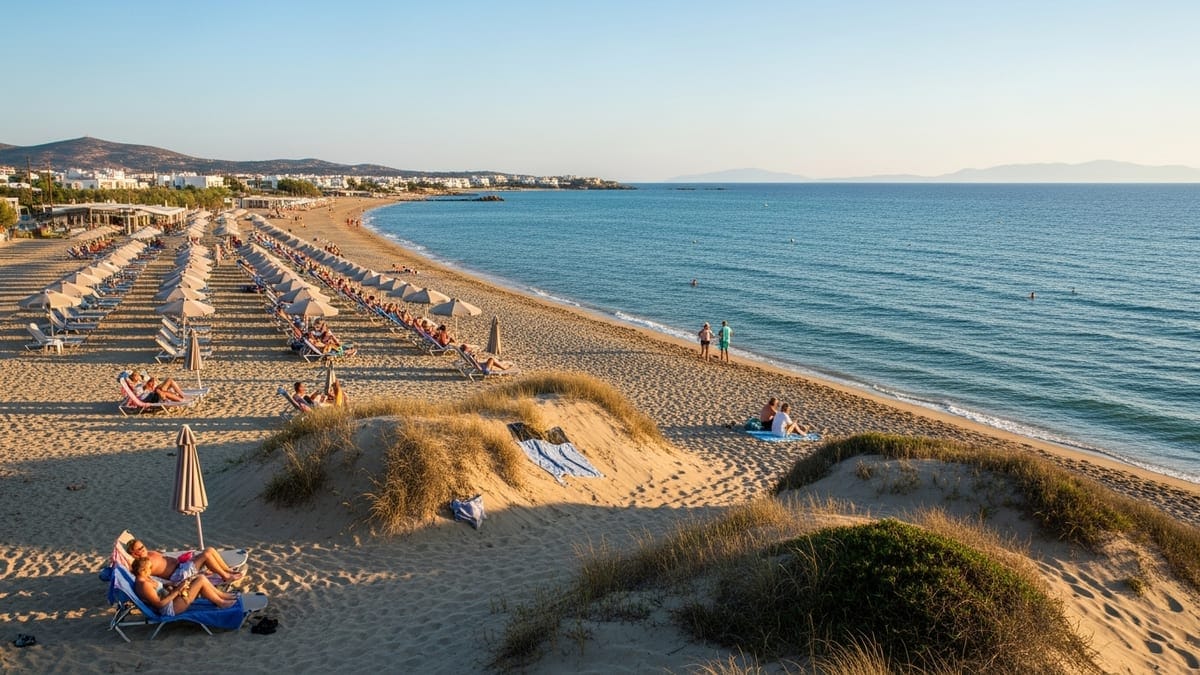
Agios Prokopios lies on the west coast of Naxos, roughly 5 kilometers from Naxos Town (also known as Chora) and a short distance south of the island’s small airport. The beach runs for about one kilometer in a soft, gentle curve, with views across the water to Paros on a clear day.
The settlement itself is compact and low rise, with a main road that runs slightly inland, parallel to the sea, and a waterfront lane lined with cafés and tavernas at the more developed northern end.
The beach is broadly split into two character zones. The northern and central sections are organized, with rows of sunbeds and umbrellas, beach clubs and water sports bases. The southern stretch becomes quieter and more natural, with dunes and a wilder feel that appeals to independent travelers and those who prefer to bring their own gear.
The sand is coarse and golden rather than powdery, which helps keep it from blowing around on windy days, and the water is usually crystal clear, shifting from turquoise in the shallows to deep blue further out.
Although Agios Prokopios is undoubtedly popular in high season, it rarely feels as overrun as some more compact Cycladic beaches. The bay is wide, and it is usually possible to walk a few minutes away from the busiest sections to find extra space. The atmosphere is a mix of families, couples and small groups of friends, with a noticeable but not overwhelming international crowd during July and August.
In the evenings, the beach area softens into a mellow promenade scene. People linger over grilled fish and local wine in waterfront tavernas, children play along the promenade, and the sea reflects the pastel tones of the sunset. It is relaxed more than raucous, and the scale of the village helps preserve a holiday-town feeling rather than a built-up resort vibe.
How to Get There and Around
From Naxos Town, Agios Prokopios is easy to reach. By road, the distance is short enough that many visitors opt for a quick taxi ride from the port or town hotels. Travel times are typically around 10 to 15 minutes, depending on traffic. Taxis are readily available at the port and in Chora’s central areas, and prices are usually moderate for such a short hop, though they can rise slightly in peak season and at night.
The island’s public bus network links Naxos Town with Agios Prokopios, Agia Anna and Plaka along the west coast. In the core summer months, buses between Chora and Agios Prokopios typically run very frequently, often every 30 minutes from early in the morning until late at night, making it one of the best-served routes on the island.
Schedules are seasonal and updated regularly, with additional departures added in June through September. In spring and autumn, frequencies remain practical for day trips, though late-night services may be reduced, and in winter the service becomes much more limited, often with only a handful of departures each day.
For maximum flexibility, many travelers choose to rent a car, scooter or quad bike. Rental agencies operate both in Naxos Town and directly in Agios Prokopios, offering everything from small compact cars to scooters suitable for one or two riders.
The drive from Chora is straightforward, along a mostly flat and paved coastal road. Parking is spread along the back of the beach and in small lots near the hotels and tavernas; in peak season, it can become competitive in the middle of the day, so arriving earlier or later is wise if you are driving.
Once in Agios Prokopios, getting around is simple. The beach is entirely walkable, and most accommodation, restaurants and cafés are clustered within a few minutes’ stroll of the shoreline. If you plan to explore further south to Agia Anna and Plaka, you can walk along the sand or use the road that parallels the coast.
The walk to Agia Anna is short and scenic, particularly at sunrise or sunset, making it easy to split your days between neighboring beaches without relying on transport.
Beach Layout, Water Conditions and Safety
The first thing many visitors notice about Agios Prokopios is the clarity of the water. The seabed is largely sandy with some pebbly patches, and the coast here is relatively sheltered, which helps explain why the water often appears as a luminous turquoise.
The sea is generally calm in early summer mornings and evenings, though like all Cycladic islands, Naxos is exposed to the Meltemi, the strong north wind that can pick up in July and August, especially in the afternoon.
The entry into the water is gentle for much of the bay, making it suitable for less confident swimmers and children under supervision. In places, the seabed shelves a bit more quickly, so it is worth wading in slowly the first time you swim to get a feel for the depth profile.
Lifeguard coverage is typically present during the main summer months at designated points along the organized sections of the beach, and flag systems are used to indicate conditions. As always, you should never rely solely on lifeguards and should take care to stay within your abilities and comfort level.
Water quality around Agios Prokopios is consistently high. The beach has a long-running reputation for clean, swimmable conditions, and local authorities and businesses are keen to preserve its status as one of the island’s flagship stretches of coast.
There are no major harbors or industrial sites in the immediate area, and coastal development remains relatively low rise, contributing to a generally unspoiled environment.
On the sand, the organized zones are clearly defined by rows of sunbeds and umbrellas associated with specific cafés, hotels or beach clubs. The distance between these clusters can vary; in high summer, you may find fairly dense setups at the busy northern end, while the southern reaches retain longer open stretches where you can lay a towel on the sand without renting a lounger. This gives you the flexibility to choose between comfort and a more natural experience, day by day.
Facilities, Food and Where to Stay
One of the reasons Agios Prokopios works so well for many travelers is the balance of nature and convenience. Behind the beach, you will find almost everything you need for a comfortable stay: mini-markets, bakeries, a pharmacy, ATMs, car and scooter rentals, laundry facilities and a range of cafés, bars and tavernas.
Most of these are concentrated near the northern end of the beach and along the main road that runs slightly inland, but nothing is far from the sand.
Beach facilities are varied. Many of the seafront establishments operate their own sunbeds and umbrellas, often offering waiter service for drinks and snacks. In high season, you can expect to pay a daily fee or a minimum consumption per set; prices tend to increase for the first row and for more premium beach club setups with thicker mattresses and shade structures.
Showers and changing areas are usually available at or behind some of the organized sections, and several spots have freshwater taps for rinsing off sand before you head back to your room.
Dining is a highlight of time spent at Agios Prokopios. Traditional tavernas serve classics such as grilled octopus, fried calamari, Greek salads piled with local tomatoes and Naxian graviera cheese, moussaka and lamb dishes. Seafood plays a prominent role, with catch-of-the-day displays and simple preparations that let the ingredients stand out.
Alongside the traditional, there are casual eateries offering pizza, burgers and vegetarian-friendly plates, plus cafés that open early for coffee and pastries and stay busy through sunset with cocktails and meze.
Accommodation options range from simple rooms to boutique-style hotels and family-run apartments. Many properties are small in scale, often with whitewashed Cycladic architecture and blue shutters, but the level of comfort can vary from basic to fairly upscale, with pools, landscaped gardens and wellness corners.
Staying in Agios Prokopios allows you to roll out of bed and be at the water’s edge in minutes, while still having easy bus or taxi access to Naxos Town for evening strolls through the old quarter or visits to the Portara.
Best Time to Visit and What to Pack
The beach season at Agios Prokopios usually runs from late May to early October, with the busiest period concentrated from late June through August. In early summer, the sea may still feel refreshing, but daytime temperatures are warm and the crowds lighter.
By July and August, the water has warmed, the full range of beach services is operating, and the atmosphere is lively, though those sensitive to heat or crowds may prefer the shoulder months.
September is often considered one of the best times to visit. The sea remains warm from the summer heat, daytime temperatures are still summery but more comfortable, and families tied to school schedules begin to depart.
Many bus services and tavernas continue on summer-style schedules through much of September, keeping logistics straightforward while the overall feel becomes more relaxed. Early October can also be pleasant, though you should expect slightly cooler evenings and a gradual winding down of services as the month progresses.
Packing for Agios Prokopios is mostly about beach life. A high-factor reef-friendly sunscreen, wide-brimmed hat and UV-protective sunglasses are essentials, as the reflection off the water and pale sand can intensify the sun’s impact.
A light sarong or cover-up is practical both for sun protection and for slipping into seaside cafés. Water shoes can be helpful for the occasional pebbly patch or if you plan to explore rocky coves, though they are not strictly necessary for most of the bay.
Beyond the obvious swimwear and flip-flops, bring a light jacket or long-sleeved layer for breezy evenings, particularly if you are visiting in May, early June or late September.
A small dry bag is useful if you plan to head out on boat trips or use paddleboards or kayaks. If you are a snorkeler, consider packing your own mask and snorkel; while the area is not a prime coral reef destination, there are fish and underwater rock formations to explore along the edges of the bay and around nearby reefs.
Activities Beyond Sunbathing
While it is entirely possible to spend long, contented days simply swimming and reading on Agios Prokopios, the area offers more for those who prefer a bit of activity. Several water-sports centers along the organized sections of the beach rent equipment and offer lessons.
Depending on the season and weather, you may find options such as stand-up paddleboarding, sea kayaking, windsurfing, jet skiing and sometimes wakeboarding or tubing behind a boat. Conditions are generally gentler in the morning, with stronger winds typically building later in the day, which can appeal to more experienced windsurfers and kitesurfers in other nearby bays.
Diving and snorkeling are additional draws. Local dive centers based in or near Agios Prokopios run guided dives to nearby reefs, walls and wreck sites around Naxos, welcoming both beginners and certified divers.
Introductory dives and scuba courses are available in season, while snorkel trips by boat can be a good way to reach slightly more remote coves and underwater rock gardens. Even if you stick close to shore, swimming along the rocky edges of the bay can reveal schools of fish, seagrass meadows and occasional octopus hiding among rocks.
On land, walking is one of the simplest pleasures. The coastal path or beach walk between Agios Prokopios, Agia Anna and Plaka makes for an easy, scenic stroll, especially at sunset. If you are based at Agios Prokopios, you can walk south to sample a different stretch of sand each day, or combine a morning at the beach with an afternoon wander in the narrow alleys of Naxos Town.
For those who want to explore further inland, car or scooter excursions can take you to mountain villages such as Apeiranthos and Filoti or to archaeological sites like the temple at Sangri, returning to the beach for a late swim.
Evenings at Agios Prokopios tend to revolve around food, conversation and sea views rather than high-octane nightlife. There are a handful of bars and low-key beach clubs where you can enjoy sundowner cocktails or a late drink with music, but the scene stops well short of the all-night party atmosphere found on some other Cycladic islands. For a bit more buzz, you can always head into Naxos Town after dinner, where bars and café terraces stay lively well into the night in peak season.
Costs, Practicalities and Responsible Travel
Understanding local costs can help you budget realistically for time at Agios Prokopios. Sunbed and umbrella rental prices vary by operator and season, but in peak summer you can expect to pay a moderate amount for a pair of loungers and shade for the day, sometimes linked to a minimum spend on drinks and snacks.
In shoulder seasons, rates may be lower and negotiation easier. There is no requirement to rent a sunbed; the public is free to use unorganized parts of the beach at no charge, so bringing your own towel or travel umbrella remains an option.
Food and drink prices span a broad spectrum. A simple coffee and pastry at a bakery or café is typically inexpensive, while a full seafood dinner with wine at a seafront taverna will naturally cost more. Many establishments offer reasonably priced set menus or shared meze plates, which can be an economical and sociable way to dine.
Tap water on Naxos is generally not recommended for drinking by visitors, so factor bottled water into your daily budget, along with the cost of occasional bus or taxi rides if you are not renting a vehicle.
Practical services are close to hand. ATMs are available in or near the village, though it remains wise to carry some cash, as smaller businesses may prefer it, particularly outside the peak season.
A pharmacy in the broader area can supply basic medicines, sunburn relief and first-aid items, and there are medical services on the island, with Naxos Town hosting the main health center. For internet access, many hotels, apartments and cafés offer free Wi-Fi, though speeds can fluctuate with demand.
Agios Prokopios benefits from an environment that is still relatively unspoiled, and visitors play an important role in keeping it that way. Simple steps make a difference: use bins for all rubbish, avoid leaving cigarette butts in the sand, and minimize the use of single-use plastics by refilling bottles where possible.
When swimming or snorkeling, avoid touching or disturbing marine life and seagrass beds. Respect local customs by wearing cover-ups when entering shops and restaurants from the beach, and keeping noise levels moderate late at night in residential areas.
The Takeaway
Agios Prokopios Beach offers a compelling blend of natural beauty and easygoing convenience. Its shimmering water and wide golden strip provide the classic Greek-island backdrop many travelers dream of, while the modest scale of the surrounding village keeps the atmosphere friendly and relaxed rather than overwhelming.
Good bus connections and short transfer times from Naxos Town make it simple to reach, and once there, you can choose your own balance of quiet, comfort and activity.
For families, couples and solo travelers alike, it is a place where days can slip by in a pattern of swims, unhurried meals and evening walks along the shore. At the same time, access to water sports, excursions inland and the cultural life of Naxos Town means you need not feel confined to a single strip of sand.
With some planning around seasons, transport and budget, Agios Prokopios can serve as either a laid-back base for exploring the island or a destination in itself, promising clear water, soft sunsets and the gentle rhythm of life by the Aegean.
FAQ
Q1: How far is Agios Prokopios from Naxos Town and how long does it take to get there?
Agios Prokopios is about 5 kilometers from Naxos Town. By taxi or car, the journey usually takes around 10 to 15 minutes, depending on traffic. Public buses also connect the two frequently in summer, with travel times similar to a car since the route is direct.
Q2: Is Agios Prokopios suitable for families with children?
Yes, Agios Prokopios is very family friendly. The beach has a gentle entry into the sea in many sections, organized areas with sunbeds and umbrellas, and nearby facilities such as cafés, mini-markets and a pharmacy. In high season, lifeguards are typically present at parts of the beach, adding an extra layer of reassurance for parents.
Q3: Do I need to rent a car to stay at Agios Prokopios?
You do not need a car, but it can add flexibility. Regular summer buses link Agios Prokopios with Naxos Town and other west-coast beaches, and the village itself is compact and walkable. However, if you plan to explore mountain villages, remote beaches or archaeological sites extensively, renting a car or scooter for at least a couple of days is very convenient.
Q4: When is the best time of year to visit Agios Prokopios?
The prime months for beach weather are June through September. July and August offer the warmest sea temperatures and the fullest range of services, but they are also the busiest. Late May and October can be pleasant shoulder months with fewer people, while September often strikes an ideal balance between warm water, good weather and a more relaxed atmosphere.
Q5: Are there free areas on the beach or is it all covered by sunbeds?
There are both organized and free sections at Agios Prokopios. The northern and central parts of the bay tend to have rows of sunbeds and umbrellas run by cafés and hotels, while the southern stretches are more open and natural. You are free to lay your own towel in the unorganized areas without charge, though shade can be limited if you do not bring your own umbrella.
Q6: What kind of accommodation is available near the beach?
The area around Agios Prokopios offers a mix of small hotels, family-run guesthouses, self-catering apartments and a few boutique-style properties with pools and upgraded amenities. Many are within a short walk of the sand, and there are also options set slightly back from the beach, which can be quieter and sometimes more budget friendly.
Q7: Can I find vegetarian or vegan food options in Agios Prokopios?
Yes, while traditional Greek cuisine is prominent, many tavernas and cafés in Agios Prokopios cater to vegetarian and, increasingly, vegan diets. You will find salads, vegetable stews, grilled vegetables, pulses and pasta dishes on most menus, and some venues highlight plant-based options. If you have strict dietary requirements, it is always worth confirming ingredients with staff.
Q8: How windy does it get and will that affect my time on the beach?
Like the rest of the Cyclades, Agios Prokopios can experience strong Meltemi winds, particularly in July and August. Mornings are often calmer, with winds building later in the day. On windier days, the breeze can be refreshing in the summer heat, though it may create small waves and blowing sand at times. The bay is relatively sheltered compared with some spots, and you can usually find more comfortable areas by walking along the shore.
Q9: Are there water sports or activities available at the beach?
Yes, several operators along the organized parts of Agios Prokopios offer water sports in season. Options may include stand-up paddleboarding, kayaking, jet skiing, water-skiing or wakeboarding, and sometimes windsurfing. There are also diving centers nearby that run scuba and snorkeling trips to reefs and rock formations around Naxos, suitable for both beginners and experienced divers.
Q10: Is Agios Prokopios a good base for exploring the rest of Naxos?
Agios Prokopios can be an excellent base. You have a high-quality beach at your doorstep, a good choice of dining and accommodation, and frequent buses or short taxi rides to Naxos Town. From there, you can connect to inland villages, hiking routes and archaeological sites. Many visitors choose to stay at Agios Prokopios for the beach atmosphere and make day trips to other parts of the island.