

More news on this day
Online travel platform Agoda is spotlighting Bangkok alongside Manila, Ho Chi Minh City, Tokyo and Seoul as standout Asian cities to watch in 2026, underscoring how luxury tourism and business travel are increasingly converging in the region’s biggest urban hubs.
Get the latest news straight to your inbox!
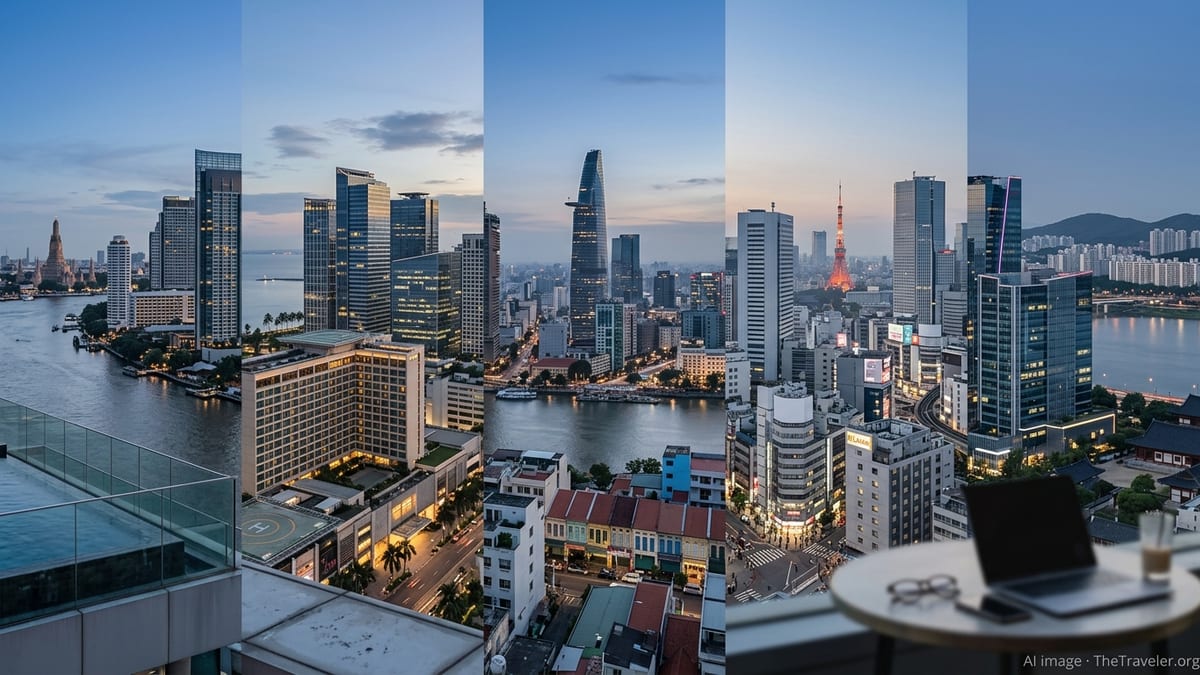
Agoda Data Points to Asia’s Powerhouse City Hubs
Agoda’s latest regional booking insights for 2026 indicate that Bangkok, Manila, Ho Chi Minh City, Tokyo and Seoul are consolidating their roles as twin engines for both corporate and leisure demand. Publicly available summaries of the company’s trend reports, together with broader industry analysis, show these cities recurring in the upper tiers of hotel searches, advance bookings and length-of-stay patterns for the coming year.
The five destinations share several characteristics that appeal to business and leisure travelers alike: dense airline connectivity, established meetings and events infrastructure, and increasingly sophisticated high-end accommodation. Travel trade publications report that these cities are among the most searched and rebooked Asian destinations on major platforms, reinforcing their position as reliable bases for regional travel in 2026.
Industry analysts note that the traditional separation between corporate and holiday travel is narrowing, with more travelers extending work trips into short stays for dining, shopping and cultural experiences. The cities highlighted in Agoda’s outlook are among the primary beneficiaries of this shift, as they already host deep inventories of upscale hotels, serviced apartments and branded residences positioned to capture blended demand.
Bangkok Rides a New Wave of Luxury Investment
Bangkok’s inclusion reflects a strong recovery and repositioning at the premium end of the market. Recent hospitality and meetings industry reports describe a pipeline of new luxury hotels and branded residences opening through 2025 and 2026, particularly along Sukhumvit, the riverside and key commercial districts. These projects add to an already dense network of high-end properties catering to conferences, exhibitions and incentive groups.
Thailand’s capital also ranks consistently among the world’s most visited cities in international arrival league tables, and airlines have been rebuilding regional and long haul capacity into Suvarnabhumi and Don Mueang. Analysts suggest that higher-spending visitors are increasingly concentrating in prime central neighborhoods where new fine dining venues, rooftop bars and lifestyle malls cluster around mass transit lines.
Travel trade coverage indicates that Bangkok is actively positioning itself as a hub for luxury meetings and events in mainland Southeast Asia, supported by convention facilities and a growing roster of international brand flagships. For Agoda users, this mix of convenience, price competitiveness and access to upscale experiences is translating into longer stays and a higher share of premium-room searches compared with earlier in the recovery cycle.
Manila and Ho Chi Minh City Emerge as High-Growth Challengers
Manila and Ho Chi Minh City are described in regional tourism and real estate reports as two of Southeast Asia’s fastest-rising urban hotel markets. Both cities are benefiting from strong economic growth, expanding airline networks and aggressive investment in new-build and refurbished four and five star properties. Industry data on pipeline projects shows a concentration of openings in central business districts and emerging lifestyle precincts.
In Manila, large mixed-use developments that combine offices, malls, casinos and hotels are targeting corporate groups and high net worth leisure travelers from Northeast Asia and North America. Publicly available information on planned hospitality projects indicates an emphasis on branded luxury and upper upscale properties, reflecting expectations of continued growth in premium inbound demand.
Ho Chi Minh City, meanwhile, is leveraging Vietnam’s export-led economy and fast growing middle class. International hotel groups have announced new luxury projects along the Saigon River and in historic districts, with developers citing interest from both regional business travelers and affluent domestic tourists. Data shared in recent investment briefings suggests rising average daily rates in the upper tiers, as upgraded room stock and new dining concepts attract higher-spend guests.
For Agoda’s customer base, these trends translate into more choices at the top end of the market at price points that are often lower than in longer established hubs. Analysts expect the two cities to capture a growing share of travelers who want modern comforts and premium services while still seeking relatively good value.
Tokyo and Seoul Double Down on Premium Urban Experiences
Tokyo and Seoul have long been mainstays in Asian business travel rankings, and recent corporate travel reports indicate that both cities remain among the most visited in the region for meetings, incentives and conferences. At the same time, national tourism strategies in Japan and South Korea place increasing emphasis on high-yield visitors, with a focus on luxury shopping, gastronomy and design-forward hotels.
Tokyo continues to attract significant hospitality investment, with new luxury properties and high-end renovations clustered around central districts such as Marunouchi, Ginza and Shibuya. Market research on Japan’s inbound tourism shows sustained interest in premium experiences, from omakase dining and private cultural tours to stays in designer hotels that blend contemporary aesthetics with traditional influences.
Seoul, supported by strong brand recognition in fashion, cosmetics and pop culture, is also enhancing its appeal to high-spend travelers. Industry coverage highlights new upscale hotels and lifestyle complexes along the Han River and in neighborhoods such as Gangnam and Jongno, as well as airport improvements that facilitate short regional trips. Business travelers are increasingly adding leisure days to explore fine dining, galleries and wellness offerings.
For Agoda, customer search patterns in these two cities appear to reflect a willingness to trade smaller room sizes for access to central locations and immersive urban experiences. Analysts suggest that as corporate itineraries shorten and become more intensive, travelers are prioritizing quality of stay and local discovery during limited free time.
Luxury Tourism Growth Redraws Asia’s Business-Leisure Map
Across all five cities, a common thread is the rapid expansion of luxury and upper upscale tourism products aligned with a more flexible, blended approach to travel. Research into Asia’s tourism recovery notes that higher income travelers are increasingly combining regional business trips with short holidays, often in the same destination, and are prepared to pay a premium for memorable, high quality experiences.
Agoda’s focus on Bangkok, Manila, Ho Chi Minh City, Tokyo and Seoul for 2026 underscores how these cities are competing not only on infrastructure and connectivity but also on lifestyle, design and service. Developers and operators are rolling out new concepts that range from urban resorts with extensive wellness facilities to boutique properties tailored to niche interest groups, from culinary enthusiasts to digital workers.
Analysts argue that the rise of these dual-purpose hubs could gradually shift corporate travel patterns within Asia, as companies weigh the attractiveness of destinations for employees and clients alongside conventional considerations such as cost and flight schedules. As luxury tourism offerings deepen, the same factors that attract holidaymakers are increasingly influencing where meetings are scheduled and regional offices are based.
While competition among Asian cities remains intense, current data suggests that Bangkok, Manila, Ho Chi Minh City, Tokyo and Seoul are well placed to capture a growing share of high-value travelers in 2026, particularly those who see little distinction between where they go for work and where they choose to spend their free time.