

More news on this day
Singapore is preparing to host what industry observers describe as a pivotal edition of the Asian Hotel Industry Conference & Exhibition, with AHICE South-East Asia 2026 poised to redefine how capital, technology and design converge in the region’s fast-evolving hospitality market this month.
Get the latest news straight to your inbox!
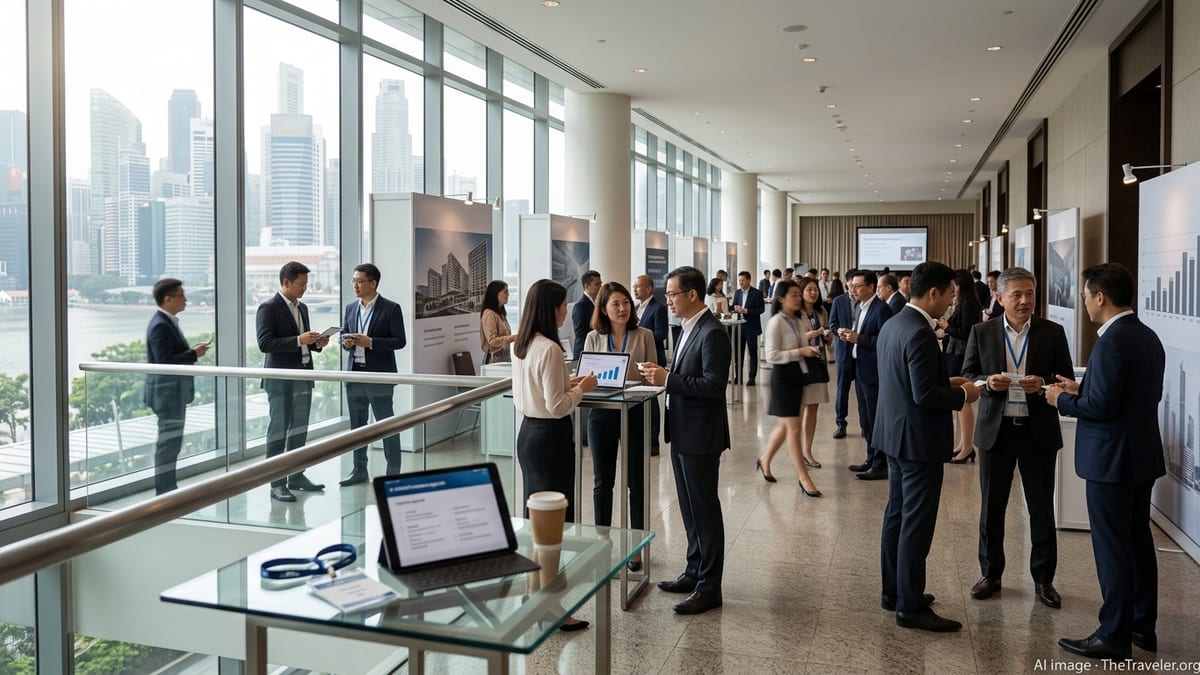
Dates, venue and why 2026 matters for AHICE South-East Asia
According to publicly available event information, AHICE South-East Asia 2026 is scheduled to return to Pan Pacific Singapore on Tuesday 10 and Wednesday 11 March 2026, consolidating the conference’s place on the global hotel investment calendar. The South-East Asia edition first launched in Singapore in 2023 and has rapidly grown from a boutique gathering of industry leaders into one of the most closely watched deal-making forums in Asia Pacific.
Reports indicate that attendance has expanded significantly since the inaugural regional outing in 2024, which drew around 500 to 600 owners, operators, consultants and suppliers from across South-East Asia and beyond. The 2025 event added new specialist tracks and attracted more than 150 speakers, setting expectations that the 2026 program will again raise the bar in terms of content depth and networking density.
The choice of Singapore as host city remains strategic. As a regional aviation hub with a diversified visitor economy and a strong pipeline of mixed-use and lifestyle projects, the city-state offers a live case study in resilient hotel performance, asset recycling and cross-border capital flows. Delegates are expected to use the March gathering to assess how those trends may play out across gateway and emerging markets from Bangkok and Ho Chi Minh City to Jakarta and secondary resort destinations.
Organisers position AHICE South-East Asia as part of a wider network of branded events spanning Australasia, the Pacific and key emerging markets, creating a platform where multi-country portfolios and regional management teams can compare strategies in a single setting. For many investors and operators, the 2026 edition arrives at a critical moment as the sector navigates slower global growth alongside solid tourism demand in much of South-East Asia.
Program themes: capital flows, development pipelines and performance outlooks
Based on outlines released for recent conferences, the 2026 agenda is expected to place fresh emphasis on the hotel investment cycle, with sessions drilling into how debt, equity and alternative capital are being deployed across the region. Prior programs have featured panels on development outlooks, investment sentiment and asset management expectations, and similar themes are anticipated again this year as stakeholders reassess risk in a higher-for-longer interest rate environment.
Market outlook discussions are likely to focus on Singapore’s own performance, where tightening supply and robust corporate and leisure demand have underpinned strong room rates, alongside diverging conditions in neighboring markets. Analysts following the sector point to ongoing new-build pipelines in Vietnam and Indonesia, a wave of upscale conversions in Thailand, and selective luxury resort development in markets such as the Philippines and Malaysia.
Another recurring focus is expected to be the changing role of asset managers and the evolving relationship between owners and operators. Public event previews for AHICE conferences highlight sessions examining what asset managers want from brand partners, how management and franchise contracts are being structured, and where operational efficiencies can unlock value without eroding guest experience.
With cross-border capital still playing a major role in the region, the 2026 program is also poised to explore how family offices, private equity firms and sovereign-related investors are approaching hospitality as part of broader real estate allocations. Delegates are likely to scrutinize whether hotel assets continue to offer an inflation hedge, how exit strategies are shifting, and which sub-segments, from extended-stay to branded residences, are attracting the most interest.
InnTech and Design Inn: innovation and design move centre stage
One of the defining additions to the broader AHICE South-East Asia platform in recent years has been the introduction of the InnTech Hotel Technology Summit and the South East Asia Design Inn Symposium. Both initiatives, launched alongside earlier editions of the conference, are set to evolve further in 2026 as technology and design become central to investment decisions.
InnTech has been positioned as a concentrated half-day summit featuring panel discussions, keynotes and masterclasses on topics including artificial intelligence, procurement software, in-room entertainment, access control, property and revenue management systems, and digital marketing. For 2026, industry watchers expect even greater attention on automation, data integration and guest-facing innovations that can support leaner operations amid rising labor costs.
The South East Asia Design Inn Symposium, which draws on the track record of a long-running design conference in Australasia, is scheduled within the 2026 week to examine how architecture and interiors can drive rate premiums and brand differentiation. Program teasers for the symposium point to case studies of new-build hotels and major refurbishments in the region, as well as debates on how to balance local storytelling with global brand standards.
For investors, these parallel events extend the value of attending AHICE South-East Asia by providing specialist forums where they can assess the capital implications of design choices and technology adoption. Operators and designers, in turn, gain a platform to demonstrate how thoughtful concepts and integrated systems can translate into higher revenue per available room, improved energy performance and stronger guest loyalty.
Who will be there and what delegates can expect on the ground
Recent editions of AHICE South-East Asia have drawn a broad cross-section of the hospitality ecosystem, from global hotel groups and regional brands to independent owners, advisory firms, legal and finance specialists, and a growing cohort of technology and design partners. Publicly available partner lists for past events highlighted participation from major international operators and key regional hotel companies, underlining the conference’s role as a neutral meeting point for competing brands.
For 2026, observers expect a similar mix, with senior executives from development, operations, finance and asset management teams converging in Singapore for two days of formal sessions and informal deal-making. The format typically combines main-stage panels, focused breakouts and extended networking intervals, creating multiple touchpoints where conversations can move from macro themes to project-specific discussions.
Delegates can also anticipate a steady flow of data-backed presentations, including benchmarking snapshots, pipeline overviews and demand forecasts that help frame strategic decisions. Service providers in areas such as transaction advisory, valuation, legal structuring and sustainability consulting tend to use the event to share insights on regulatory shifts and new market-entry structures around the region.
Beyond the program itself, Singapore’s compact urban layout means many participants extend their stay to tour assets, meet local partners and evaluate new sites. For regional and international attendees, the March timing allows for a read on first-quarter performance while leaving room to recalibrate development pipelines and capital deployment plans for the remainder of 2026.
Why Singapore and South-East Asia are under the global spotlight
The backdrop to AHICE South-East Asia 2026 is a region that many analysts see as one of the brightest spots in global travel and hospitality. International arrival figures across several South-East Asian markets have been recovering or surpassing pre-pandemic levels, helped by rising intra-Asian travel, expanding low-cost carrier networks and renewed long-haul interest in multi-country itineraries.
Singapore itself has benefited from its role as a financial and innovation hub, attracting a steady stream of events, corporate meetings and high-spending leisure visitors. The city’s pipeline of hotel and mixed-use projects, together with ongoing asset repositionings, provides a living laboratory for themes that will be dissected on stage at AHICE, from revenue management in compressed markets to the integration of wellness, co-working and branded residential components.
At the same time, the region faces structural questions that will likely permeate discussions at the conference. These include workforce shortages in key tourism markets, the cost and complexity of decarbonising existing hotel stock, and infrastructure gaps that can limit growth in otherwise promising destinations. Participants are expected to compare policy frameworks, incentive schemes and partnership models that are emerging across the region to tackle these challenges.
With capital markets still adjusting to new interest rate and risk conditions, AHICE South-East Asia 2026 in Singapore is positioned as a real-time pulse check on how hotel stakeholders are adapting their strategies. For investors, owners and operators watching the region, the March gathering offers both a barometer of sentiment and a venue where the next wave of projects and partnerships is likely to take shape.