

More news on this day
The American Hotel & Lodging Association has welcomed recent Senate action aimed at ending the record United States government shutdown, a breakthrough that is expected to ease mounting pressure on hotels, hospitality workers, and travel-dependent communities across the country.
Get the latest news straight to your inbox!
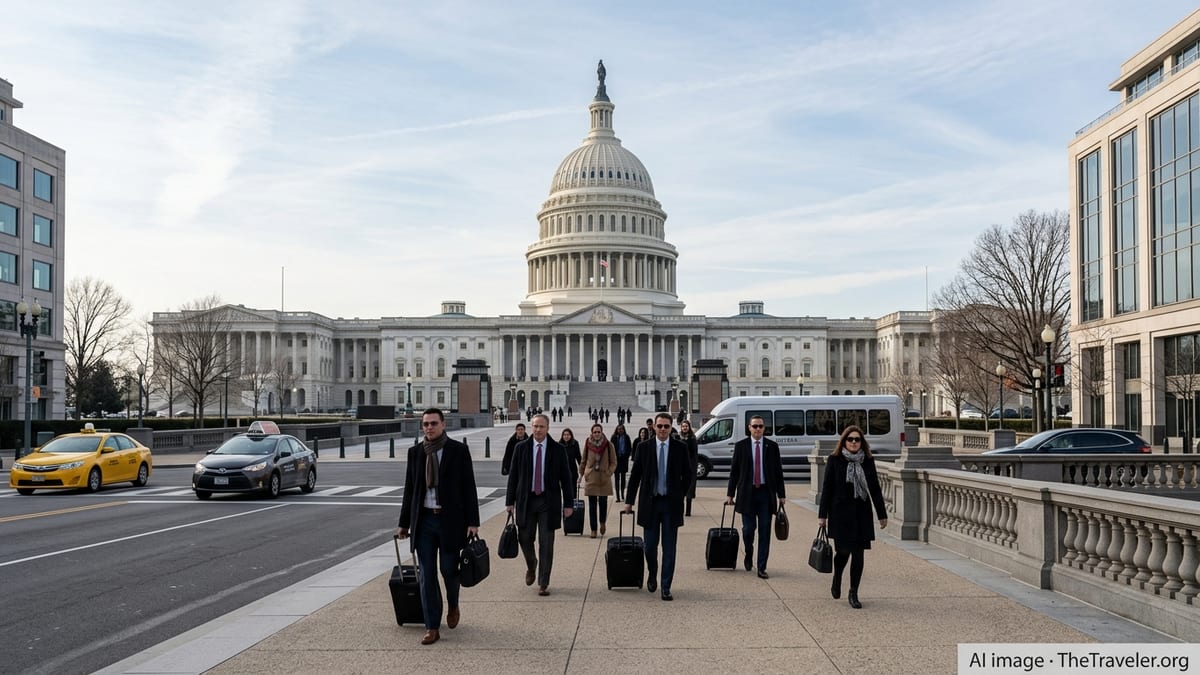
Senate Advances Deal to Reopen Federal Government
According to published coverage from national outlets, the U.S. Senate recently advanced a bipartisan spending package designed to end a 40 day partial government shutdown, the longest such disruption in modern U.S. history. The measure funds core federal functions through the end of the fiscal year and provides short term funding for remaining agencies, clearing a key procedural hurdle toward fully reopening the government.
Reports indicate that the vote drew support from both parties, with several Democrats joining Republicans to move the legislation forward after weeks of political deadlock. The package maintains current spending levels for most agencies while extending full year appropriations for departments closely tied to public services, including agriculture, veterans affairs, and legislative operations.
Publicly available information shows that the Senate action followed growing concern about the economic and operational fallout of the shutdown, from delayed paychecks for federal workers to disruptions across transportation security, national parks, and key regulatory agencies. The Senate vote now places additional focus on the House of Representatives and the White House to complete the process of restoring full government operations.
Hotel Industry Group Applauds Path to Stability
In this context, the American Hotel & Lodging Association, which represents thousands of hotels and lodging properties nationwide, has publicly applauded the Senate’s move to break the impasse. The association has consistently warned that prolonged shutdowns inject uncertainty into the travel economy, dampening business and leisure demand at a time when many markets are still adjusting to evolving patterns in both corporate and leisure travel.
Trade publications and policy trackers indicate that AHLA views predictable federal funding as a critical foundation for the wider visitor economy. Stable government operations support everything from timely visa processing and aviation security to open national parks and staffed visitor centers, all of which influence travelers’ decisions and itineraries.
By commending the Senate action, the association is signaling relief for operators who have faced cancellations tied to reduced federal travel, postponed conferences, and lingering concerns over air travel reliability. The group is also highlighting that the end of the shutdown will help restore confidence among meeting planners, corporate travel managers, and international visitors weighing trips to the United States.
Shutdown Fallout for Hotels, Workers, and Destinations
Industry analyses released during the shutdown pointed to a steady accumulation of costs for the hotel sector. In cities with large federal workforces, hotels reported weaker midweek bookings as official travel and government related meetings were curtailed or deferred. Properties near national parks and monuments experienced softer demand as visitors confronted closures, restricted access, or uncertainty about services on the ground.
Hospitality workers felt the impact as well. Some hotels shortened staff schedules or delayed seasonal hiring in response to softer occupancy, particularly in gateway cities and destinations closely tied to federal attractions. Travel research organizations noted that even travelers who were not directly affected by furloughs or missed paychecks grew wary of potential disruptions at airports and key attractions, a perception that can quickly translate into canceled trips.
Local tourism economies in smaller communities were especially exposed. Towns that rely on nearby national parks, historic sites, or federal facilities saw declines in visitor spending across lodging, restaurants, transportation, and tours. For these destinations, reliable government operations are tightly woven into the fabric of the travel experience, making the resumption of normal federal activity a prerequisite for recovery.
What an End to the Shutdown Means for Travel Demand
With the Senate’s action setting the stage for a full reopening, travel organizations now expect a gradual rebound in hotel demand linked to federal activity. Business travel connected to government agencies, defense contractors, research institutions, and regulated industries is likely to resume first, helping to stabilize weekday occupancy in major metropolitan areas such as Washington, Denver, Atlanta, and other regional hubs.
National park gateway communities and cities anchored by major cultural institutions are also poised to benefit as visitors regain confidence that attractions will be open, staffed, and fully operational. Tour operators and international travel partners typically adjust itineraries cautiously after a disruption, but clear signals from Congress about funding through the end of the fiscal year can help restore long term planning horizons.
At the same time, analysts caution that some lost business may not be recoverable. Meetings and conferences canceled or shifted to virtual formats during the shutdown are unlikely to be rescheduled in the short term, and households affected by missed paychecks may pare back discretionary travel for months. Even so, the end of the shutdown removes a significant headwind for hotels already contending with shifting booking windows and evolving guest expectations.
Calls for Longer Term Solutions to Protect Travel
Beyond celebrating immediate progress, AHLA and other travel sector stakeholders are using the moment to renew calls for longer term safeguards against future shutdowns. Policy commentary from travel and economic think tanks points to recurring funding crises as a structural risk to the tourism economy, capable of undermining the United States’ reputation as a reliable and welcoming destination.
Industry groups are emphasizing that clear, timely budgets support infrastructure investments, tourism promotion, and workforce development programs that extend far beyond the federal workforce. For hotels and resorts planning renovations, technology upgrades, and new hiring, a predictable fiscal environment allows for multi year strategies instead of short term improvisation around the latest budget standoff.
As Congress shifts from crisis management to broader budget negotiations, hospitality leaders are expected to continue pressing for policies that lock in stability for air travel systems, border processing, and public lands management. For travelers, the Senate’s action to end the shutdown is an immediate relief. For hotels and destinations, it is also a reminder that dependable government operations remain one of the most important, if often overlooked, supports for a thriving travel economy.