

More news on this day
A new generation of Asia-Pacific business travel expos is bringing artificial intelligence and sustainability from the margins to the main stage, signaling a rapid reset in how companies across the region plan, manage and measure corporate trips.
Get the latest news straight to your inbox!
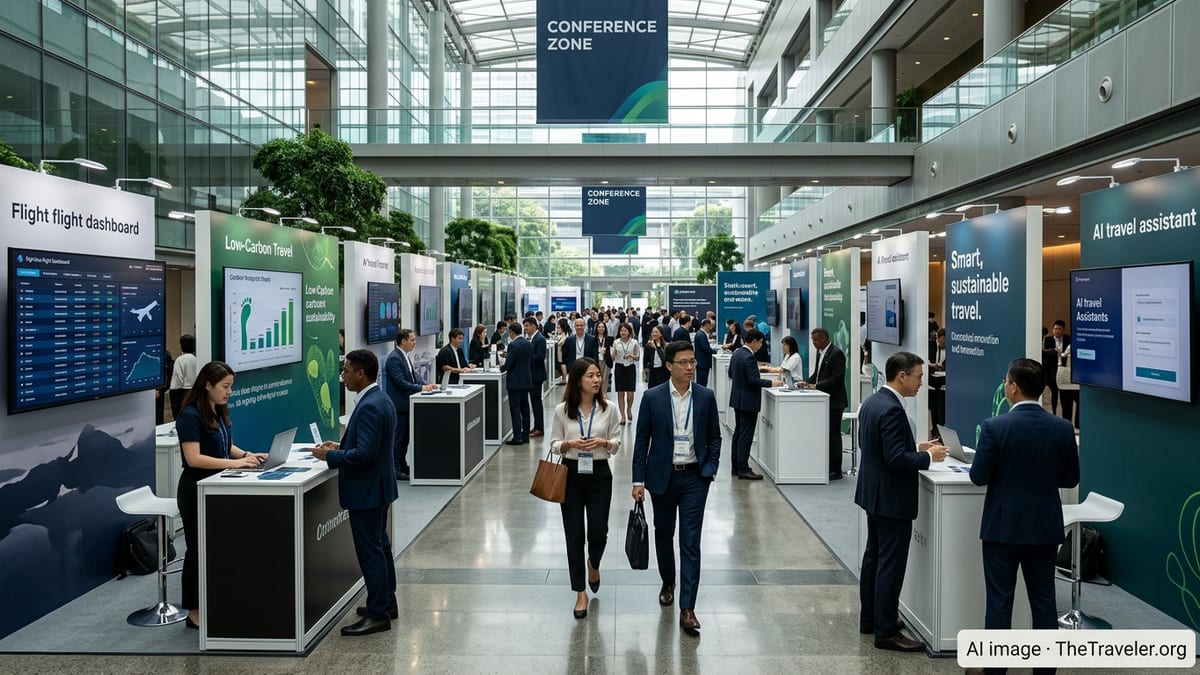
Expo Floor Becomes a Testbed for AI-First Travel Programs
Recent business travel and technology expos across Asia-Pacific are increasingly positioning their show floors as live testbeds for AI-enabled corporate travel. In Singapore, events such as ITB Asia, Travel Tech Asia and the GBTA Asia Pacific Conference have highlighted automation, predictive analytics and intelligent assistants as central to the next wave of travel program design. Conference agendas and exhibitor line-ups show a strong focus on AI-powered booking engines, real-time disruption management and personalization tools built specifically for high-frequency business travelers.
Demonstrations at these events typically showcase systems that learn from historical trip data and traveler preferences to recommend flight and hotel options aligned with company policies. Travel managers are being shown how AI can aggregate content from multiple suppliers, flag policy risks, and automatically suggest compliant alternatives, turning formerly manual approval processes into near-instant decisions. The technology is also being pitched as a way to increase traveler satisfaction by delivering more relevant options in fewer clicks.
Startups and established travel management companies are using these expos to debut agent-style AI copilots embedded into online booking tools and mobile apps. These assistants are designed to answer traveler questions in natural language, rebook disrupted itineraries and surface preferred suppliers that support corporate sustainability and duty-of-care goals. The combination of conversational interfaces and back-end automation is being presented as a major efficiency gain for overstretched travel teams.
For Asia-Pacific hubs that compete to host regional headquarters and major meetings, the clustering of AI travel innovators at exhibition venues is becoming part of the destination value proposition. Organizers are positioning their shows as places where buyers can see interoperable solutions in one place, lowering the barrier to experimenting with AI pilots across entire travel programs.
Sustainability Metrics Move From Side Session to Center Stage
Alongside AI, sustainability has moved to the center of conference programs, mirroring broader regional pressure to align travel with corporate climate commitments. Business travel events in markets such as Singapore, Bangkok and Taipei are increasingly featuring dedicated sustainability stages, ESG summits and joint activations with environmental technology expos. Sessions focus on emissions accounting, science-based targets and practical steps to decarbonize trip portfolios rather than only offsetting remaining emissions.
Organizers are highlighting new tools that track emissions at a granular level, including dashboards that capture the carbon impact of flights, accommodation, event operations and delegate ground transport. These systems are being promoted as essential for companies facing mandatory climate disclosures or investor scrutiny. Publicly available material from regional sustainability conferences indicates that energy-efficient venues, renewable power sourcing and low-waste catering are becoming baseline expectations for large corporate events.
Exhibitors are also bringing in solutions that link travel policies directly to sustainability outcomes. Examples include platforms that default to rail over short-haul air where infrastructure allows, steer travelers toward hotels with credible environmental certifications, or flag itineraries that could be consolidated into fewer, longer trips. This shift reflects growing interest in measuring the return on carbon as well as the return on investment for each journey.
In parallel, some Asia-Pacific trade shows are experimenting with their own event-level sustainability frameworks, publishing high-level reports on energy use, material recycling and transport choices. While methodologies vary, the increased transparency is feeding into buyer expectations and influencing how corporations view destinations and venues when selecting host cities for regional meetings.
Corporate Buyers Seek Practical Playbooks, Not Just Demos
Across the Asia-Pacific expo circuit, corporate travel buyers appear less focused on headline-grabbing prototypes and more interested in practical frameworks they can take back to their organizations. Conference programs increasingly feature case-study style sessions that break down how to integrate AI and sustainability into existing travel policies, payment structures and risk management processes. Published agendas for regional business travel conventions point to strong attendance in sessions on change management, governance and data integration.
Travel managers face pressure to reduce costs, improve traveler experience and hit emissions targets at the same time. As a result, the solutions drawing the most attention at recent expos are those that promise measurable impact with relatively low implementation complexity. These include AI tools that plug into established booking and expense platforms, emissions calculators calibrated to global standards, and reporting suites that can be shared with finance and ESG teams without extensive customization.
Workshops and knowledge arenas at these events often walk participants through scenarios such as redesigning approval workflows using AI risk scores, or benchmarking a company’s travel emissions against peers in the region. Publicly available conference materials suggest that buyers are asking pointed questions about data privacy, algorithmic bias and the energy footprint of AI itself, indicating a more mature understanding of both the potential and the trade-offs.
Many of the expo organizers are framing their events as neutral platforms for comparing technologies rather than endorsing specific vendors. This approach allows travel and procurement teams to pressure-test claims in a competitive environment, speaking with multiple providers in a single visit while also engaging with sustainability experts, venue operators and transport providers.
Asia-Pacific Cities Compete to Be Regional Hubs for Smart, Low-Carbon Travel
The concentration of AI and sustainability content at business travel expos is also intensifying competition among Asia-Pacific cities to be seen as regional hubs for smart, low-carbon corporate mobility. Singapore, for example, has leveraged large-scale travel, technology and enterprise conferences to showcase its digital infrastructure, public transport network and commitments to responsible AI governance. Reports on recent events indicate that city authorities and venue operators are aligning around themes of innovation, resilience and environmental performance to attract global corporate events.
Other destinations in Southeast and East Asia are following similar paths, using travel and sustainability expos to highlight new convention centers, upgraded airports and green hotel developments. In markets such as Thailand and Taiwan, business-focused ESG and carbon-neutrality exhibitions are increasingly co-located with broader trade shows, bringing together travel buyers, urban planners and technology providers under one roof.
This regional competition is shaping the agenda of business travel expos themselves. Program organizers are curating sessions that connect AI and sustainability with city-level strategies, such as smart mobility corridors, digital identity for seamless border crossings and incentives for low-emission meetings. For corporate decision-makers, the result is a richer set of options when selecting where to base regional teams or host annual leadership gatherings.
As Asia-Pacific continues to account for a rising share of global business travel spending, the region’s leading expo hubs are likely to keep investing in their role as conveners of travel, technology and sustainability stakeholders. The current wave of AI and ESG-focused programming suggests that destinations able to demonstrate real progress in both areas will hold a competitive advantage in attracting high-value corporate travel.
From Experimentation to Standards in the Next Travel Cycle
The latest Asia-Pacific business travel expos suggest that AI and sustainability are moving from experimental topics to the foundations of how regional travel programs will be run over the next cycle. Industry forecasts presented at large-scale conventions point to continued growth in business travel volumes, but with tighter controls on emissions and a greater emphasis on traveler welfare. In this context, expos are serving as accelerators for setting common expectations and informal standards.
Vendors are increasingly positioning their AI tools as part of a broader responsible travel ecosystem, emphasizing explainability, data security and alignment with emerging regulations. Sustainability providers, in turn, are working to harmonize metrics and methodologies so that companies operating across multiple Asia-Pacific markets can avoid fragmented reporting. Public information from cross-industry forums indicates a rising appetite for shared frameworks that can be adopted by airlines, hotels, travel management companies and corporate buyers alike.
For now, the expo spotlight remains on piloting solutions in controlled environments, with many organizations using the events to announce limited rollouts or regional trials. However, the speed at which AI capabilities are maturing, combined with external pressure to demonstrate credible climate action, suggests that today’s demonstrations could become tomorrow’s default settings for corporate travel in the region.
As new editions of these expos are announced for 2026 and beyond, the trajectory points toward deeper integration of AI-driven decision-making and verifiable sustainability performance. For business travelers and their employers, the emerging message is clear: in the Asia-Pacific market, smarter and greener will increasingly be the price of entry for how work trips are planned and executed.