

More news on this day
Italy’s cruise sector is heading into 2026 with record passenger forecasts and a surge in early bookings, helped by fresh Mediterranean capacity and the rapid adoption of AI-powered travel planning tools.
Get the latest news straight to your inbox!
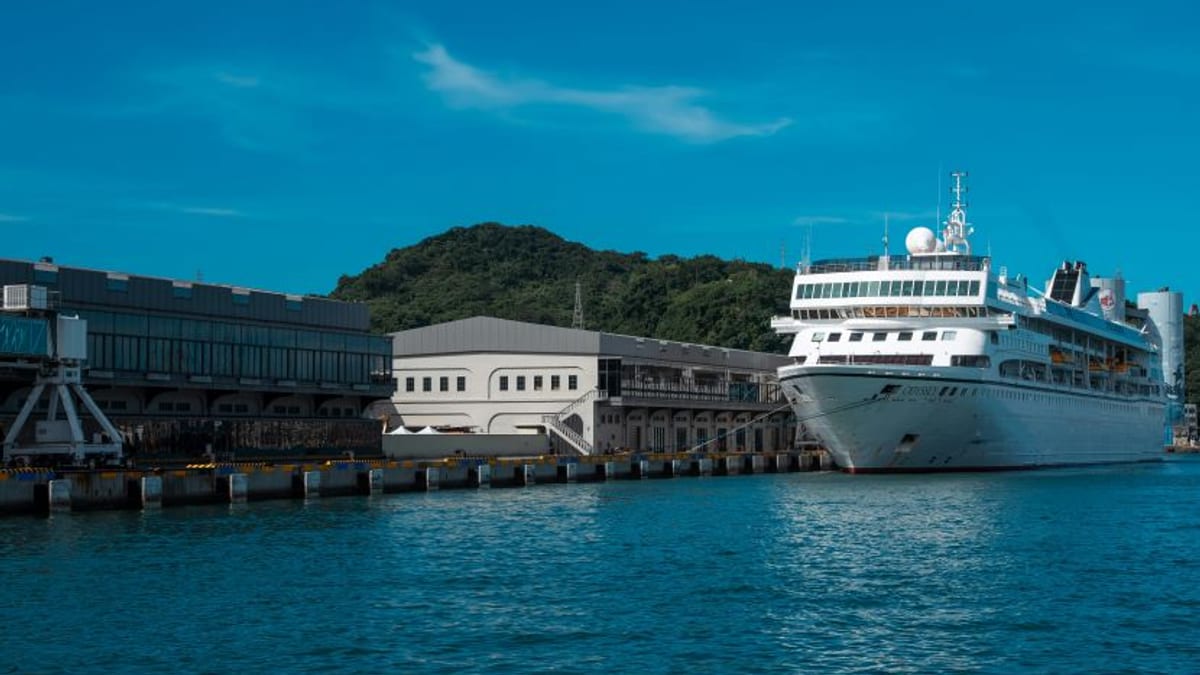
Image by International Cruise News: Latest Cruise Line & Cruise Ship News
Record passenger forecasts put Italian ports in the spotlight
Recent forecasts for Italy’s cruise industry point to another year of expansion in 2026, consolidating the country’s status as one of the Mediterranean’s main hubs. Industry data compiled for Italian ports indicate passenger volumes could climb above 15 million movements by 2026, building on an already robust rebound in 2024 and 2025 and extending a growth trend that was interrupted only during the pandemic years.
Port studies and sector reports highlight continuous gains in ship calls and passenger throughput at key gateways such as Civitavecchia, Genoa, Naples and Venice-adjacent terminals. Italian cruise ports collectively handled more than 14 million passengers in 2024, with projections around 14.7 to 14.8 million in 2025 and a further low to mid single-digit percentage increase anticipated for 2026, according to published figures from port authorities and cruise market consultancies.
Capacity growth is also feeding into the outlook. A luxury cruise market report cited by Cruise Industry News points to a more than 30 percent increase in Mediterranean luxury capacity in 2026, a shift that is expected to benefit Italian embarkation ports and premium itineraries calling at cities such as Rome, Trieste and Bari. New vessels entering service from Italian shipyards, including energy efficient and liquefied natural gas powered ships, are adding berths just as demand strengthens.
Analysts note that this expanded capacity is being met with strong booking trends rather than discounted distress sales, suggesting that the underlying appetite for Mediterranean cruising remains resilient despite higher airfares and broader economic uncertainty.
AI-driven trip planning reshapes how cruises are booked
Behind the numbers, a rapid change in how travelers search for and book cruises is underway, with artificial intelligence tools increasingly embedded in the process. Research from Phocuswright on 2025 and 2026 distribution trends finds that a growing share of travelers are willing to book entire trips through generative AI interfaces, bypassing traditional web search in favor of conversational planning assistants.
Consultancy analysis focused on the cruise sector reports that a large majority of repeat cruisers say generative AI capabilities now influence their choice of booking channel. Separate work on AI use in hospitality and travel payments, including a 2025 hospitality report from Adyen, shows that roughly one in three travelers in surveyed markets already experiment with AI for vacation planning or booking, with usage rising across age groups.
These findings align with evidence from large online travel platforms, where integrated AI assistants are being used at scale for itinerary design, cabin selection and price tracking. Academic research using data from Ctrip, one of Asia’s biggest travel platforms, documents how millions of users interact with a platform-embedded AI assistant throughout the shopping journey, from inspiration to final purchase. While that study is not specific to Italy, it underscores the speed at which AI-native booking behavior can spread once tools are deeply integrated.
For cruises in and around Italy, this shift is visible in how platforms present Mediterranean sailings. Many booking engines now deploy AI to surface suggested itineraries that balance cost, time, port mix and even sustainability preferences, reflecting advances described in recent technical papers on AI itinerary optimization and predictive analytics in reservation systems. In practice, this can mean a traveler asking a virtual assistant for a seven-night family cruise with fewer sea days and child-friendly excursions, and being shown itineraries from Italian ports that fit those constraints within seconds.
Major lines front-load Mediterranean deployment for 2026
The surge in AI-enabled demand is intersecting with strategic deployment decisions by cruise brands that rely heavily on Italian ports. Costa Cruises, for example, has already opened bookings for its full 2026 European season, positioning six ships across the Mediterranean and northern Europe and extending popular itineraries that include Taranto, Cagliari, Savona and Civitavecchia. Industry coverage notes that openings for 2026 were brought forward in response to strong early interest for Mediterranean sailings.
Other operators are also committing more tonnage to the region. Newbuilds constructed at Italian yards, such as large LNG-powered ships and energy efficient vessels delivered from Fincantieri, are scheduled for extensive Western Mediterranean programs in 2026, often with Rome or other Italian ports as turnaround hubs. One new large ship class is slated to debut European operations with summer 2026 itineraries that alternate between Barcelona and Rome, further increasing capacity through Italian gateways.
Smaller segments are expanding as well. A 2026 outlook on daily private cruises in the Mediterranean highlights a 35 percent rise in demand for private day charters between 2024 and 2025, with Italy among the consistently most requested destinations. This market caters to travelers who may pair a mainstream cruise with bespoke yacht or speedboat experiences around destinations such as the Amalfi Coast, Sardinia and the Sicilian islands.
Altogether, these deployment plans mean that Italian ports are set to handle more, and more diverse, cruise products next year, ranging from mass market ships sailing short Western Mediterranean loops to ultra luxury and private-charter operations targeting high-spend visitors.
Personalization, pricing and sustainability in an AI-first market
The integration of AI into booking systems is changing not only where travelers sail, but how they choose, customize and pay for their trips. Reports from travel technology firms indicate that generative AI is allowing cruise retailers to assemble dynamic packages that combine pre- and post-cruise stays, rail links and shore excursions in Italian cities, adjusting prices and recommendations in real time based on inventory and user responses.
Technical studies on microservices-based travel platforms describe how predictive analytics and AI algorithms can process thousands of concurrent user requests while optimizing itineraries for cost, timing and user preferences. For consumers looking at Italian cruises, this translates into more precise cabin suggestions, tailored port-intensive itineraries and nudges toward less-crowded sailing dates or shoulder-season departures, which can ease pressure on popular destinations such as Capri or Cinque Terre.
Price dynamics are also in flux. Consumer discussions and agency commentary compiled across online forums suggest that while fares for some 2026 Mediterranean departures have risen sharply since initial launch, targeted promotions are still appearing as cruise lines fine-tune load factors. AI-driven revenue management tools, designed to predict booking curves more accurately, are expected to further refine these price adjustments as 2026 approaches.
Sustainability remains another area where AI and technology intersect with Italy’s cruise boom. New vessels built in Italy with advanced propulsion systems are promoted as significantly more fuel efficient, and cruise associations point to long-term forecasts that assume continued efficiency gains as passenger volumes rise toward a projected global total of nearly 40 million cruisers by 2027. Italian ports, particularly along the Adriatic, are also included in multi-hundred-million-euro infrastructure programs that support shore power, improved terminals and better integration with local transport networks.
What rising AI-enabled demand means for Italian destinations
For Italian coastal cities and islands, the combination of record cruise forecasts and AI-accelerated booking behavior presents both opportunities and challenges. On the opportunity side, higher passenger volumes in 2026 promise a boost to local economies in port communities, from Rome and Naples to secondary ports such as Salerno and Olbia that have recently crossed new passenger thresholds.
At the same time, more efficient digital discovery means emerging destinations can be surfaced more easily to travelers looking to avoid crowding. Recent Mediterranean booking data for ferries and small-ship travel show growing interest in alternative islands and lesser-known coastal towns. If AI recommendation tools increasingly factor in crowd levels, congestion and seasonality, they may gradually redirect some demand from Italy’s most saturated hotspots toward under-visited areas that are investing in cruise infrastructure.
Local planners are watching these trends closely as they weigh port expansion against concerns about overtourism and environmental impact. With 2026 shaping up as a year of combined capacity growth and AI-fueled demand, the way Italy manages cruise flows, spreads visits across the calendar and coordinates with inland attractions is likely to become as important as the headline passenger numbers themselves.