

More news on this day
Artificial intelligence is rapidly becoming the hidden operating system of global travel, reshaping how flights are planned, hotel rooms are priced and cities are explored long before travelers ever reach the airport.
Get the latest news straight to your inbox!
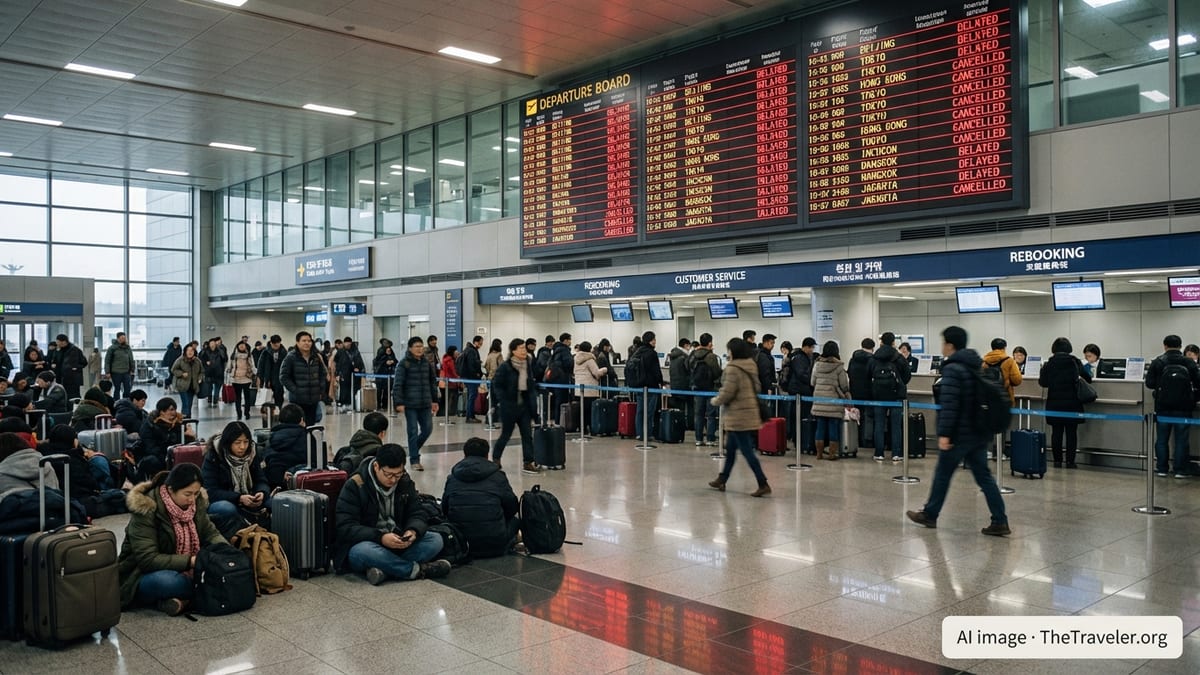
AI Orchestrates Flights Before Travelers Reach the Gate
In aviation, artificial intelligence has shifted from experimental add-on to core decision engine for major carriers in the United States and Europe. Publicly available information shows that airlines are using AI to model aircraft turnaround times, anticipate disruption and adjust schedules in near real time, with the goal of cutting delays and operational costs. Analytical platforms now scan data from weather feeds, crew rosters, air traffic patterns and airport congestion to recommend gate changes, aircraft swaps and recovery plans that once took teams of dispatchers hours to assemble.
Published analysis of airline operations highlights how AI route optimization tools are beginning to influence the paths aircraft actually fly, shaving minutes off flights and reducing fuel burn by proposing alternative routings and altitudes. Some carriers in North America have reported trials in which AI-generated alternatives were offered on the majority of flights in a given window, producing measurable time savings when adopted. In parallel, recent coverage of work involving a major U.S. airline and a large technology company describes AI models that predict where contrails are most likely to form, allowing dispatchers to select routes that reduce the climate impact of flights.
In Europe, industry reports indicate that large network airlines and low-cost carriers alike are concentrating AI investments on what they describe as the “day of operations” problem. Camera systems on ramps and stands feed computer-vision tools that identify slow baggage loading or catering delays, triggering alerts before a delay ripples through the network. AI systems are also being trained to suggest which flights can hold briefly for connecting passengers and which should depart on time to protect overall punctuality.
For passengers, these changes are mostly invisible. The boarding process and onboard experience may look familiar, but the decisions that determine whether a connection is made, a flight is slightly re-routed or a seatmap shifts in the background are increasingly the work of AI models running continuously in airline control centers.
Dynamic Pricing and Smart Hotels Quietly Recode the Stay
Hotels across the United States and Europe are undergoing a quieter, but equally significant, transformation as AI-driven revenue management tools replace static rate sheets. Industry case studies describe how major chains such as Marriott, Hilton and Accor have deployed AI systems that ingest dozens of variables, from historical booking curves and local events to competitor pricing and guest behavior, to set room rates multiple times a day. Instead of seasonal rate bands, prices now drift up or down based on probability models that estimate demand for specific room types on specific nights.
Specialist travel technology outlets report that these AI revenue engines are delivering measurable gains, with some brands citing high single-digit or double-digit percentage increases in revenue per available room after rollout. Analysts note that AI allows revenue teams to move beyond simple “high or low season” logic, automatically spotting compression nights, shoulder-night opportunities and cross-selling chances that human managers might miss. Some forecasts suggest that, by the middle of this decade, top-tier hotel groups could see notable reductions in operating costs and significant uplifts in revenue as AI becomes embedded in property management systems.
AI is also changing how stays are configured rather than just priced. Hotels are experimenting with predictive models for room assignment, extended-stay offers and ancillary sales such as late checkout, parking or co-working access. Virtual concierge tools, often accessed through messaging apps, use language models to recommend restaurants, attractions and services that fit a guest’s profile, drawing on both hotel data and external destination information.
Yet the shift is prompting new questions. Revenue management experts point out that the same algorithms that maximize occupancy can frustrate owners if they prioritize full hotels over higher-yield business. Consumer advocates are scrutinizing how far personalization will extend and whether pricing systems might eventually target individuals based on willingness-to-pay signals. For now, most available evidence suggests that AI in hotels is being deployed at the segment and channel level, but the direction of travel is clearly toward more granular, automated control over each night’s inventory.
Singapore’s Smart Airport Ambitions Set a Benchmark
Singapore has positioned itself as a testbed for AI-driven travel infrastructure, and its aviation hub offers one of the clearest examples of how these systems operate behind the scenes. Recent Changi Airport Group reports describe a multi-year push to embed predictive analytics across airside and landside operations, from baggage and maintenance to passenger information. Predictive maintenance tools track equipment health to anticipate failures before they disrupt operations, while resource allocation models help match staff and assets with fluctuating passenger flows.
Annual disclosures from the airport’s operator outline investments in what it characterizes as graph and generative AI to stitch together data across retail, loyalty, flight information and passenger touchpoints. The objective, according to these documents, is to create a more seamless experience in which notifications about gate changes, baggage belt assignments or security wait times are pushed proactively to travelers through apps and digital displays. Baggage handling has been a particular focus, with scanning and tracking tools that use AI image recognition to reduce mishandling and speed transfers.
Singapore’s flag carrier and its low-cost partners are also experimenting with AI beyond the airport campus. Industry presentations and sustainability reports indicate interest in route-planning tools that balance fuel efficiency, schedule reliability and environmental targets, mirroring similar efforts in the United States and Europe. Taken together, these initiatives reflect a national strategy that treats AI as core infrastructure for tourism and aviation rather than a series of isolated pilots.
For visitors, the benefits may manifest as shorter queues, more accurate flight information and fewer lost bags, even if the underlying algorithms remain out of view. The city-state’s approach is closely watched by other hubs seeking to handle growing travel volumes without proportional increases in staff and physical capacity.
Generative AI Rewrites Itinerary Planning and City Exploration
While operational systems reshape what happens behind the scenes, a parallel revolution is unfolding in how travelers discover and navigate destinations. Generative AI tools that began as experimental chatbots are evolving into always-on travel companions that propose routes, filter options and adjust plans mid-trip. Travel publishers and online agencies in Europe and the United States have introduced assistants that answer natural-language prompts about budgets, interests and time constraints, then generate suggested itineraries that combine flights, hotels and activities.
One widely reported example is GuideGeek, a travel assistant launched by Matador Network that runs on popular messaging platforms and uses generative AI to provide itinerary ideas and local tips. Similar tools are being integrated into established booking ecosystems, where they surface personalized hotel and flight recommendations, monitor price movements and send alerts when deals fall below typical levels. Surveys from major booking platforms suggest that a growing share of travelers are open to using AI for at least part of their planning, particularly for discovering lesser-known neighborhoods, cafes or museums.
In cities, AI is starting to influence what visitors actually do once they arrive. Startups and tourism boards are experimenting with systems that adapt recommendations in real time based on weather, opening hours, crowd levels and user feedback. Instead of static lists of “top 10 sights,” travelers receive evolving suggestions that might, for example, divert them from an overcrowded landmark to a quieter district with similar appeal. Early pilots in European capitals and Asian city-states link these engines with public transport data to propose multimodal routes that balance speed, cost and comfort.
This new layer of algorithmic mediation is prompting debate within the tourism sector. Destination marketers see opportunities to spread visitor traffic more evenly and promote sustainable choices, while some local businesses worry about visibility in AI-generated answers. Market research from media monitoring firms in 2026 points to the emergence of an “AI visibility” race in which airlines, hotels and attractions seek to optimize how they appear in large language model responses, treating AI systems as a new kind of search channel.
A Silent, System-Level Shift With Global Implications
Taken together, developments in Singapore, Europe and the United States point to a structural shift in how tourism is organized. From route planning and airport logistics to hotel pricing and in-destination guidance, AI is becoming the connective tissue that links previously separate systems. Most of this activity is not branded as a new product on a booking screen; instead, it is embedded in control centers, revenue dashboards and recommendation engines that quietly steer choices long before a traveler opens a boarding pass.
Industry analysts argue that this “silent revolution” will define competitiveness in the next decade. Airlines and airports that can forecast disruption more accurately may run more reliable networks with lower emissions. Hotels that harness AI to balance profitability and guest satisfaction could adapt more quickly to shocks in demand. Cities and tourism boards that understand how AI tools route visitors through streets, venues and transit systems may be better placed to manage crowding and sustainability.
At the same time, the growing influence of opaque algorithms raises familiar concerns about transparency, fairness and control. Regulators in both Europe and the United States are scrutinizing AI in pricing and personalization, while consumer advocates encourage travelers to treat AI-generated suggestions as one input among many rather than a definitive guide. What is clear is that tourism’s data layer is being rewritten, and the next phase of global travel will unfold on infrastructure that is increasingly intelligent, often invisible, and still in the early stages of public understanding.