

More news on this day
AIDA Cruises is reinforcing its position as Germany’s dominant cruise brand, reporting exceptionally strong booking levels and high occupancy for 2025 and 2026 sailings even as the global travel industry contends with economic uncertainty, geopolitical tensions and persistent cost pressures.
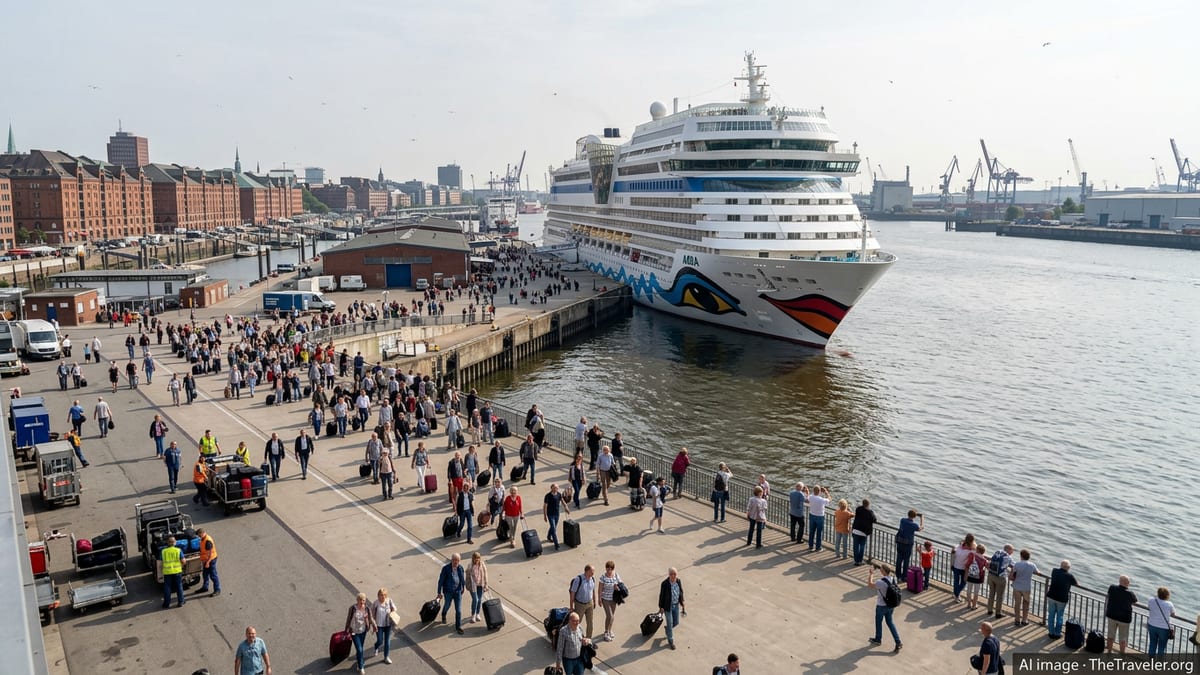
German Market Leader Defies Global Headwinds
While many travel operators are navigating softer consumer confidence and rising operating costs, AIDA Cruises is emerging as a clear outlier in the German-speaking market. Backed by parent company Carnival Corporation, executives have repeatedly highlighted the brand as one of the group’s top performers, pointing to robust pricing, strong advance bookings and sustained demand from German guests.
Cruise and tourism analysts say the broader environment remains challenging, with inflation, higher interest rates and energy costs weighing on household budgets in Europe. Yet AIDA’s ships are sailing at historically high load factors, and booking curves for 2025 are reportedly running ahead of both 2019 and 2023 levels, suggesting that German travelers remain willing to prioritize cruise holidays over other discretionary spending.
Industry data for the European cruise sector indicate that Germany has firmly re-established itself as one of the world’s three largest source markets, and AIDA is leveraged directly into that recovery. Its focus on German-speaking guests, familiar onboard culture and convenient departures from domestic ports have helped the brand outperform competitors who rely more heavily on long-haul airlift and volatile international source markets.
For Carnival Corporation, the strength of AIDA is strategically important. The company’s latest filings and commentary emphasize that new capacity is being directed toward “higher returning” brands, and AIDA is regularly cited in that group, underlining its role as a profit engine within the wider portfolio.
Fleet Investments Signal Confidence in Long-Term Demand
AIDA’s booking strength is being matched by a fresh round of fleet investment that underscores management’s confidence in the German market’s long-term trajectory. Carnival Corporation recently confirmed an order with Italian shipbuilder Fincantieri for two new AIDA vessels, part of a new class of mid-sized ships optimized for the brand’s core clientele.
The newbuilds will follow recent introductions such as AIDAnova and AIDAcosma, large LNG-powered ships that already rank among the most technically advanced cruise vessels homeported in Northern Europe. The forthcoming ships are expected to prioritize energy efficiency, flexible onboard venues and a broad mix of cabins aimed at families, multigenerational groups and price-conscious first-time cruisers.
At the same time, AIDA is advancing its AIDA Evolution program, a multi-year modernization effort that is refitting several existing ships with upgraded cabins, redesigned public areas and enhanced technical systems. Carnival executives have framed the program as central to keeping the brand’s hardware competitive as guest expectations rise and environmental regulations tighten.
Analysts note that committing to new capacity in the current climate would be risky without clear evidence of durable demand. AIDA’s willingness to add ships, while also investing in midlife upgrades for its older tonnage, sends a strong signal that management expects German cruise appetite to remain high well into the next decade.
German Homeports Benefit From Surging AIDA Traffic
The ripple effects of AIDA’s booking momentum are visible across Germany’s major cruise gateways. Ports such as Hamburg, Kiel and Rostock-Warnemünde have all reported strong call schedules driven in part by multiple AIDA ships homeporting or turning around there during the peak season.
In Hamburg, AIDA continues to rank among the leading cruise customers by number of calls, with several ships operating varied itineraries that range from short North Sea breaks to longer voyages to Norway, Iceland and the British Isles. Port officials credit the line’s consistent deployment for helping to underpin investment in terminals, shore power infrastructure and improved passenger facilities.
Kiel, a key embarkation point for Baltic itineraries, has seen cruise volumes climb sharply since 2023, with AIDA frequently basing more than one vessel there during the summer. This has brought a steady flow of German and international guests into the region, boosting hotel occupancies, retail spending and transport links throughout Schleswig-Holstein.
Smaller ports and regional destinations are also benefitting as AIDA expands its network of calls. Coastal communities in northern Germany and along the Baltic are reporting higher visitor numbers tied directly to cruise arrivals, highlighting the brand’s broader economic impact beyond the ships themselves.
Sustainability Credentials Strengthen Brand Appeal
Even as the cruise industry faces criticism from environmental groups, AIDA has worked to position itself at the forefront of sustainability initiatives in the German market. The line operates several LNG-capable ships and has invested in advanced exhaust treatment, energy-efficient hotel operations and sophisticated waste and water management systems across the fleet.
German authorities and industry associations have singled out AIDA as a key partner in the rollout of shore power, which allows ships to shut down their engines in port and draw electricity from the grid. The brand’s vessels have logged hundreds of shore-side electricity connections in recent seasons at ports across Germany and Scandinavia, an achievement frequently cited by local officials seeking to reduce urban air pollution.
Environmental rankings published by non-governmental organizations have rated AIDA among the stronger performers in the ocean cruise segment, particularly on criteria such as emission reduction strategies and adoption of cleaner fuels. While advocates say the industry as a whole remains far from climate neutrality, AIDA’s relative leadership has helped it maintain credibility among increasingly climate-conscious German consumers.
Travel agents report that sustainability is becoming a more prominent factor in client discussions, especially among younger travelers and families. AIDA’s ability to point to tangible investments and measurable progress gives it an advantage in this evolving marketplace, further reinforcing its high booking levels.
Shifting Travel Behavior Fuels AIDA’s Booking Surge
Behind the headline figures on occupancy and advance sales lies a noticeable shift in how German travelers are planning and purchasing their cruises. Industry booking data suggest that guests are reserving sailings further in advance than before the pandemic, locking in preferred cabins and dates on AIDA ships many months, and in some cases more than a year, ahead of departure.
Several factors are driving this behavior. Pent-up demand following years of disrupted travel has left many households eager to secure attractive itineraries early, while the perception that ships regularly sail close to full has reduced the appeal of last-minute bargain hunting. Flexible booking policies and staggered payment schedules have also made it easier for guests to commit to future voyages.
At the same time, AIDA’s targeted promotions in the German market, including early-booking discounts, loyalty incentives and bundled packages with rail or hotel stays, are encouraging guests to plan comprehensive holidays around their cruises. Travel agents say these offers, combined with clear communication on health and safety standards, have played an important role in sustaining demand despite broader economic worries.
For now, the combination of strong brand recognition, focused product design and proactive capacity investment is keeping AIDA Cruises firmly in the leading position within Germany’s cruise sector. If current booking trends continue, the line appears well placed to navigate global challenges while capitalizing on the enduring appetite of German travelers for life at sea.