

More news on this day
AIDA Cruises has formally suspended its Middle East winter operations for the 2026–27 season, extending a pause on Arabian Gulf deployments as the company continues to recalibrate itineraries in response to regional security risks and evolving fleet strategy.
Get the latest news straight to your inbox!
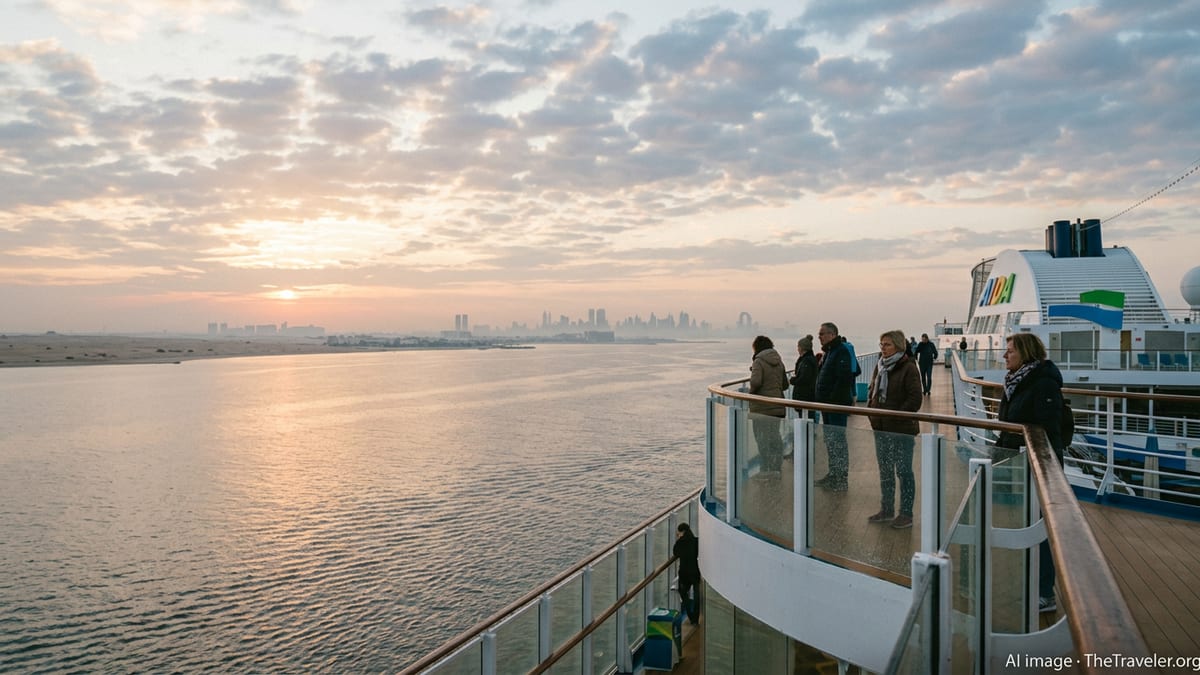
Expanded Break in AIDA’s Arabian Gulf Presence
The latest deployment update confirms that AIDA Cruises will not base a ship in the Middle East for the 2026–27 winter season, continuing a withdrawal that began with the cancellation of its 2025–26 Arabian Gulf program. Publicly available information indicates that the line, a German brand within Carnival Corporation, is keeping its ships on routes that avoid the most sensitive choke points in and around the Red Sea and Arabian Gulf, where commercial shipping and cruise activity have been disrupted by security incidents in recent years.
The move follows AIDA’s earlier decision in mid‑2025 to cancel all 2025–26 winter sailings for AIDAprima from Dubai and Abu Dhabi, a step that ended nearly two decades of continuous seasonal presence in the Gulf. At that time, coverage in cruise trade media linked the withdrawal to heightened tensions in the wider region and persistent risks along key approaches used by cruise ships repositioning to and from the Middle East.
While the newly confirmed 2026–27 pause extends that absence, AIDA has signaled that it views the retreat as strategic and time‑limited rather than permanent. Deployment announcements for later years show the company planning a structured return to the region once it judges conditions and fleet priorities to be more favorable.
Security Environment Shapes Itinerary Planning
Cruise deployment in the Middle East has become increasingly sensitive to geopolitical events, and AIDA’s latest suspension fits into that wider pattern. Reports over the past two years have described repeated security incidents affecting commercial vessels in the Red Sea, Gulf of Aden, and approaches to the Strait of Hormuz, prompting multiple cruise brands to reconsider or adjust itineraries involving the region.
For lines such as AIDA that traditionally combine Gulf cruises with repositioning voyages via the Suez Canal or around southern Africa, each escalation in maritime risk increases operational complexity. Longer alternative routes raise fuel consumption and reduce the number of revenue‑producing days available in a given season, while ports and passengers expect reliable schedules. The 2026–27 suspension suggests that, for now, the cost and uncertainty of routing ships into and out of the Gulf outweigh the commercial benefits of maintaining a winter program there.
Industry observers note that AIDA’s decision follows a broader recalibration among European cruise brands serving the Arabian Gulf. Other operators have also trimmed or reshaped regional deployments, even as local port authorities and tourism boards continue to promote the Gulf as a winter sun destination with modern terminals and established cruise infrastructure.
Redeployment Toward Europe, Atlantic Islands and Africa
With the Middle East program on hold for 2026–27, AIDA is redirecting capacity to what it terms more established and resilient winter markets. Previous announcements around the 2025–26 changes showed affected capacity moving into Northern Europe, the Canary Islands, Madeira and Atlantic itineraries, and similar patterns are evident in the brand’s forward deployment for late 2026 and early 2027.
Itinerary updates for ships such as AIDAprima and AIDAcosma highlight a focus on cruises from German homeports to Norway and Western Europe in the shoulder seasons, followed by winter programs in the Canary Islands and nearby Atlantic archipelagos. These regions provide a mix of milder winter weather, strong source‑market demand from Germany and neighboring countries, and routing that avoids higher‑risk maritime corridors.
Reports on AIDA’s wider network also point to an expanded emphasis on Africa and the Indian Ocean, with longer voyages connecting European ports to destinations such as South Africa, Mauritius and La Réunion. That strategy allows the company to market extended sunshine cruises while keeping ships largely clear of the most contested sea lanes linked to the Middle East.
Guests Offered Alternatives as Bookings Shift Forward
The formalization of the 2026–27 suspension means that guests who may have been anticipating a revival of Arabian Gulf sailings in that window will instead be steered toward alternative itineraries. When the line first withdrew its 2025–26 Middle East season, published reports described a combination of rebooking options and future cruise benefits for affected passengers, including vouchers calibrated to the value of the original fare.
For the 2026–27 period, the disruption is more about the absence of new product than the cancellation of already‑on‑sale voyages, as AIDA had not reintroduced a dedicated Gulf program into its public schedules. Travel agents and repeat guests tracking deployment patterns will now see the gap extending across a second consecutive winter, reinforcing the message that AIDA’s near‑term focus lies elsewhere.
At the same time, the brand is positioning newly announced 2027–28 cruises as a way for Middle East enthusiasts to plan further ahead. Bookings have opened for AIDAperla to operate a full Arabian Gulf winter season in 2027–28, including itineraries combining Gulf ports with longer routes linking the region to Africa and the Indian Ocean. This gives guests with flexibility the option to shift their ambitions to a later season when the line expects to restore a structured presence in the Gulf.
Return Scheduled for 2027–28 Highlights Long‑Term Interest
The decision to keep 2026–27 clear of Middle East operations stands in contrast to the more optimistic tone of AIDA’s 2027–28 announcements. Cruise industry coverage in early 2026 describes the company opening sales for a comprehensive Arabian Gulf program from late 2027 into spring 2028, with AIDAperla at the center of the deployment and a mix of seven‑night and longer voyages.
According to that information, AIDA will reintroduce roundtrip cruises from regional hubs and link the Gulf to South Africa and Indian Ocean islands through extended repositioning routes. The plan underlines the company’s view that the region remains strategically significant over the longer horizon, both as a winter homeport market and as a bridge between Europe and southern hemisphere destinations.
By formally suspending operations for 2026–27 while simultaneously committing capacity for 2027–28, AIDA is signaling a phased approach: a tactical retreat while short‑term risks and costs are elevated, followed by a structured comeback when the operating environment is expected to be more predictable. For port authorities and tourism stakeholders across the Middle East, that timeline offers both a reminder of current challenges and a marker for when one of the Gulf’s longest‑standing seasonal cruise partners intends to return.