

More news on this day
AIDAbella has officially resumed guest service from Palma de Mallorca following a seven-week, five million dollar refurbishment in Marseille, emerging as a more luxurious yet markedly more sustainable option for European cruise travelers.
Get the latest news straight to your inbox!
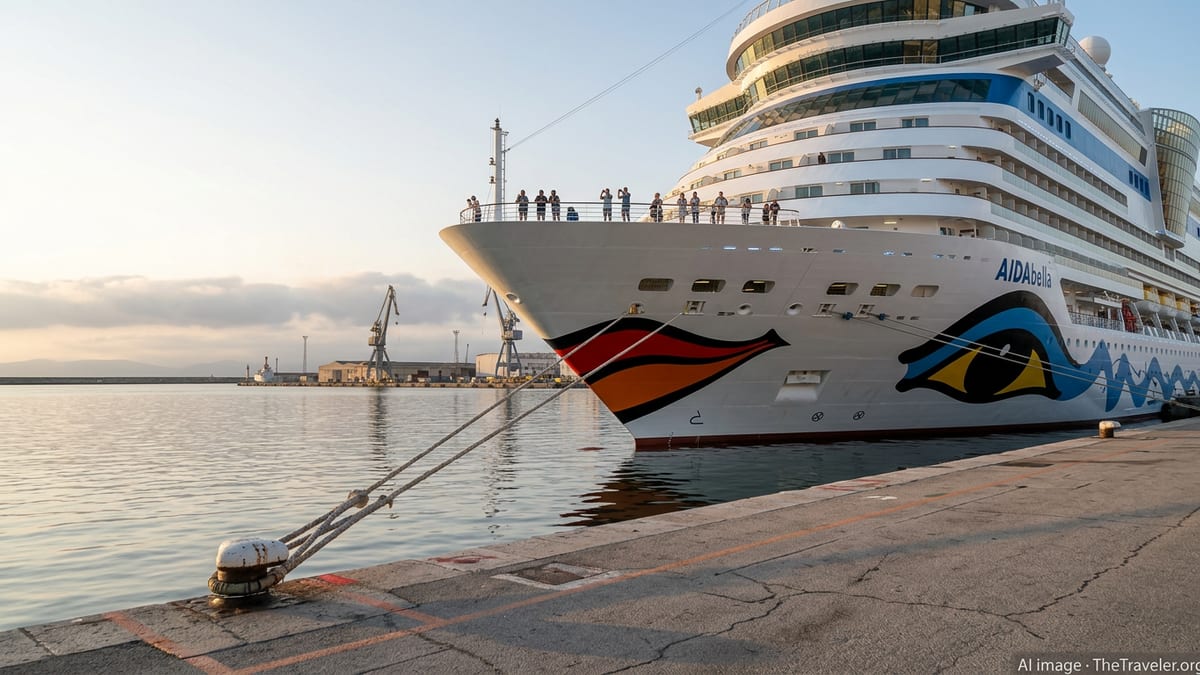
Flagship of AIDA Evolution Returns to Service
The 2008-built AIDAbella re-entered operation on March 11, 2026, sailing a seven-day Western Mediterranean itinerary from Palma de Mallorca that calls at Civitavecchia near Rome, La Spezia, Marseille and Barcelona. The return follows an intensive shipyard stay at Chantier Naval de Marseille, where the vessel underwent structural, technical and interior upgrades as part of AIDA Cruises’ wider AIDA Evolution modernization program.
AIDA Cruises has positioned AIDAbella as the third ship in its Selection-class fleet to complete an Evolution refit, following sister ships AIDAdiva and AIDAluna. For the German-focused brand, the project is a showcase of how established tonnage can be elevated to near-newbuild standards through targeted investment rather than fleet expansion.
While the total modernization package for the Evolution program runs into a nine-figure sum, AIDA allocated approximately five million dollars to AIDAbella’s latest phase of work, concentrating that spend on guest-facing enhancements, energy efficiency measures and circular-economy initiatives across the 68,500-ton vessel.
The relaunch comes at a time when European cruise lines are under increasing pressure to demonstrate tangible sustainability progress while still competing in the premium and contemporary luxury segments, particularly in mature markets such as the Mediterranean.
Luxury Upgrades Redefine Onboard Experience
Central to the refit is an enhanced accommodation offering. All staterooms received refreshed color schemes, new soft furnishings and modern lighting, with additional USB ports and practical storage designed around today’s digitally connected guests. New stern-facing suites with private sun decks broaden the ship’s appeal to higher-spend travelers seeking more space and privacy at sea.
Public areas have also been comprehensively reimagined. AIDAbella now features expanded dining and bar concepts, including the nautical-themed Yacht Club restaurant and the open-air Lanai Bar at the stern. Popular brand signatures such as French Kiss Bar & Bistro, East Fusion and Tapas & Bar join the line-up, giving guests a more diverse culinary landscape and extended evening social options.
Entertainment has been upgraded through a modernized Theatrium, the ship’s multi-level show lounge at the heart of the vessel. New lighting and sound technology, together with reconfigured seating and circulation space, are aimed at improving sightlines and comfort while supporting more complex productions and live performances.
Wellness and relaxation areas on the spa and sky deck have been redesigned with updated materials, loungers and layout, while the suite lounge has been refined to deliver a quieter, club-style atmosphere for top-tier guests. These changes collectively push AIDAbella further into the premium segment without sacrificing the informal “AIDA feeling” that underpins the brand.
Concrete Sustainability Measures at Sea
Beyond visible guest-facing upgrades, AIDAbella’s refurbishment places a strong focus on measurable environmental performance, reflecting both regulatory pressure and shifting traveler expectations. A new reverse osmosis system allows the ship to produce more fresh water from seawater using less energy, reducing reliance on bunkered potable water and cutting associated emissions.
Across the vessel, extensive lighting replacements have transitioned remaining conventional fixtures to LED, while the climate-control system has been recalibrated for more precise, demand-based operation. In the galleys and catering areas, modernized equipment and smarter heat management are expected to reduce overall energy and water consumption per guest-night.
One of the most significant technical changes is the application of a biocide-free, low-friction hull coating designed to minimize fouling and drag. By reducing resistance through the water, the coating enables more efficient sailing at the same speed profile, contributing directly to lower fuel consumption and emissions over the life of the paint system.
These measures add to a broader fleet-wide decarbonization strategy at AIDA Cruises, which includes shore-power readiness, alternative fuels testing and progressive optimization of voyage planning. While AIDAbella remains a conventionally powered ship, the refit demonstrates how existing tonnage can be incrementally improved to align more closely with emerging environmental benchmarks.
Circular Economy and Eco-Conscious Interiors
A signature element of the AIDA Evolution program, and of AIDAbella’s refit in particular, is the emphasis on circular-economy principles. Approximately 5,100 pieces of furniture removed during the refurbishment were donated to social organizations, allowing items with a continued usable life to be repurposed instead of sent to landfill.
At the same time, around 18 tons of aluminum from sun loungers and outdoor chairs were separated and recycled, returning valuable material to the production cycle. Large volumes of interior materials were also processed for reuse, including roughly 45,000 square meters of carpet, 10,000 square meters of underlay, 2,500 square meters of artificial turf and more than 1,000 mattresses.
In crew and reception areas, AIDA introduced fully recyclable, allergy-friendly carpet made from Econyl yarn, a material produced using recycled fibers, including carpets removed from sister ships AIDAdiva and AIDAluna. This closed-loop approach connects the different stages of the Evolution program and visibly demonstrates how refurbishment projects can generate new raw materials for subsequent upgrades.
For guests, these behind-the-scenes choices translate into fresher interiors with lower environmental impact, while for the cruise line they serve as a pilot model for future refits planned across additional Sphinx-class ships, including AIDAsol, AIDAstella, AIDAblu and AIDAmar by 2028.
Family-Friendly Features for a Greener Generation
AIDAbella’s modernization is also geared toward multigenerational travel, with several new spaces designed for families. A purpose-built Fun Park featuring a climbing tower offers an active outdoor zone for children, while a redesigned Kids Club introduces interactive elements and age-appropriate play areas that better support longer itineraries.
For older children and teenagers, a refreshed Game Center provides digital entertainment, group challenges and social hangouts away from adult-dominated venues. These additions aim to balance relaxation and activity, allowing parents to enjoy upgraded dining, spa and lounge spaces while younger guests explore supervised environments tailored to them.
By combining family-focused amenities with eco-conscious upgrades, AIDA Cruises is targeting a younger, sustainability-aware audience that increasingly seeks transparency on how vacations are operated. The company is betting that visible, story-rich features such as recycled materials, energy-saving technologies and responsible refurbishments will resonate with travelers who want comfort and entertainment without ignoring environmental impact.
As AIDAbella resumes regular deployment in the Mediterranean, industry observers will be watching closely to see how the five million dollar refit resonates with the market, and whether the blend of elevated luxury and concrete sustainability measures sets a new template for mid-life modernizations across the global cruise sector.