

More news on this day
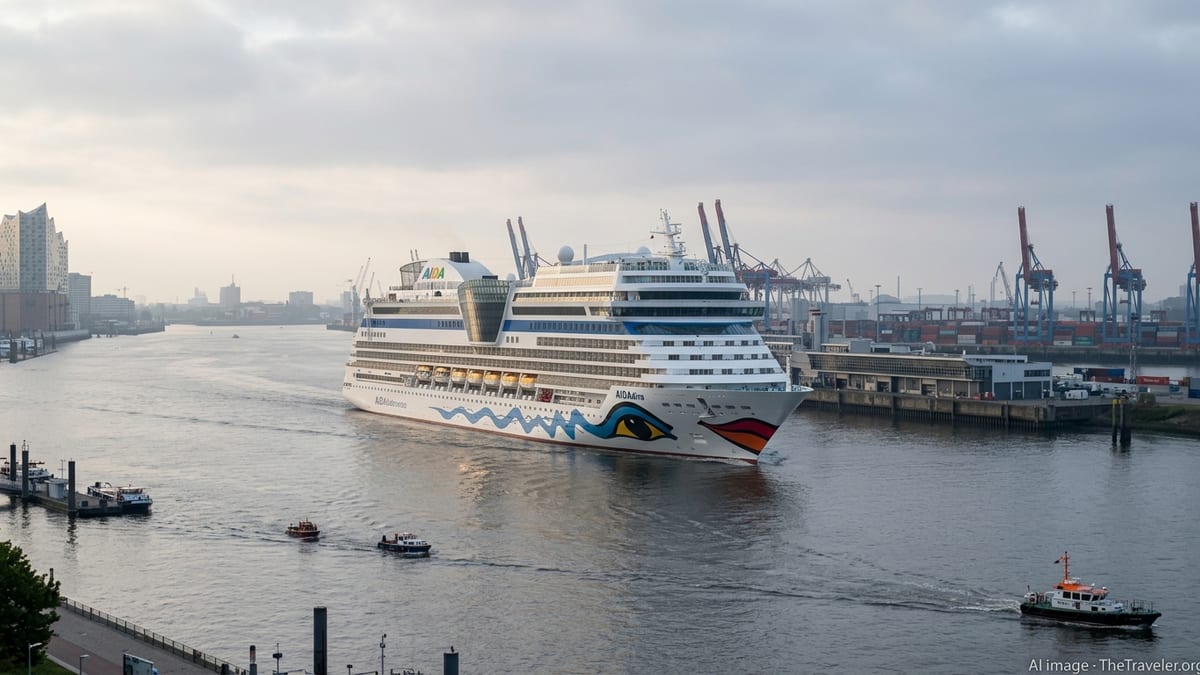
AIDAdiva is scheduled to return to Hamburg in March 2026 after a landmark 2025–26 world cruise, a high-profile turnaround that highlights both the ship’s renewed role in global tourism and the city’s growing importance as a Northern European cruise gateway.
Get the latest news straight to your inbox!
Landmark World Cruise Caps a 133-Day Global Journey
The current AIDAdiva world cruise, which departed Hamburg on 10 November 2025, is widely described in industry coverage as the longest voyage in the brand’s history, stretching to around 133 days and circling four continents. Publicly available itineraries show a route that threads from Europe across the Atlantic, along the North American Pacific coast, through Hawaii and Asia, and back via the Indian Ocean and southern Africa before returning to Northern Europe.
Schedules published by cruise distributors and the Hamburg port authority indicate that AIDAdiva is due to complete the voyage with an arrival back in Hamburg around 23 March 2026. The turnaround is expected to be one of the headline calls of the city’s early cruise season, as the ship ends a months-long itinerary that has taken guests to more than 50 ports.
Reports from cruise industry outlets point to the voyage as part of a broader push by AIDA Cruises to expand its portfolio of long-duration and world itineraries. The 2025–26 schedule follows earlier world cruises on other ships, but industry observers note that the current routing adds new destinations and lengthens time at sea, positioning the sailing as a flagship product in the company’s long-haul offering.
The world cruise also coincides with the line’s wider fleet modernization program, with AIDAdiva having undergone a substantial refurbishment in 2025. Trade publications describe upgrades to guest areas and technical systems, positioning the ship to compete in a market where travelers increasingly expect contemporary amenities even on older tonnage.
Hamburg Strengthens Its Status as a Northern Europe Cruise Hub
Hamburg’s cruise calendar for 2026 shows AIDAdiva’s return slot among a series of early spring calls that are expected to bring thousands of passengers into the port city. Local scheduling documents list the ship’s March 2026 arrival at Cruise Center Steinwerder, underlining how large-tonnage vessels are integrated into the city’s modern terminal infrastructure.
Hamburg has been steadily building its reputation as a key turnaround port for German and international cruise lines. Recent seasons have seen a growing mix of homeport operations and transit calls, and analysts tracking passenger numbers view 2026 as another step toward pre-pandemic volumes. The high visibility of a world cruise arrival, combined with concentrated sailings in the following weeks, is likely to give the city an additional marketing boost among potential cruise travelers in Central and Northern Europe.
Publicly available information from regional tourism bodies highlights the wider economic effect of those calls, citing hotel stays, restaurant visits and shore excursions as important contributors to local spending. The return of a large ship such as AIDAdiva at the end of a global voyage typically generates heightened media attention, which in turn can strengthen Hamburg’s branding as both a cruise and city-break destination.
Industry observers also point to the port’s environmental agenda as an increasingly important factor for cruise deployment decisions. Hamburg has invested in shore-power facilities and emissions-reduction initiatives, and sector analysts note that German-sourced brands are under particular pressure from their core markets to demonstrate progress on sustainability. AIDAdiva’s operations in and out of the city sit within that broader transition.
Summer 2026 Program Signals Confidence in European Cruise Demand
After completing the world cruise, AIDAdiva is expected to transition back into a pattern of European sailings for the 2026 summer season. Forward schedules and trade coverage suggest a mix of Northern Europe and Baltic-style itineraries, along with selected voyages in the wider Atlantic region, reflecting resilient demand for regional cruising among German-speaking guests.
Booking patterns tracked by industry analysts indicate that summer 2026 deployments across several major brands were opened to the market as early as early 2025, with strong early interest reported for Northern Europe itineraries. Within this context, AIDAdiva’s post-world-cruise program is being viewed as a test of how far demand has recovered for medium-sized, German-market ships compared with the pre-2020 period.
Travel retailers specializing in the German cruise market note that multi-week and back-to-back bookings have become more common on popular ships, as passengers seek to extend holiday time while minimizing air travel. Routes that begin and end in Hamburg or other drive-to ports are seen as particularly attractive to customers from Germany, Denmark, the Netherlands and neighboring countries.
The 2026 season is also expected to see increased competition in the region from other European and US-based brands, many of which are deploying newer tonnage to the North Sea and Baltic. Observers say AIDAdiva’s refreshed onboard product and the marketing halo of the world cruise could help the ship stand out in a crowded marketplace.
World Cruises as a Barometer of Global Tourism Recovery
World cruises have become a closely watched segment of the travel market, often viewed as a bellwether for the spending power and confidence of mature cruise travelers. The strong advance sales reported for AIDAdiva’s 2025–26 voyage, along with announcements of future world itineraries into 2027 and 2028, are being interpreted by analysts as a sign that long-haul discretionary travel is firmly back on the agenda for many European consumers.
Surveys cited in European travel media indicate that extended cruises appeal to guests seeking “once in a lifetime” experiences that bundle multiple continents into one trip, particularly at a time when airfares and hotel prices remain volatile. For cruise lines, these itineraries lock in higher per-guest revenue and support occupancy during shoulder and winter seasons.
Global booking data compiled by cruise research firms shows a steady rise in the number of world voyages and grand cruises offered for the 2025–27 period, not only in the German-speaking market but also from UK, US and Asian brands. AIDAdiva’s deployment fits this pattern, expanding the availability of world itineraries that start and end in continental European ports rather than flying guests to distant embarkation points.
At the same time, observers caution that long itineraries remain exposed to operational and geopolitical risks, from port access changes to regional instability. Published commentary notes that cruise lines, including AIDA’s parent group, have become more flexible in route planning, building in options to adjust calls while keeping the overall experience intact for guests.
Boost to Cruise Supply Chains and Regional Tourism Partners
AIDAdiva’s world cruise and subsequent 2026 summer operations are expected to generate additional activity along the ship’s broader supply chain, from maritime services in Hamburg to provisioning, entertainment and technical support spread across multiple ports. Trade publications covering the German maritime sector emphasize the role of homeport calls in supporting local service companies, including tug operators, fuel suppliers, food distributors and maintenance firms.
Across the itinerary, dozens of destinations along the 2025–26 route are preparing for repeat exposure as the world cruise concludes and the ship transitions to regional sailings. Shore-excursion providers, transport companies and local attractions in ports visited by AIDAdiva commonly report spikes in demand on cruise days, and many have been investing in infrastructure and staff to handle larger volumes.
For smaller ports in particular, the presence of a mid-sized ship with a predominantly European passenger base can act as a catalyst for further tourism development. Media reports from destinations on AIDAdiva’s route highlight efforts to package local culture, gastronomy and nature-based activities in ways that appeal to cruise visitors, while also addressing concerns from residents about crowding and environmental impact.
As AIDAdiva returns to Hamburg and prepares for a full slate of summer 2026 cruises, industry observers see the ship as emblematic of how European cruise tourism is repositioning itself: leaning on established homeports, promoting longer and more varied itineraries, and attempting to balance growth with rising expectations around sustainability and local engagement.