

More news on this day
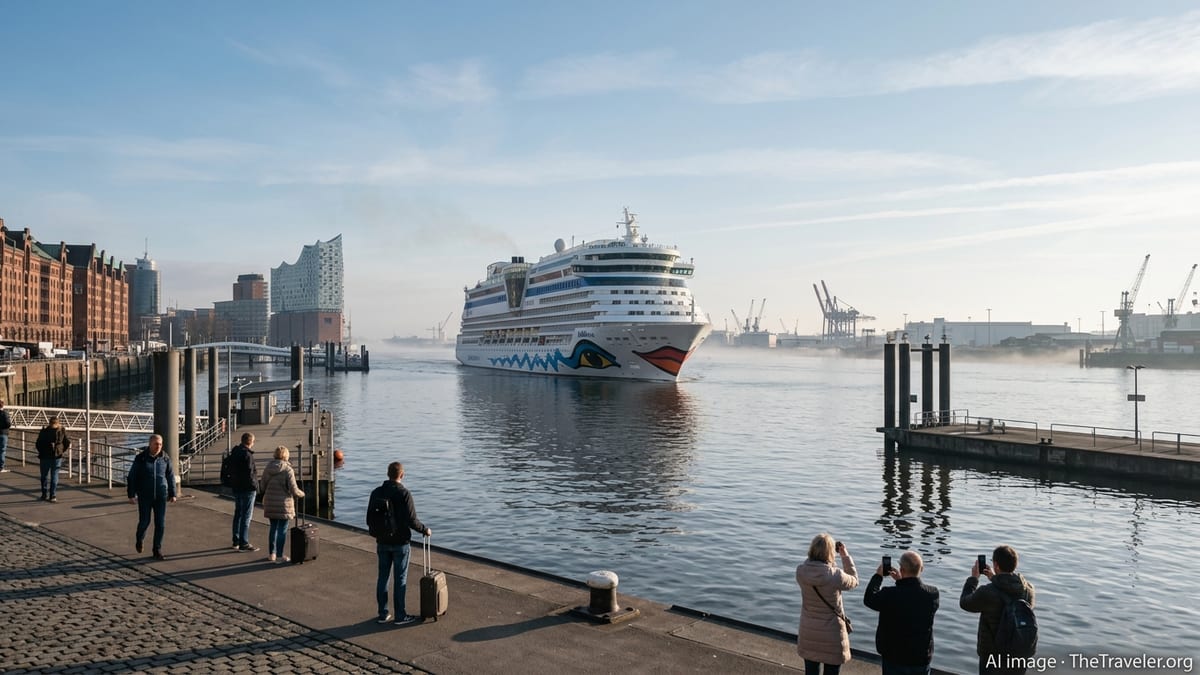
When AIDAdiva completes its 133 day world cruise and docks back in Hamburg on 23 March 2026, the ship’s return is set to highlight not only a landmark voyage for the German cruise line but also a renewed surge in tourism focused on Germany’s largest port city.
Get the latest news straight to your inbox!
A Landmark World Voyage for AIDAdiva
The current AIDAdiva world cruise began in Hamburg on 10 November 2025 and stretched across 133 days, making it one of the longest itineraries in the fleet’s history. Publicly available booking data and cruise line catalogues describe a route that circles the globe, calling at 54 ports in 27 countries before returning to the River Elbe in late March 2026.
The itinerary has been promoted as a showcase of contrasting regions. Passengers departed Hamburg for the British Isles and North America before heading south to the Caribbean, continuing via the Panama Canal to the Pacific coast of the Americas and on to Hawaii. From there, the route leads across the Pacific to East Asia, Southeast Asia and the Indian Ocean, before tracing the coastline of southern Africa and returning to northern Europe.
Industry coverage notes that this is the first world cruise operated by AIDAdiva and the longest AIDA world itinerary to date operated from Hamburg as both the starting and finishing port. The design is intended to appeal especially to the German source market, offering a round the world voyage without the need for flights to or from the ship.
During the winter 2025 to 2026 season, the sailing has also drawn attention for operational challenges, including weather related adjustments and at least one medical diversion in the Pacific. Despite such incidents, reports indicate that the voyage has remained broadly on schedule and that Hamburg’s planned welcome for the returning ship on 23 March 2026 is expected to proceed as advertised.
Hamburg’s Cruise Comeback and Local Economic Impact
Hamburg has spent the past several years positioning itself as a leading turnaround port in northern Europe, and the AIDAdiva world cruise has become a focal point of that strategy. Cruise industry publications list the vessel’s departure and return among the marquee events of the city’s 2025 to 2026 cruise calendar, alongside regular departures to Norway, the Baltic and the British Isles.
Local tourism analyses describe turnaround calls like AIDAdiva’s as particularly valuable because passengers often arrive in the city several days before embarkation or stay on after disembarkation. Hotels, restaurants, cultural institutions and retailers in central Hamburg and the waterfront districts of HafenCity and St. Pauli are expected to benefit from an influx of guests at both ends of the voyage.
Economic studies commissioned by German port cities in recent years have consistently associated large homeport operations with higher per passenger spending on accommodation, dining, shopping and local excursions compared with simple port of call visits. With more than 2,000 passengers carried at full capacity, a world cruise turnaround by a ship the size of AIDAdiva represents a concentrated injection of visitor spending into the city’s economy.
Importantly for the wider German tourism sector, the sailing reinforces the country’s position as a major cruise source market. Booking platforms have reported strong interest in long duration itineraries departing from German ports, a trend that could encourage further investment in infrastructure and joint promotions between cruise lines, regional tourism boards and local businesses.
What Returning Passengers Will Find in Hamburg
Travelers ending their world voyage in March 2026 will encounter a Hamburg that has been actively refining its tourist offering. Public information from city marketing campaigns and travel guides highlights new hotels around the harbor, expanded cultural programming at venues such as the Elbphilharmonie concert hall, and updated visitor facilities at the St. Pauli Piers and in the Speicherstadt warehouse district.
The timing of AIDAdiva’s return coincides with the early spring travel period, when riverfront walks, harbor tours and museum visits are popular with visitors from across Germany and neighboring countries. For those arriving with time to spare before returning home, rail connections from Hamburg provide access to other German destinations from the North Sea coast to cities such as Berlin, Hanover and Cologne, allowing the cruise to serve as a starting point for extended overland travel.
Reports from previous cruise seasons show that many guests use Hamburg turnarounds to combine sea voyages with city breaks, seeking out local food, architecture and music. For the world cruise segment, which skews toward experienced travelers, travel advisors expect heightened interest in neighborhood level experiences, such as guided walks through historic quarters, independent galleries and specialty food markets.
In addition, Hamburg’s reputation as a maritime hub is itself a draw. The return of a ship that has circled the globe underscores the city’s identity as both a working port and a travel destination, reinforcing marketing efforts that present Hamburg as “Germany’s gateway to the world.”
Modernized Ship, Evolving Expectations
AIDAdiva returned to service after a major refurbishment as part of the company’s broader fleet renewal program. Corporate information released over the past two years describes upgrades including refreshed public spaces, additional dining options, updated cabin designs and new family focused activity areas. The world cruise is the most visible test of these changes in a long haul setting.
Cruise analysts note that such investments reflect rising expectations among German and European passengers for higher comfort and variety on extended voyages. On a 133 day itinerary, factors such as diverse cuisine, flexible entertainment and wellness spaces play a significant role in guest satisfaction. By deploying a freshly modernized ship on its longest itinerary, the brand is signaling confidence in its ability to compete in the premium segment of the German speaking cruise market.
The successful completion of a complex global route also matters for the wider perception of cruising from Germany. Over the past decade, German ports and operators have worked to address concerns around crowding and to balance growth with environmental and social considerations. Demonstrating that large scale voyages can be managed efficiently, with clear communication to passengers and local stakeholders, is seen within industry commentary as a way to build trust in the sector’s future expansion.
For travelers considering similar voyages in coming years, the AIDAdiva experience provides a reference point for itinerary design, onboard standards and price positioning. Travel agencies already promote future world cruises from Hamburg, suggesting that sustained interest in these grand voyages could become a regular feature of Germany’s outbound tourism landscape.
Environmental Debate Around Cruise Growth
While AIDAdiva’s return is framed by many travel businesses as a success for Hamburg and German tourism, the growth of cruise traffic in northern Europe continues to prompt public debate. Commentators in local and national media frequently point to air emissions, marine pollution and crowding in port districts as key concerns, especially as more large ships use German ports as home bases.
Hamburg has responded over the past several years by expanding shore power facilities and encouraging ships to connect to the local grid while alongside, reducing the need to run diesel engines in port. Publicly available port authority data and environmental reports indicate that an increasing share of visiting cruise vessels are technically capable of using the infrastructure, although adoption varies by ship and itinerary.
For travelers, this evolving policy landscape means that choosing a cruise from Hamburg now intersects with broader discussions about sustainable tourism. Some passengers actively seek out information on fuel types, shore power usage and emissions reduction measures when selecting itineraries, and travel advisers report that questions about environmental performance have become more frequent in the German market.
As AIDAdiva completes its circumnavigation and returns to the Elbe, the ship symbolizes both the appeal and the complexity of modern cruise tourism. Its arrival is expected to draw crowds to the waterfront and support businesses across the city, while also keeping the environmental and urban planning implications of continued cruise growth firmly in the public eye.