

More news on this day
After 133 days at sea, hundreds of port calls and an unscripted detour across the Pacific, AIDAdiva has completed its epic world cruise in Hamburg, capping a milestone voyage for Germany’s cruise market and signaling renewed demand for ultra long itineraries.
Get the latest news straight to your inbox!
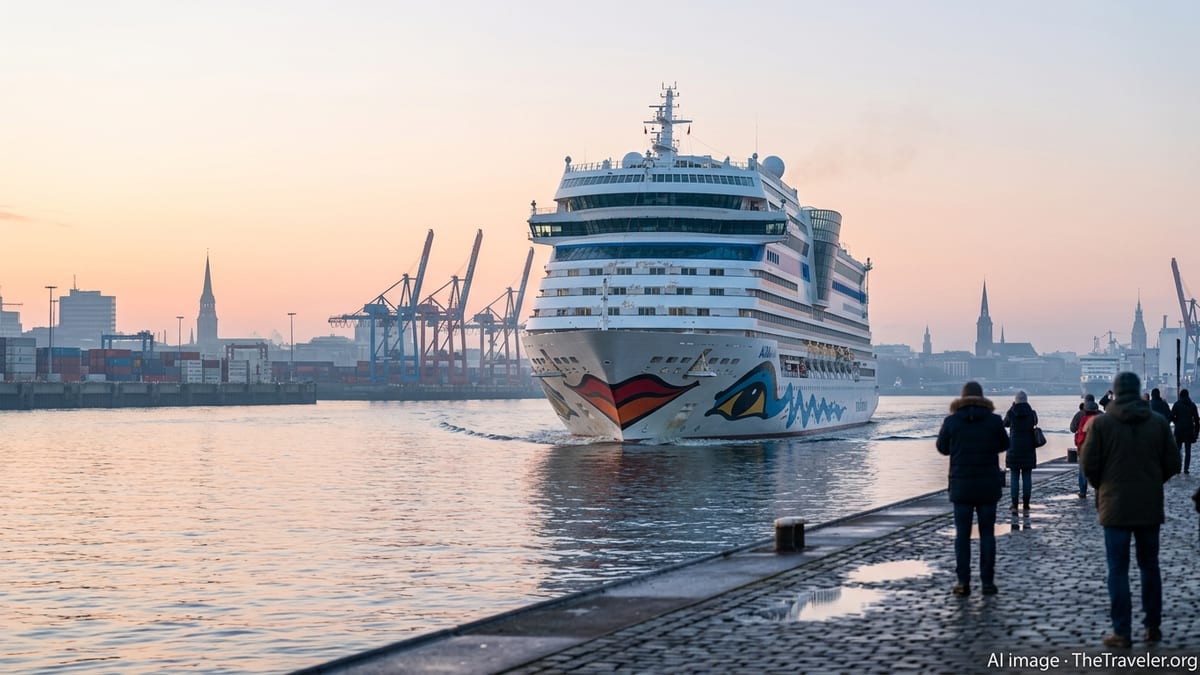
A Landmark Voyage for AIDAdiva and the German Cruise Market
The recently completed AIDAdiva world cruise, which departed Hamburg on November 10, 2025 and returned to the Hanseatic city on March 23, 2026, is being highlighted in industry coverage as the longest itinerary in the brand’s history. Publicly available schedule data and previous announcements indicate that the voyage lasted 133 days and circled the globe, calling at dozens of ports across Europe, the Americas, the Pacific and Asia before heading back to Europe via the Indian Ocean and southern Africa.
The itinerary is widely described as a defining moment for AIDA Cruises’ long haul strategy. Reports from cruise industry publications note that AIDAdiva, a familiar sight in northern Europe, was repositioned and upgraded ahead of the trip as part of the company’s broader “AIDA Evolution” modernization program, then sent out on its first ever round the world voyage. Observers in Germany frame the cruise as a visible symbol of how strongly the country’s source market has recovered since the pandemic period.
For Hamburg, the arrival represented a high profile homecoming event. Port schedules show AIDAdiva assigned a full day alongside, underlining the commercial importance of the call for local tourism and maritime services. The ship’s return adds to Hamburg’s positioning as a northern European gateway for extended itineraries, including world cruises and grand voyages operated by several brands.
Travel analysts point out that the sailing also reinforces Germany’s role in the global cruise ecosystem. With AIDAdiva’s circumnavigation now completed, the country joins a small group of markets where homeport world cruises both start and end domestically, blending source market strength with a mature port and logistics infrastructure.
A Route Linking Four Continents and Iconic Sea Passages
According to published itineraries and promotional material, the AIDAdiva world cruise traced an ambitious route that linked four continents and more than 50 ports. From Hamburg, the ship first headed to western Europe before crossing the Atlantic to North America, including calls that brought the brand back to New York for the first time in several years. Coverage in German travel media highlighted this return as a symbolic step for AIDA’s internationalization efforts.
From the US east coast, the ship continued to the Caribbean and Central America. Industry reports confirm that AIDAdiva became the first vessel in the AIDA fleet to transit the Panama Canal during this world cruise, elevating the crossing as one of the nautical highlights of the voyage. That passage linked the Atlantic to the Pacific and set the stage for a series of calls along the North American west coast, including San Francisco.
The Pacific segment of the itinerary carried guests toward Hawaii, where the ship spent the New Year period around Honolulu. Marketing material for the cruise had emphasized the appeal of celebrating New Year’s Eve in the central Pacific, and social media posts from passengers documented the combination of tropical setting and onboard festivities. From there, the ship continued across the ocean toward East Asia.
On the homeward stretch, AIDAdiva visited ports in Japan and other parts of Asia before turning southwest toward the Indian Ocean. Published route adjustments show that the ship called at destinations such as Sri Lanka and the Maldives, then continued to the Seychelles and onward to southern Africa. A call at Cape Town and the rounding of the Cape of Good Hope provided another classic world cruise moment before the vessel steered north again toward the Cape Verde islands, Madeira, Lisbon and, finally, back to Hamburg.
Unplanned Detours Highlight Realities of Long Distance Voyaging
Despite detailed advance planning, the world cruise illustrated how quickly conditions can change at sea. In early 2026, reports from cruise news portals and specialist blogs documented a significant route deviation in the Pacific. Instead of proceeding directly toward South Korea as originally scheduled, AIDAdiva reversed course and sailed back to Hawaii in response to a medical emergency involving guests on board.
Accounts from those tracking the voyage indicate that this decision led to the cancellation or reshuffling of several Asian port calls. The detour extended the time spent in the central Pacific and required operational adjustments, but the ship was later able to rejoin the broader route toward Asia and the Indian Ocean. Observers emphasize that such changes, while disruptive for some passengers, underline the priority that cruise lines place on access to advanced shore side medical facilities during complex itineraries.
Industry commentary following the incident suggests that the episode has been viewed as an example of the unpredictability that can accompany ultra long voyages. However, the ship’s eventual arrival in Hamburg more or less on the planned date is being cited as evidence of flexible voyage planning and scheduling buffers built into world cruise itineraries. For many travelers, the detour formed part of the narrative of a once in a lifetime journey rather than overshadowing the experience.
Cruise analysts note that such events are increasingly visible to the public thanks to ship tracking platforms and passenger generated content on social media. In the case of AIDAdiva, enthusiasts were able to follow the altered course in real time, adding an extra layer of engagement for those on shore watching the world cruise unfold.
Onboard Life During 133 Days at Sea
While the port list attracted most of the pre voyage attention, coverage of the completed cruise highlights the onboard experience as a critical element of sustaining interest over more than four months. Public information about AIDAdiva’s facilities points to a mix of wellness areas, multiple dining concepts and theater style entertainment, all of which had to be calibrated to a slower, long distance rhythm rather than the tempo of a typical one week holiday cruise.
Reports indicate that the line curated a rotating schedule of shows, lectures and destination themed activities to mirror the changing regions. As the ship moved from Europe and North America to the tropics and then to Asia and Africa, menus and entertainment reportedly shifted to reflect local influences. For long haul guests, this variety formed part of the rationale for committing to a 133 day itinerary.
The sailing also served as a practical test of the recent refurbishment work carried out under the AIDA Evolution program. Trade publications had previously detailed upgrades to AIDAdiva’s public spaces and cabins, designed to refresh the ship for the coming decade. Spending several months at sea with a largely continuous passenger base offered a clear measure of how those investments translated into day to day comfort.
Travel observers suggest that life on board such a voyage creates a semi transient community, with guests and crew sharing routines across multiple oceans and seasons. As AIDAdiva tied up in Hamburg and passengers began disembarking, that temporary community dissolved, but its experiences are likely to influence word of mouth and repeat demand for similar itineraries in the future.
Implications for Future World Cruises and German Homeports
The completion of AIDAdiva’s world cruise is already feeding into planning for future seasons. Cruise industry outlets and booking platforms list additional extended itineraries for the ship in the coming years, including new long duration world cruises that build on the template of the 2025 to 2026 journey. These programs underline the brand’s commitment to making globe spanning voyages a recurring feature of its portfolio rather than a one off experiment.
For German ports, the successful turnaround operation in Hamburg reinforces their capacity to manage the logistical demands of embarking and disembarking world cruise passengers. Local tourism stakeholders are expected to benefit from pre and post cruise stays, as travelers extend their time in the region before or after such a major journey. The call also feeds into Hamburg’s broader branding as a maritime capital that regularly welcomes large ocean going vessels.
Analysts tracking cruise deployment patterns note that demand for very long voyages has grown in several markets since the pandemic, particularly among travelers seeking immersive, time rich experiences at sea. AIDAdiva’s recently concluded circumnavigation fits squarely into this trend and provides the company with a high visibility case study on how German speaking guests respond to months long itineraries.
With AIDAdiva back in European waters and preparing for its next season, attention is now turning to how the line will refine future world cruise routes, pricing and onboard concepts. The experiences gathered between November 2025 and March 2026, from headline ports like New York and Honolulu to unexpected deviations in the Pacific, are likely to shape the evolution of AIDA’s long haul strategy and the wider appeal of world cruises sailing to and from Germany.