

More news on this day
Air Algérie has ordered 10 Boeing 737-8 aircraft as part of an accelerated renewal and expansion of its fleet, marking a fresh commitment to the US manufacturer while the Algerian flag carrier modernizes across both domestic and international networks.
Get the latest news straight to your inbox!
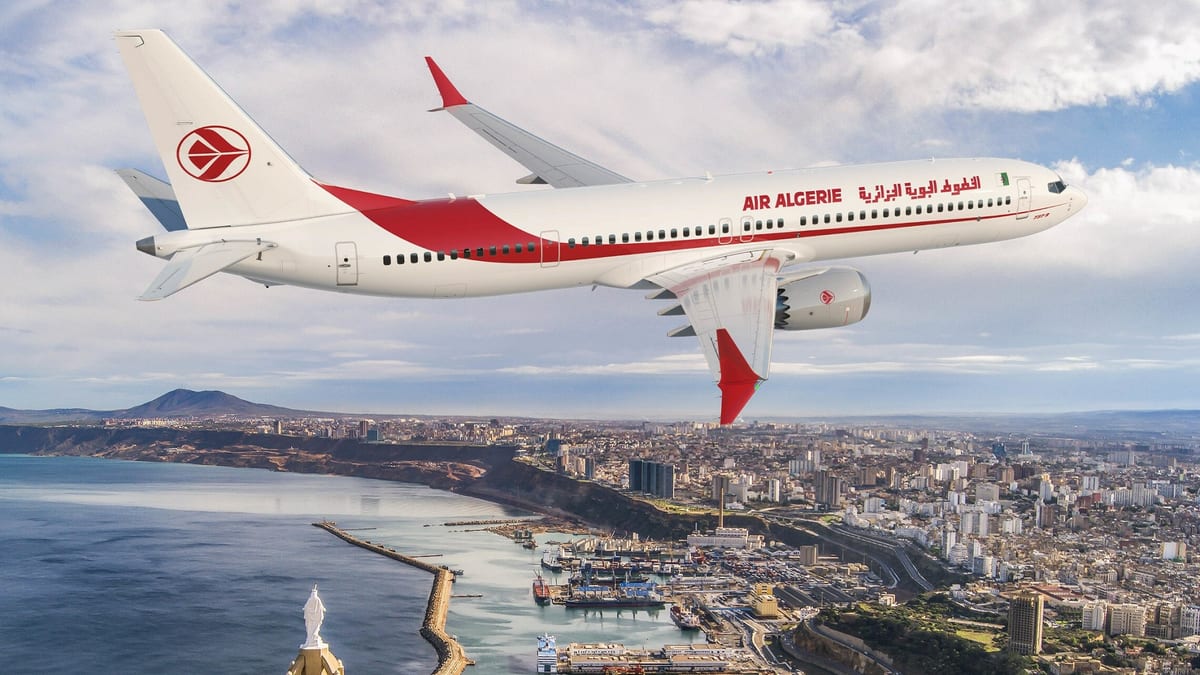
Image by AeroTime
New 737-8 order strengthens medium-haul backbone
According to recent industry reports, Air Algérie has agreed a purchase of 10 Boeing 737-8s, the latest generation variant of the 737 MAX family, to refresh and expand its medium-haul operations. The aircraft are expected to be deployed primarily on routes linking Algeria with key markets in Europe, the Middle East and parts of Africa, where single-aisle jets form the core of the schedule.
Publicly available fleet data and procurement documents indicate that deliveries are scheduled to commence from mid-2026, subject to final production slots and regulatory clearances. The batch of 737-8s is positioned to progressively replace older Boeing 737 classics and next-generation models, improving fuel burn and unit costs on trunk routes out of Algiers and regional bases.
Industry coverage notes that Air Algérie is targeting higher schedule reliability and better cabin standards as it renews its single-aisle fleet. The 737-8s typically seat around 160 to 190 passengers in a two-class configuration, offering more range and lower emissions per seat compared with the airline’s older narrowbodies, which is expected to support both network growth and environmental objectives.
The latest Boeing order also adds to a wider reshaping of the North African carrier’s fleet profile. By opting for additional 737-8s, Air Algérie is consolidating its position among African airlines using new-generation single-aisle jets to compete on busy regional corridors while containing operating costs amid volatile fuel prices.
Part of a broader multi-type renewal strategy
The 10 Boeing 737-8s are only one element of a much larger renewal and expansion program now underway at Air Algérie. Publicly available information shows that the airline has already committed to new Airbus widebodies, including A330neo and A350-1000 aircraft, as well as a substantial order for ATR 72-600 turboprops to reinforce domestic connectivity.
This multi-manufacturer approach reflects a strategy that combines long-haul growth, regional dispersion and domestic densification. The 737-8 order slots into the middle of that spectrum, bridging shorter domestic and regional flights operated by ATRs and longer sectors planned with new-generation Airbus widebodies.
Sector analysts note that spreading orders across Boeing, Airbus and ATR allows Air Algérie to tailor aircraft types more closely to route profiles, while also diversifying its supplier base. The new Boeing narrowbodies are expected to operate alongside existing 737s and leased aircraft, providing a gradual transition rather than a sudden fleet switch.
Reports also indicate that Algeria’s authorities have framed the airline’s fleet plan as part of a broader aviation and tourism development agenda. By investing simultaneously in new jets and domestic regional aircraft, Air Algérie aims to strengthen Algiers as a connecting hub, support inbound tourism and improve links to underserved regions of the country.
Operational and passenger experience gains
The introduction of 10 Boeing 737-8s is set to deliver tangible operational benefits for the carrier. The type is designed to offer double-digit fuel-burn reductions compared with older 737 models, which, combined with maintenance savings from a younger fleet, should help Air Algérie reduce unit costs on key routes.
Fleet planning specialists point out that a more uniform new-generation narrowbody fleet simplifies crew training, spare-parts management and maintenance planning. This can translate into better on-time performance, more flexibility in aircraft rotations and improved resilience during peak travel seasons or operational disruptions.
From a passenger perspective, the 737-8s are expected to introduce updated cabins, including modern lighting, larger overhead storage and the potential for improved inflight entertainment and connectivity compared with many of the aircraft they will replace. For Air Algérie, the upgrade supports efforts to sharpen its competitive edge against European and regional rivals that already operate new-generation narrowbodies.
Travel industry observers add that enhanced comfort and reliability on key leisure and diaspora routes, notably to France, Spain and other European destinations, can have a measurable impact on customer loyalty. As the carrier continues to rework its product offering, the 737-8 order is viewed as a central tool for aligning service levels with growing passenger expectations.
Implications for Boeing and the regional market
For Boeing, the Air Algérie order adds further momentum for the 737-8 in Africa and the wider Mediterranean region, a market where competition with the Airbus A320neo family remains intense. Recent manufacturer data and financial reports have highlighted renewed demand for the 737 MAX series as airlines resume fleet renewal deferred during the pandemic and subsequent supply chain disruptions.
Analysts following the airframer note that commitments from state-backed flag carriers such as Air Algérie are strategically important, enhancing Boeing’s presence on routes where fleet choices are highly visible to regulators and neighboring operators. The 10-aircraft deal, though modest in size compared with some recent mega-orders, reinforces the 737-8’s foothold in North Africa at a time when several regional competitors are also reviewing their single-aisle strategies.
Within the Maghreb and broader African market, the move is likely to add pressure on rival airlines to accelerate their own renewal programs. Modern single-aisle jets can open thinner routes, improve frequencies and lower fares, which in turn can reshape competitive dynamics across short and medium-haul networks.
Market watchers suggest that as the first aircraft arrive, scheduling choices by Air Algérie will be closely monitored. Deployment on high-profile city pairs, particularly those connecting Algiers with major European hubs and key sub-Saharan African capitals, would signal a drive to consolidate market share on routes where the airline faces growing competition from low-cost and full-service carriers alike.