

More news on this day
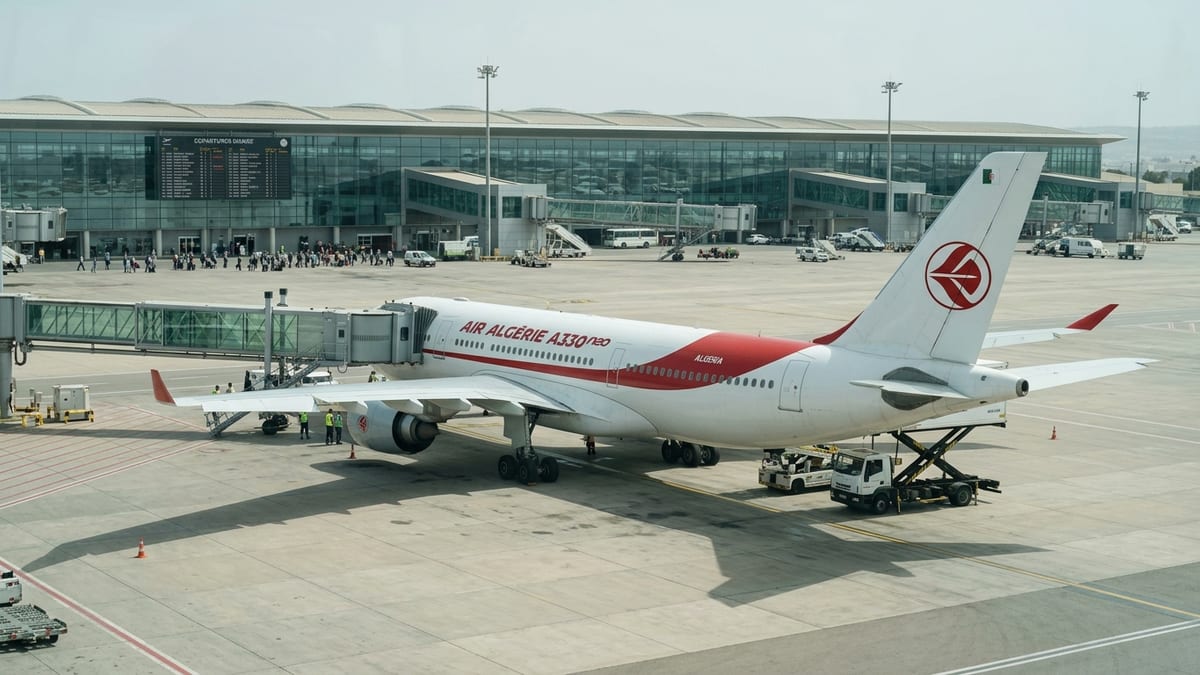
Air Algérie is preparing to launch a new non-stop route between Algiers and Kuala Lumpur operated by its Airbus A330neo, positioning the Algerian capital as a strategic hub for Africa–Asia travel and trade.
Get the latest news straight to your inbox!
New Long-Haul Link Connects North Africa and Southeast Asia
The planned Algiers–Kuala Lumpur service marks one of Air Algérie’s most ambitious long-haul additions to date, tying together two rapidly growing aviation markets. Publicly available information on the airline’s network strategy indicates that the new route is part of a broader push to expand from its Algiers hub toward Asian destinations, supported by the recent arrival of its first Airbus A330-900neo aircraft.
The non-stop service is expected to significantly shorten travel times between North and West Africa and Malaysia compared with existing one-stop itineraries via Gulf or European hubs. By linking the Mediterranean gateway of Algiers with Kuala Lumpur International Airport, the airline is aiming to capture passenger flows that today are routed through carriers based in the Middle East or Europe.
In aviation industry coverage, Air Algérie’s long-haul expansion has been described as a key step in repositioning the airline beyond its traditional focus on Europe and the Middle East. The Algiers–Kuala Lumpur route sits alongside planned growth to other Asian cities such as Guangzhou, signaling a shift toward deeper integration with Asian markets.
A330neo Brings Modern Efficiency and Cabin Upgrades
The Algiers–Kuala Lumpur service will be operated by the Airbus A330neo, the newest widebody type in Air Algérie’s fleet. Manufacturer data and independent fleet reports describe the A330-900neo as offering lower fuel burn and longer range compared with earlier-generation A330 variants, making it well suited to missions linking North Africa with Southeast Asia.
Air Algérie’s first A330neo was delivered in late 2025, featuring a three-class layout with full-flat seats in Business, a dedicated Premium Economy cabin and a high-density Economy section. The aircraft is equipped with Airbus’s latest Airspace cabin, including larger overhead bins, modern LED lighting and updated in-flight entertainment and connectivity systems that align with current long-haul standards.
The airline is due to receive several additional A330neo aircraft over the coming years, according to Airbus order information and specialized aviation media. As more units enter service, Air Algérie is expected to rotate the type across key intercontinental routes, using its improved economics to open thinner long-haul markets that previously would have been challenging to serve profitably.
Tourism, Religious Travel and Business Demand in Focus
The Algiers–Kuala Lumpur route is poised to serve a diverse mix of demand, from leisure tourism to religious and business travel. Malaysia promotes itself as a leading Muslim-friendly tourism destination, and Kuala Lumpur is seen as a gateway for travelers heading onward to Indonesia, Thailand and other parts of Southeast Asia.
For passengers originating in Algeria and neighboring African countries, the new route creates a one-stop option via Algiers to reach Kuala Lumpur and regional connections beyond, potentially undercutting travel times via traditional hubs. Industry observers note that this could prove particularly attractive for group travel, educational exchanges and growing halal tourism markets.
On the return leg, Kuala Lumpur offers new access to North and West Africa through Air Algérie’s network. The airline’s own corporate materials describe Algiers as a bridge between Africa, Europe, Asia and North America, and the Kuala Lumpur link reinforces that positioning by adding a direct connection deep into Southeast Asia.
Strengthening an Emerging Africa–Asia Trade Corridor
Beyond passenger traffic, the new A330neo service is expected to support trade flows between Algeria and Malaysia as well as broader Africa–Asia cargo movements. The A330-900neo provides meaningful belly-hold capacity for high-value, time-sensitive goods such as electronics, automotive components, pharmaceuticals and perishables.
Algeria has been seeking to diversify its economic partnerships in Asia, while Malaysia maintains growing ties with African markets in sectors including energy services, construction and consumer goods. Airline and airport data from both regions already show an upward trend in air cargo volumes, and the addition of direct widebody capacity is likely to reinforce that trajectory.
By routing freight via Algiers, logistics providers gain an alternative to traditional hubs in the Gulf and Europe. This could be particularly relevant for shipments originating in West and Central Africa, where Air Algérie’s regional network and planned fleet renewal with new regional and narrowbody aircraft are designed to feed long-haul services.
Algiers Positions Itself as a Connecting Hub
The Algiers–Kuala Lumpur launch fits into a larger transformation of Air Algérie and its home base at Houari Boumediene Airport. Recent fleet investments in A330neo widebodies, future Boeing 737 MAX aircraft and additional regional turboprops are part of a multi-year plan to increase both domestic and international connectivity while improving service quality.
Airport infrastructure around Algiers has also been upgraded in recent years, with a modern international terminal supporting transit traffic and new corporate facilities reflecting the airline’s ambition to operate as a competitive network carrier. Together, these developments aim to make Algiers more attractive as a transfer point linking African secondary cities with long-haul destinations such as Kuala Lumpur.
Aviation analysts point out that competition for connecting traffic between Africa and Asia is intensifying, with Gulf and Turkish carriers already active in the market. Air Algérie’s move with the A330neo gives the airline a more efficient platform from which to participate in that competition, particularly on routes where traffic volumes are growing but still relatively modest.
If demand on the Algiers–Kuala Lumpur route meets expectations, the service could pave the way for additional Africa–Asia links operated by Air Algérie, further consolidating the airline’s role as a bridge between the two continents.