

More news on this day
Budget carrier Air Arabia is set to offer Gulf travellers a new low-cost gateway to Italy’s capital, with daily nonstop flights between Sharjah and Rome Fiumicino due to begin on July 1, 2026.
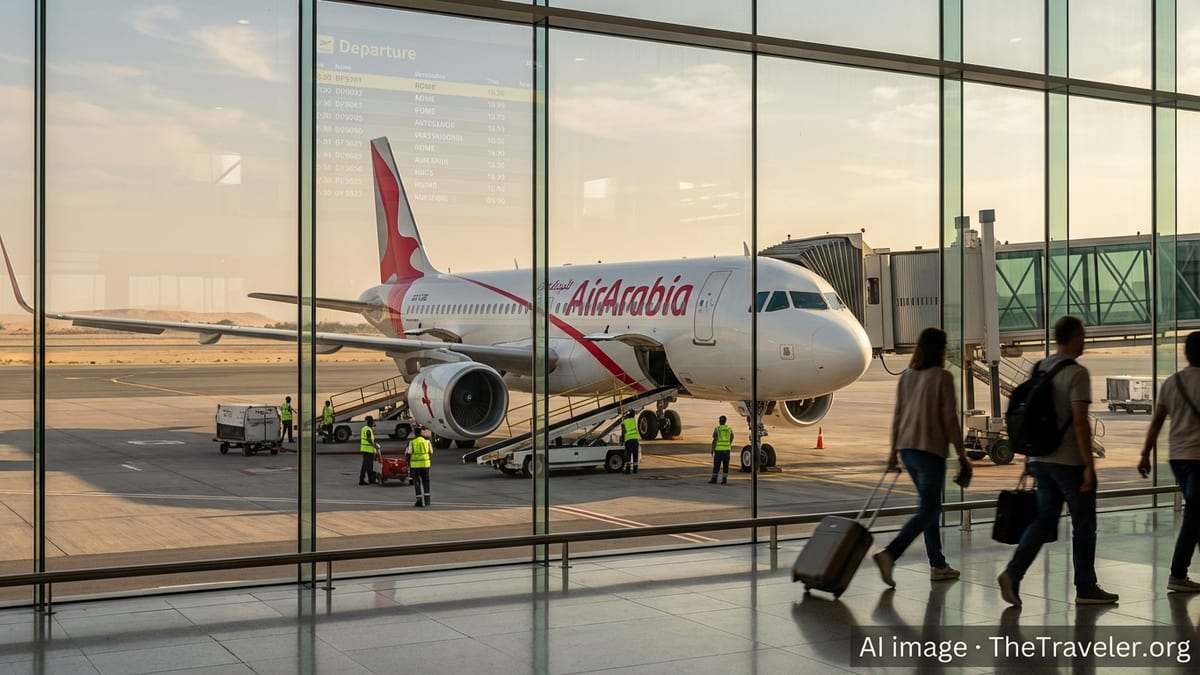
New Daily Link Between Sharjah and the Eternal City
The new Sharjah–Rome service will operate every day of the week, connecting Sharjah International Airport with Rome Fiumicino, Italy’s busiest international hub. The launch cements Rome as Air Arabia’s second Italian destination from its UAE base, alongside its existing Milan Bergamo flights, and further deepens the airline’s footprint across Southern Europe.
According to schedules released by the airline, the daily operation is structured around two distinct rotations. On Mondays, Wednesdays and Fridays, flights are set to leave Sharjah in the morning and arrive in Rome around midday, before turning back to the UAE in the early afternoon. On Tuesdays, Thursdays, Saturdays and Sundays, services will depart Sharjah in the late afternoon, reaching Rome in the evening, with late-night returns to Sharjah arriving the following morning.
The pattern is designed to give travellers flexibility when planning trips, offering a mix of daylight and evening options in both directions. For leisure visitors, it makes it easier to connect with hotel check-in times and cruise departures, while business travellers can choose timings that better align with meetings or onward connections inside Italy and elsewhere in Europe.
Rome’s addition to the network comes as Italian tourism authorities continue to court Gulf visitors, a market known for longer stays and higher average spending. For UAE residents, meanwhile, the daily link simplifies travel to one of Europe’s most visited cities without the need for time-consuming connections through other regional hubs.
Affordable Fares Powered by A320neo Efficiency
Air Arabia will deploy Airbus A320neo aircraft on the new Rome route, part of its latest-generation single-aisle fleet. The type offers improved fuel efficiency and lower emissions compared with earlier models, as well as a quieter cabin environment. For passengers, that translates into a more comfortable ride; for the airline, it underpins the cost discipline that allows it to keep fares competitive on longer sectors into Europe.
On board, travellers can expect Air Arabia’s standard low-cost model, with a single economy-class cabin configuration and a pay-as-you-go approach to extras. Food, beverages and snacks can be purchased from the airline’s onboard menu, while an in-flight streaming platform allows passengers to access entertainment on their own devices. A loyalty programme gives frequent flyers opportunities to earn and redeem points across the wider network.
The combination of lower operating costs and ancillary revenues has been central to Air Arabia’s ability to expand into new European markets while maintaining its value positioning. Industry observers say the Rome launch reflects rising demand for affordable, point-to-point connections between the Gulf and major EU capitals, particularly during peak summer months when legacy carriers’ fares tend to climb.
For price-sensitive travellers, including families, students and visiting friends-and-relatives traffic, the new service is expected to introduce downward pressure on average fares between the UAE and Italy. That could encourage more frequent trips and open up European holidays to customers who previously viewed Rome as out of reach.
Sharjah’s Hub Strengthens Its Role in UAE–Europe Travel
The daily Sharjah–Rome connection also reinforces Sharjah’s role as a growing aviation hub in its own right. While neighbouring Dubai remains the region’s largest long-haul gateway, Sharjah has steadily built a niche as a cost-conscious alternative, anchored by Air Arabia’s expanding network across the Middle East, North Africa, Central Asia and Europe.
Airport officials in both Sharjah and Rome have highlighted the strategic importance of the route, pointing to its potential to diversify traffic flows between the Arabian Peninsula and Europe. For Rome Fiumicino, the service adds another link to the Gulf region at a time when Italian tourism boards are actively promoting multi-city itineraries that combine Rome with coastal and regional destinations.
For Sharjah, increased connectivity to a marquee European capital supports the emirate’s own tourism ambitions. Authorities have invested in cultural districts, museums and heritage attractions that differentiate Sharjah from its neighbours, positioning it as a family-friendly and arts-focused stopover. The Rome route opens new channels for European visitors to access those attractions directly, without having to route through Dubai first.
Trade and business ties are also expected to benefit. Improved air access typically drives growth in bilateral commerce, and logistics firms are likely to explore new cargo opportunities on the bellyhold capacity of the daily passenger flights, particularly for high-value and time-sensitive goods.
What the New Route Means for Travellers Planning Rome
For travellers based in the UAE and wider Gulf, Air Arabia’s Rome flights change the practicalities of planning European breaks. Instead of stitching together connections via Istanbul, Doha or other hubs, passengers will be able to fly nonstop from Sharjah to the Italian capital, cutting overall travel times and reducing the risk of missed connections or transit delays.
Morning arrivals into Rome on select days are timed to give visitors almost a full day on the ground, a draw for weekend city-break travellers looking to maximise limited annual leave. Evening arrivals on alternate days cater to those who prefer to fly after work, wake up in Italy and start sightseeing the next morning.
On the return leg, afternoon and late-night departures from Rome give flexibility for the journey back to the Gulf. Leisure travellers can spend an extra day exploring the city before heading to the airport, while business passengers can finish meetings and still catch an evening flight that delivers them into Sharjah with enough time to connect to regional destinations.
The schedule is likely to be particularly attractive to travellers combining Rome with wider European itineraries. With Fiumicino serving as a major gateway for domestic and intra-European connections, the new service can act as the first leg in multi-country trips that take in Italian coastal regions, neighbouring Mediterranean states or central European capitals, before a nonstop flight back to Sharjah.
Rome on a Budget: Opening the Italian Capital to More Visitors
Rome has long been perceived as a premium city break, with peak-season hotel rates and airfares that can put pressure on travel budgets. The arrival of a daily low-cost service from Sharjah has the potential to rebalance that equation for visitors originating in the Gulf and nearby markets served by Air Arabia’s network.
Lower headline fares on the long-haul sector leave more room in budgets for accommodation, dining and experiences once in the city, from guided tours of ancient sites to day trips into the Lazio countryside. Travellers comfortable with the unbundled model common to low-cost carriers can further control costs by paying only for the extras they value, such as pre-booked seats or additional baggage.
The route could also alter seasonality patterns. While Rome is traditionally busiest from late spring through early autumn, the presence of a year-round daily flight makes it easier for visitors to target shoulder seasons, when crowds thin and hotel prices ease. Travel agents in the Gulf are expected to respond with new packages built around the Sharjah–Rome link, positioning the city not only as a summer highlight but as a viable short break throughout the year.
For Rome itself, the service brings fresh momentum to efforts to attract a broader mix of international guests. With more travellers able to reach the city on a budget, the Italian capital is set to become a more regular feature on travel plans from the UAE and beyond, deepening cultural exchange while keeping an eye firmly on affordability.