

More news on this day
Air Arabia’s latest wave of route launches from Sharjah to Rome, Munich, Prague, Warsaw and other European hubs is tightening the tourism ties between the United Arab Emirates and a growing list of EU markets, with Italy now joining Germany, the Czech Republic, Poland, the United Kingdom, Greece, Austria and others in actively courting visitors from the Gulf.
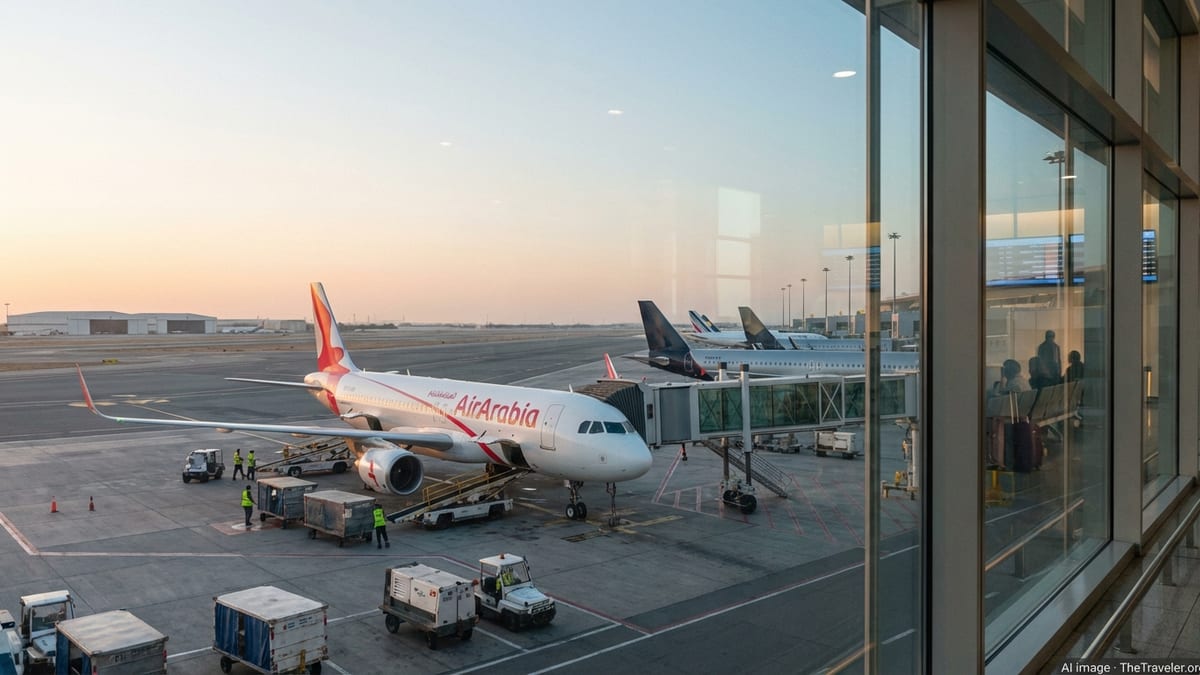
New Rome Service Cements Italy’s Push for Gulf Visitors
Air Arabia has confirmed it will begin operating a new daily nonstop service between Sharjah International Airport and Rome Fiumicino from 1 July 2026, marking a significant step in Italy’s strategy to attract more high-spending visitors from the Gulf. The low-cost carrier will deploy its Airbus A320neo on the route, adding capacity and competition on a corridor already served by full-service Gulf airlines via Abu Dhabi and Dubai.
Rome becomes Air Arabia’s second Italian destination from Sharjah, following its Milan Bergamo service, and reinforces the growing importance of Italy on UAE carriers’ European maps. Italian tourism officials have been seeking deeper access to Middle Eastern markets as they diversify beyond traditional European source countries and target year-round arrivals rather than just summer peaks.
For Emirati and expatriate residents in the UAE, the new Rome flights add an additional gateway into Italy’s extensive rail and aviation network, offering convenient onward options to coastal resorts, secondary cities and cultural hotspots. The combination of competitive fares and direct access is expected to stimulate first-time travel to Italy among budget-conscious leisure segments that previously relied on indirect routes.
Aviation analysts note that the Rome launch also positions Sharjah as a credible alternative hub to Dubai for Italy-bound traffic, particularly for travelers from Northern Emirates and parts of the wider Gulf who can connect through Air Arabia’s growing regional network.
Daily Links to Munich, Prague and Warsaw Boost Central European Connectivity
The Rome announcement follows Air Arabia’s decision to roll out daily direct flights from Sharjah to Munich, Prague and Warsaw, with services beginning in the December 2025 schedule. The expansion broadens the airline’s European footprint into Central Europe’s most dynamic tourism and business markets, while providing new entry points to the UAE for travelers from Germany, the Czech Republic and Poland.
Munich, a major gateway for southern Germany and the Alpine region, offers Emirati travelers direct access to Bavaria’s cultural attractions and nearby ski territories that are popular in the winter season. For German visitors, Sharjah’s connections into wider Gulf and South Asian markets add fresh one-stop options beyond the traditional mega-hub of Dubai.
Prague and Warsaw, already experiencing rising arrivals from the Gulf, are expected to benefit from the consistency of daily services that support both short city breaks and longer multi-country itineraries. Tourism boards in Central Europe have increasingly marketed to Middle Eastern travelers seeking cooler summer climates, historic architecture and halal-friendly services, a trend that Air Arabia’s expanded schedule is likely to accelerate.
Industry observers say the move to daily frequencies, rather than limited weekly rotations, is crucial for building confidence among tour operators and corporate travel planners, who rely on predictable schedules when packaging holidays or planning business trips across the UAE and Central Europe.
Sharjah Emerges as a Strategic Hub in the UAE–Europe Corridor
Air Arabia’s European growth is simultaneously elevating Sharjah’s role as a complementary hub to Dubai and Abu Dhabi. The carrier’s expanding list of nonstop links to cities such as Rome, Munich, Prague and Warsaw adds to existing services to destinations including Kraków and Vienna, reinforcing Sharjah’s positioning as a cost-effective gateway between the Gulf and Europe.
Sharjah Airport’s focus on point-to-point low-cost operations allows Air Arabia to offer competitive fares while maintaining frequent schedules, an approach that appeals to price-sensitive leisure travelers and to the region’s sizable expatriate communities. The airport’s connectivity also enables efficient onward links to secondary cities in the Middle East, North Africa and the Indian subcontinent.
For the broader UAE, Sharjah’s enhanced network strengthens the country’s overall aviation ecosystem, adding capacity and geographic diversity that spread inbound tourism beyond a single hub. This multi-airport strategy mirrors approaches seen in major European markets, where secondary hubs play a critical role in absorbing demand and supporting regional tourism development.
Tourism officials in the UAE argue that improved access through Sharjah also encourages visitors to explore beyond the more familiar skylines of Dubai, highlighting Sharjah’s cultural institutions, desert landscapes and family attractions as part of multi-emirate itineraries.
European Markets Race to Capture Growing UAE Outbound Demand
Italy’s new alignment with Germany, the Czech Republic, Poland, the United Kingdom, Greece and Austria reflects a broader European race to capture a larger share of UAE outbound tourism. Over the past two years, national tourism boards and city marketing agencies across the continent have stepped up campaigns in the Gulf, promoting everything from winter ski holidays and medical tourism to heritage cities and coastal escapes.
Germany and Austria have long been established draws for Gulf travelers, particularly during the summer, while Greece’s islands and coastal resorts have seen rapid growth in visitors from the UAE in recent seasons. The Czech Republic and Poland, once considered emerging destinations in this market, are now moving into the mainstream as easier air access and targeted promotions raise their profile.
Air Arabia’s direct routes dovetail with these national efforts by lowering travel costs and travel times, making it simpler for families and younger travelers to consider multi-stop itineraries across different European countries in a single trip. Travel agents in the UAE report increasing interest in custom-built holidays that might combine, for example, a cultural stay in Prague with shopping in Munich or a Rome city break linked to beach time elsewhere in Italy.
At the same time, the new routes facilitate inbound tourism from Europe to the UAE, where cities such as Sharjah and Dubai continue to market year-round sun, shopping, cultural festivals and increasingly prominent sporting events to European audiences seeking winter escapes.
Competitive Landscape Intensifies as Gulf and European Carriers Expand
Air Arabia’s European push is unfolding against a backdrop of intensifying competition on the UAE–Europe corridor. Full-service carriers based in Abu Dhabi and Dubai have been increasing capacity to key European capitals, while European low-cost and hybrid airlines have added or reinstated services into the Gulf, particularly on leisure-heavy routes.
In this crowded field, Air Arabia is betting on a model built around lean operations, single-aisle aircraft and direct point-to-point flying, targeting travelers willing to trade some frills for lower fares and straightforward schedules. The airline’s move into major hubs such as Rome Fiumicino and Munich, as well as high-growth markets like Prague and Warsaw, signals its intent to compete directly for both origin-and-destination traffic and connecting passengers.
Analysts expect the added capacity to place downward pressure on fares, particularly outside peak holiday periods, potentially unlocking new demand segments. However, it also raises the stakes for airports and tourism bodies in Europe, which will need to invest in destination marketing, infrastructure and tailored services to convert improved connectivity into sustained visitor growth.
For travelers, the result is a rapidly expanding menu of options linking the UAE with an increasingly diverse set of European destinations. With Italy now firmly joining Germany, the Czech Republic, Poland, the United Kingdom, Greece and Austria in stepping up outreach to Gulf markets, Air Arabia’s expanding network from Sharjah is emerging as one of the most visible drivers of this new phase in transcontinental tourism.