

More news on this day
Air Arabia will launch daily nonstop flights between Sharjah and Rome from July 1, 2026, a move that significantly upgrades low-cost connectivity between the United Arab Emirates and Italy’s capital at a time of surging Gulf–Europe travel demand.
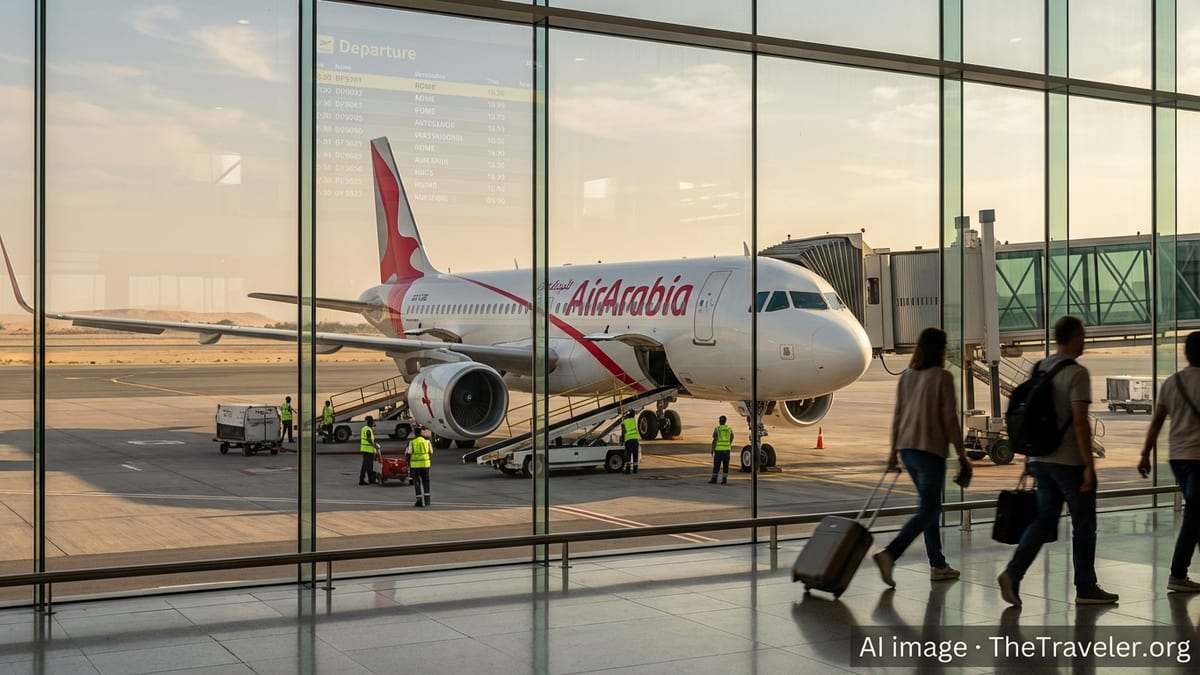
Daily Nonstop Link Between Sharjah and Rome
Under the newly announced schedule, Air Arabia will connect Sharjah International Airport and Rome Fiumicino Airport with a daily pattern that combines morning and late-afternoon departures. From July 1, 2026, flights from Sharjah will leave at 07:55 on Mondays, Wednesdays and Fridays, arriving in Rome at 12:35, while services on Tuesdays, Thursdays, Saturdays and Sundays will depart at 16:20 and land in the Italian capital at 21:00 local time.
Return services follow a mirrored structure designed to support both business and leisure traffic in both directions. On Mondays, Wednesdays and Fridays, departures from Rome are scheduled at 13:35, reaching Sharjah at 21:40, while on Tuesdays, Thursdays, Saturdays and Sundays the aircraft is set to leave Fiumicino at 22:00, touching down in Sharjah at 06:05 the following morning. All services will be operated with Airbus A320neo aircraft, adding capacity on a fuel-efficient narrowbody already familiar to Air Arabia passengers.
The airline, the Middle East and North Africa’s largest budget carrier, confirmed the launch this week as part of a wider push into Europe from its Sharjah hub. The Rome route is being introduced as a year-round service, positioning it as a stable new option for both UAE residents heading to Italy and Italian travelers looking for direct access to Sharjah and the wider Gulf.
Strengthening the UAE–Italy Aviation Corridor
Rome becomes Air Arabia’s second Italian destination from Sharjah, joining Milan Bergamo and underlining the growing importance of Italy within the carrier’s European strategy. Officials at both the airline and Rome’s airport operator describe the new link as a key piece of infrastructure for an increasingly busy UAE–Italy corridor, one that combines point-to-point demand with onward connecting traffic across both networks.
For the United Arab Emirates, the additional capacity supports the country’s broader aim of deepening ties with Southern Europe through diversified aviation links beyond the largest Gulf hubs. Sharjah’s growing role as an origin point for European travel means Italian visitors can reach the UAE’s cultural capital directly, while still being within easy reach of Dubai and other emirates.
On the Italian side, Rome Fiumicino gains a new low-cost connection into the Gulf at a time when demand from Middle Eastern markets is rising. Tourism agencies in Italy have been courting visitors from the UAE and wider region, citing higher average spending and strong interest in heritage, shopping and culinary tourism. The Air Arabia link gives Rome an additional tool to capture that demand while easing access for Italian travelers drawn to the Arabian Peninsula’s year-round warmth.
Budget Travel Meets Long-Haul Aspirations
As the first low-cost carrier to operate a nonstop Sharjah–Rome route, Air Arabia is positioning the service squarely at the intersection of budget travel and long-haul aspirations. One-way fares from Sharjah are already being promoted from entry-level price points that target cost-conscious leisure travelers, families and younger passengers who may previously have opted for indirect itineraries or postponed trips to Europe altogether.
The A320neo aircraft scheduled on the route are configured in a single-class layout with a comparatively generous seat pitch by low-cost standards, backed by buy-on-board dining and a complimentary streaming service that lets passengers access content on their own devices. For many travelers, the combination of nonstop flying time of around six hours and lower fares is likely to prove more attractive than connecting through a second hub.
Industry analysts note that the move also reflects a wider trend of budget carriers stretching deeper into medium- and long-haul sectors, particularly where strong migrant, visiting-friends-and-relatives and tourism flows overlap. Sharjah–Rome ticks several of those boxes, adding another example of how low-cost operators are reshaping traditional long-haul markets previously dominated by full-service rivals.
Tourism and Trade Boost for Sharjah and Rome
Tourism bodies on both sides of the route are already highlighting potential gains. Sharjah’s positioning as a cultural and family-friendly destination is expected to resonate with Italian visitors drawn by its museums, heritage districts and waterfront developments, as well as its proximity to the wider attractions of the UAE. The overnight arrival pattern into Sharjah on several days of the week also enables immediate onward connections across Air Arabia’s regional network.
Rome, meanwhile, stands to benefit from a larger influx of visitors from the Gulf who are looking for easier access to Italy’s most iconic attractions, from ancient archaeological sites to Vatican City and vibrant neighborhood districts. Travel advisors say that the daily schedule will make it simpler to package short city breaks and multi-stop itineraries that combine Rome with other Italian regions such as Tuscany, Campania and Lombardy.
Beyond tourism, the new connection is also expected to facilitate business travel and trade links. While the narrowbody aircraft cabin limits cargo volumes, additional belly-hold capacity on a daily basis will still be welcomed by freight forwarders moving high-value, low-weight goods between the UAE and Italy. Regular departures in both directions should also support corporate travel between the two markets in sectors ranging from infrastructure and energy to fashion and design.
Sharjah’s Expanding European Network
The Rome announcement follows a series of new European routes from Air Arabia’s Sharjah hub, including services to Munich, Prague and Warsaw, reflecting a focused effort to broaden the airline’s footprint across both Western and Central Europe. With the addition of Rome, Sharjah-based passengers will be able to reach a growing roster of European capitals and regional gateways on nonstop or one-stop itineraries entirely within the Air Arabia network.
For Sharjah International Airport, the move reinforces its role as an increasingly important alternative gateway for UAE-bound traffic. Passenger growth has been supported by infrastructure investments and a push to streamline transfers for travelers connecting onward to destinations across the Middle East, North Africa and South Asia. The new Rome flights are expected to contribute to further growth in 2026, particularly during peak summer and holiday periods.
As airlines globally recalibrate their networks in the wake of shifting demand patterns, Air Arabia’s decision to add a daily Rome service underscores the continued momentum of Gulf–Europe travel. For passengers, it translates into more choice, additional competition on fares and simpler itineraries. For the UAE and Italy, it marks another step in a steadily deepening aviation partnership that is increasingly central to tourism and trade between the two countries.