

More news on this day
Air Arabia is set to further redraw the Middle East–Europe travel map with the launch of daily nonstop flights between Sharjah and Rome from July 1, 2026, a move that strengthens the United Arab Emirates’ role as a regional hub and ties into the carrier’s rapid expansion into Egypt, Italy, Greece, the Czech Republic, Austria and beyond.
Daily Sharjah–Rome Link Marks New Phase of UAE–Italy Connectivity
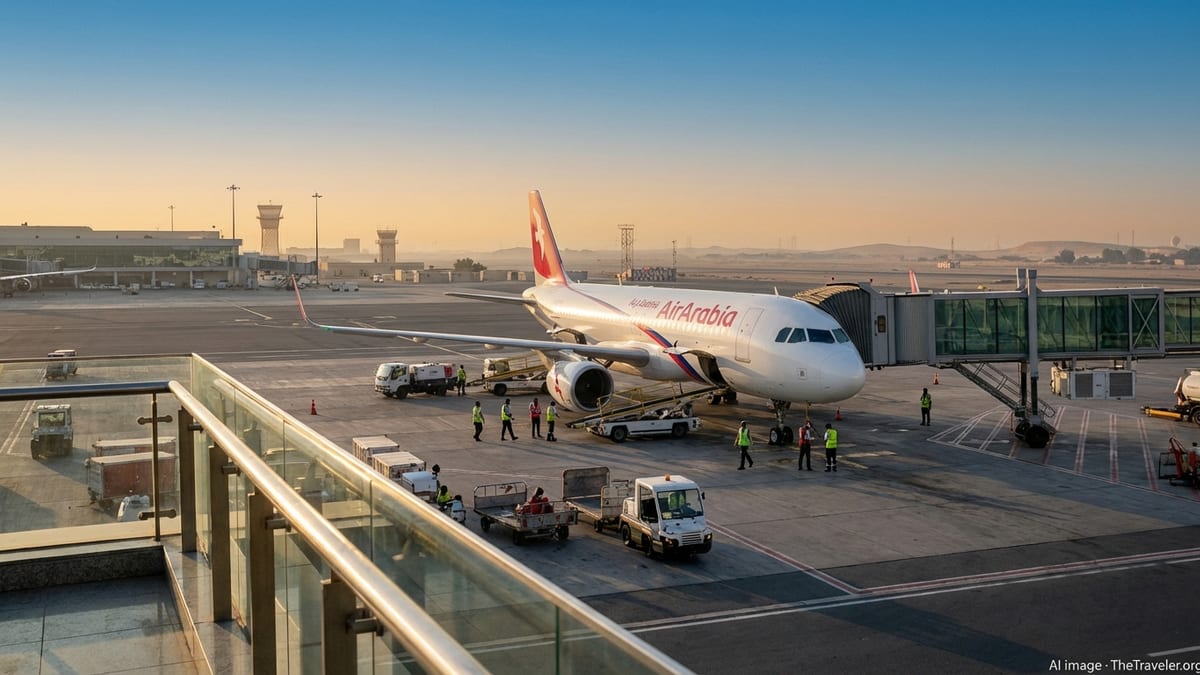
The new route will connect Sharjah International Airport with Rome Fiumicino Airport every day from July 1, 2026, using Air Arabia’s Airbus A320neo aircraft. The schedule is structured around two rotation patterns, with morning departures on selected weekdays and afternoon departures on alternate days, ensuring seven-day coverage and consistent capacity on one of the region’s busiest emerging corridors.
Rome becomes Air Arabia’s second Italian destination from Sharjah after Milan Bergamo, underlining Italy’s importance within the airline’s strategy. For UAE residents, the service introduces a direct, low-cost option to the Italian capital, reducing total journey times and eliminating the need for connections through larger hubs such as Doha or Istanbul.
For Italian travelers, the link offers direct access to Sharjah and, through the carrier’s network, to destinations across the Gulf, the Indian subcontinent, North Africa and Central Asia. Industry analysts view the move as a competitive play in a market historically dominated by full-service Gulf carriers and European legacy airlines on Italy–UAE routes.
Part of a Broader European Push Covering Egypt, Greece, Austria and Central Europe
The Sharjah–Rome launch follows a series of route additions that have rapidly broadened Air Arabia’s European footprint. From its Sharjah hub, the airline now serves or has recently added key gateways including Athens in Greece, Vienna in Austria, Prague in the Czech Republic, Warsaw in Poland and Munich in Germany, alongside existing services to Milan Bergamo and Krakow.
Complementing these are expanded links with Egypt, where Air Arabia and its joint venture in Abu Dhabi have introduced new routes such as Assiut, building on established services to Cairo and other Egyptian cities. The network development positions the carrier as a cost-conscious alternative for travelers moving between the Middle East, North Africa and secondary but strategically important European cities.
Analysts say the pattern is clear: Air Arabia is targeting high-demand, price-sensitive flows between the UAE and Europe, particularly where point-to-point traffic is strong but underserved by low-cost operators. By adding Rome, the airline aligns itself more closely with leisure and diaspora markets that regularly travel between Southern Europe, the Gulf and nearby regions.
Low-Cost Model, New-Generation Fleet and Competitive Fares
The Sharjah–Rome flights will be operated with Airbus A320neo aircraft, part of the newest generation added to Air Arabia’s all-Airbus single-aisle fleet. The type offers improved fuel efficiency and lower emissions compared with earlier models, a key factor in sustaining the low-cost business model on medium-haul sectors such as the roughly six-hour journey between the UAE and Italy.
Inside the cabin, the aircraft configuration focuses on high-density seating while maintaining standard legroom for the segment, combined with buy-on-board food and beverage through the airline’s SkyCafe service. A complimentary streaming platform, SkyTime, and the Air Rewards loyalty program round out an offering designed to keep base fares low and ancillary revenues robust.
Travel agents in both markets expect promotional pricing to stimulate initial demand, especially for summer 2026 travel when the route launches. With Rome already a magnet for tourists from the Gulf and wider Middle East, a nonstop low-cost service is likely to intensify fare competition with European and Gulf full-service carriers that currently route many Rome–UAE passengers via one-stop itineraries.
Sharjah and Rome Strengthen Roles as Regional Gateways
The schedule is calibrated to feed broader connectivity at both ends. In Rome, arrival times from Sharjah are planned to align with popular banks of intra-European services, providing onward access to secondary Italian and European cities without long layovers. On the return, departures from Fiumicino are timed so that arrivals in Sharjah facilitate evening and overnight connections deeper into the airline’s network.
Airport officials in Rome have welcomed the new entrant, noting that the service diversifies the airport’s links to the Arabian Peninsula and further supports Fiumicino’s strategy of combining full-service and low-cost offerings under one roof. Sharjah, meanwhile, continues to consolidate its status as a cost-efficient alternative gateway to the UAE, particularly attractive to budget-conscious travelers who may be priced out of direct services into Dubai and Abu Dhabi.
For tourism boards and hospitality operators in both countries, the route offers fresh opportunities. Italian tourism stakeholders are eyeing higher arrivals from the Gulf and wider Middle East, while outbound agencies in the UAE expect increased interest in Italy’s capital and nearby destinations such as the Amalfi Coast, Tuscany and northern cities accessible via high-speed rail from Rome.
Implications for Middle East–Europe Travel in 2026 and Beyond
By adding daily Sharjah–Rome operations to an expanding list of European and Egyptian routes, Air Arabia is helping reshape how travelers move between the Middle East and Europe. The airline’s model of nonstop, point-to-point services from a secondary Gulf hub is proving attractive to cost-conscious families, students, small business owners and diaspora communities seeking predictable schedules and transparent pricing.
Industry observers expect the Rome launch to support two-way growth in tourism and trade, particularly small and medium-sized enterprises that rely on affordable air links to maintain cross-border relationships. If demand tracks early forecasts, capacity increases or seasonal frequency adjustments could follow, mirroring the airline’s approach on other successful European routes.
As 2026 approaches, the Sharjah–Rome announcement stands as a milestone in Air Arabia’s evolution from a regional low-cost carrier into a major player on the Middle East–Europe corridor, and underscores the UAE’s wider strategy of deepening air connectivity with key European markets.