

More news on this day
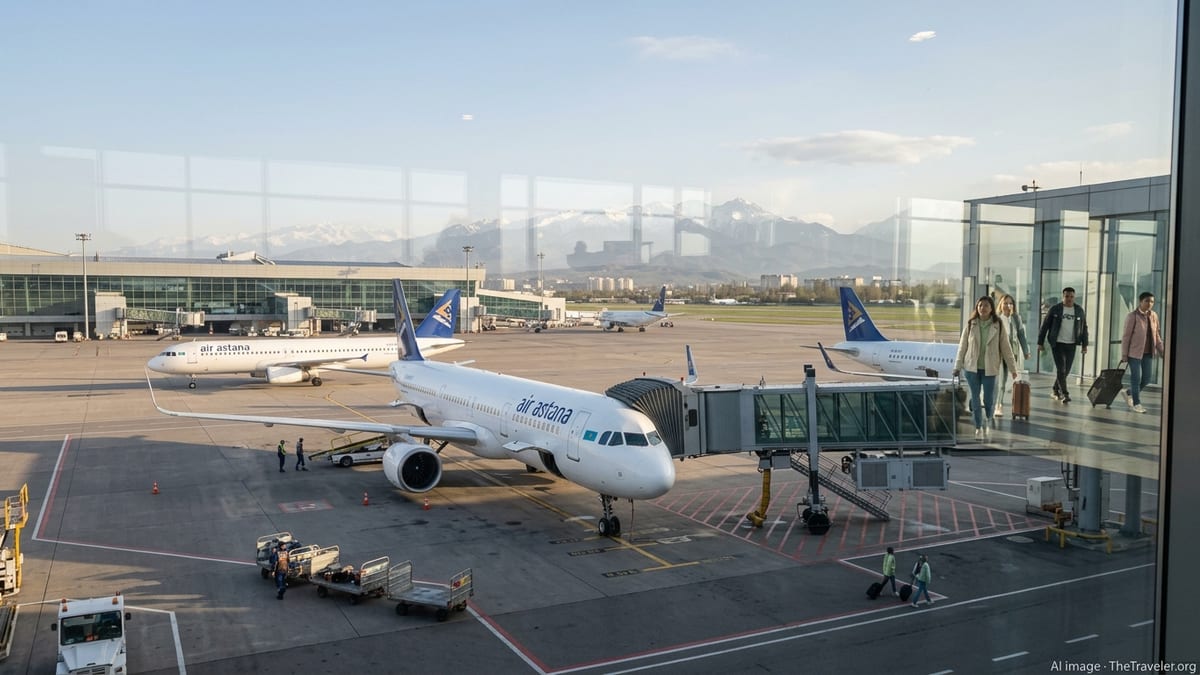
Air Astana is ramping up capacity across its network for the Nauryz spring holidays, adding flights and deploying larger aircraft on high-demand routes as Kazakhstan’s flagship carrier positions itself for a surge in regional and international travel.
Get the latest news straight to your inbox!
Nauryz Holiday Drives Surge in Regional Demand
Publicly available information shows that Kazakhstan’s March Nauryz holidays have become one of the busiest travel periods of the year, prompting local carriers to add frequencies on both domestic and international routes. From mid to late March 2025, Kazakhstan’s airlines collectively scheduled around 120 additional flights to accommodate rising passenger numbers, with Air Astana playing a central role in boosting capacity on key corridors linking Almaty and Astana with major cities across Eurasia.
According to published coverage, Air Astana expanded its Nauryz holiday schedule from March 16 to 30, 2025 with 55 extra flights, including international services to destinations such as Seoul, Istanbul, Male, Beijing, Tbilisi, Phuket, Phu Quoc, London, Dushanbe, Baku, Cam Ranh and Guangzhou. The additional frequencies have effectively opened more options for travelers seeking both short regional breaks and long-haul sunshine escapes during the extended holiday period.
These holiday-driven increases sit within a broader policy push by Kazakhstan’s transport authorities to strengthen air connectivity. Reports indicate that regulators have encouraged domestic airlines to respond quickly to seasonal spikes in demand, especially around national holidays like Nauryz, by flexibly adding flights and using higher-capacity aircraft where possible.
Expanded Frequencies on Popular Leisure Routes
Air Astana’s response to Nauryz demand focuses strongly on leisure destinations popular with travelers from Kazakhstan and neighboring countries. Published schedules for recent seasons show expanded services from Almaty to beach destinations such as Male in the Maldives, where frequencies typically rise during peak holiday periods including New Year and Nauryz. This pattern is mirrored on other sun-and-sea routes, giving holidaymakers more choice on departure days and connection options.
Regional city pairs have also benefited from additional frequencies. Ahead of the Nauryz and Navruz holidays, public information shows that Air Astana has expanded services on the Almaty to Baku route, resuming and increasing direct flights between Kazakhstan’s largest city and the Azerbaijani capital. From March 15, 2026, this route is scheduled to operate twice weekly, on Thursdays and Sundays, with extra services around the holiday window designed to capture increased demand linked to spring festivities across Central Asia and the Caucasus.
These expanded connections complement Air Astana’s broader network growth in markets such as Saudi Arabia and Southeast Asia. In recent seasons, the carrier has added or restored links from Almaty and Shymkent to Jeddah and increased services to Vietnamese coastal destinations, aligning its schedule with shifting patterns in outbound tourism from Kazakhstan.
Larger Aircraft and Fleet Growth Unlock New Capacity
In addition to adding flights, Air Astana is leaning on a larger and more modern fleet to unlock extra seats during peak periods. Publicly available fleet data shows that by 2025 the airline was operating more than 30 aircraft, centered on Airbus A320neo-family jets and larger A321neo variants. These aircraft bring both higher capacity and improved fuel efficiency, supporting the airline’s ability to upgauge popular routes as demand increases around holidays like Nauryz.
Corporate disclosures indicate that Air Astana has been simplifying its fleet by retiring smaller regional types and focusing on single-aisle Airbus models with higher seat counts. The delivery of additional A320neo and A321neo aircraft in 2024 and 2025 has enabled the carrier to boost capacity on routes from Almaty and Astana to major hubs such as London, Istanbul and Seoul, often substituting larger aircraft in place of smaller jets on peak travel days.
More recently, reports from the aviation sector highlight that Air Astana has finalized a firm order for 25 additional Airbus A320neo-family aircraft, described in industry coverage as the airline group’s largest direct order to date. While these aircraft will be introduced over several years, the move underlines the carrier’s ambition to sustain capacity growth and support further frequency increases during future Nauryz seasons and other high-demand travel periods.
Kazakhstan’s Wider Strategy to Expand Air Connectivity
The expansion of Air Astana’s Nauryz schedule is closely tied to Kazakhstan’s broader strategy to enhance its air transport network. Government statements and independent reporting show that the country aims to grow its combined commercial fleet from just over 100 aircraft to more than 220 by 2030, while increasing the number of international routes from around 119 to 200. This long-term plan positions airports in Astana, Almaty, Aktobe, Karaganda and Shymkent as key hubs for both passenger and cargo flows.
Within this framework, Air Astana’s increased frequencies and aircraft upgauging during Nauryz act as a visible example of how policy goals are being implemented on the ground. Investments in airport infrastructure, terminal capacity and ground handling at Astana and Almaty are designed to support larger aircraft and more frequent departures, reducing bottlenecks when holiday travel peaks.
Other Kazakh carriers are also expanding in parallel, with low-cost operators such as FlyArystan adding routes and aircraft ahead of Nauryz to satisfy domestic demand. However, Air Astana’s mix of regional and long-haul services gives it a pivotal role in connecting Kazakhstan’s travelers to international holiday destinations, reinforcing the country’s growing profile as a regional aviation hub.
Nauryz Travel Signals Growing International Appeal
The stepped-up Nauryz schedule reflects more than just seasonal demand management; it also points to the growing international appeal of Kazakhstan’s spring celebrations. As more travelers from neighboring markets become familiar with Nauryz and Navruz festivities, published travel features and airline marketing materials suggest that the holiday period is increasingly seen as an attractive window for cultural tourism and cross-border city breaks.
By expanding frequencies and using larger, modern aircraft on routes linking Central Asia with the Caucasus, the Middle East, Europe and Asia-Pacific, Air Astana is effectively turning Nauryz into a catalyst for wider network connectivity. Additional seats to cities such as Baku, Tbilisi, Istanbul, Beijing and Guangzhou create opportunities for both outbound and inbound travel, encouraging visitors to experience Kazakhstan while also enabling local residents to explore the region.
As the airline continues to grow its fleet and align capacity with seasonal patterns, future Nauryz periods are likely to see even denser schedules and broader geographic reach. For travelers, that translates into more nonstops, improved connection times and a greater choice of destinations, positioning Air Astana as a key facilitator of springtime journeys across Eurasia.