

More news on this day
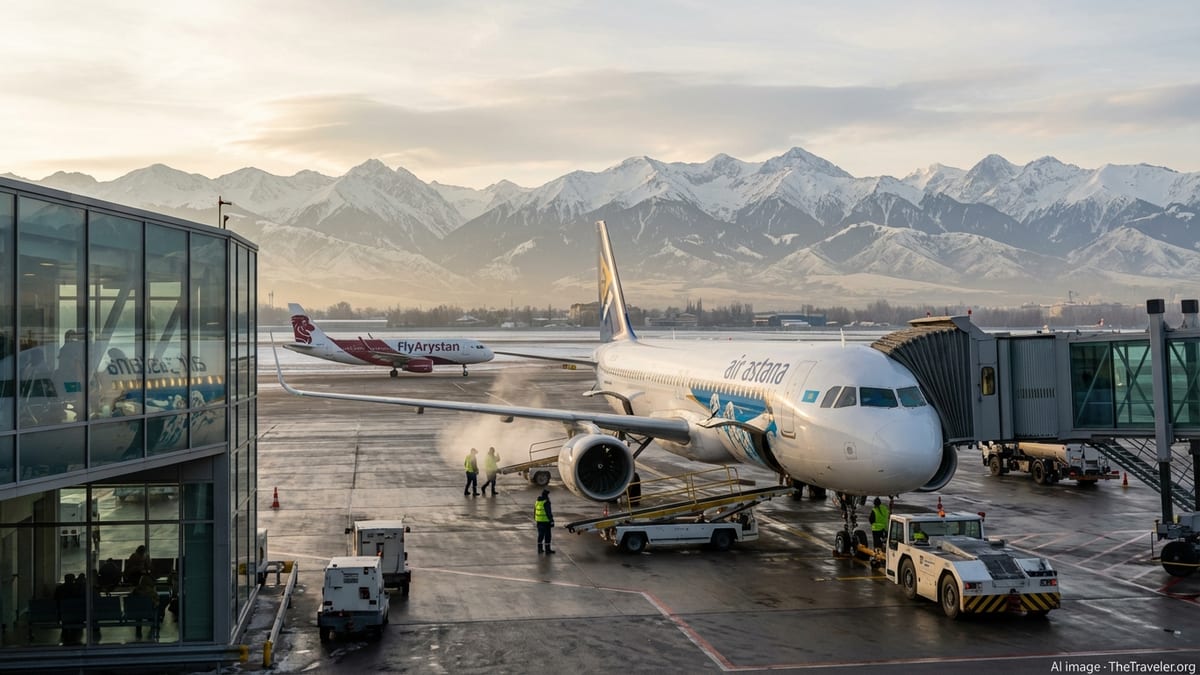
Air Astana has accelerated its post-IPO growth strategy with shareholder approval for a record-breaking firm order of 25 Airbus A320neo-family aircraft, a landmark deal that reinforces the Kazakh carrier’s role as a key connector across Central Asia and the Caucasus while deepening its commitment to more fuel-efficient, lower-emission narrowbodies.
Largest Aircraft Order in Air Astana’s History
The newly approved order, confirmed in mid-February 2026 after a shareholder vote, covers five Airbus A320neo and 20 A321neo aircraft, with deliveries scheduled between 2031 and 2034. It converts a memorandum of understanding first unveiled in November 2025 into a firm commitment and cements the A320neo family as the backbone of the group’s regional and medium-haul network.
The deal is structured as 25 firm aircraft with options for a further 25, giving Air Astana the flexibility to double the size of the order if market conditions and route performance justify additional growth. Executives describe the package as the largest aircraft commitment in the airline’s history, both in unit count and long-term strategic impact, building on the group’s rapid expansion following its 2024 stock market listing.
The aircraft will be deployed across both full-service flag carrier Air Astana and low-cost offshoot FlyArystan, which already operate a combined fleet dominated by A320-family jets. According to recent fleet data, the group currently fields more than 50 Airbus single-aisle aircraft, a number set to grow significantly as existing leases roll over and the new-generation jets begin to arrive in the early 2030s.
By stretching deliveries over a three-year window, Air Astana aims to smooth capital expenditure while maintaining momentum in fleet modernization. The long lead time also secures scarce production slots at a moment when Airbus has a backlog of more than 7,000 A320neo-family aircraft and is ramping its output toward record levels.
Shaping a New Regional Hub Network
For travelers across Central Asia and the Caucasus, the order signals a continued shift from fragmented point-to-point services toward a more cohesive hub-and-spoke system centered on Almaty and Astana. Air Astana has steadily expanded its network to secondary cities in Kazakhstan and neighboring states, while linking them to major capitals in Europe, the Middle East and East Asia.
The A321neo and its long-range sibling, the A321LR, have already proven central to this strategy, allowing the airline to connect mid-sized markets with nonstop flights that would previously have required transfers through Moscow, Istanbul or Gulf megahubs. The new aircraft will deepen that model by adding capacity on trunk routes and opening thinner, longer sectors where widebodies would be uneconomical.
Industry observers expect Air Astana to channel many of the additional A321neo-family jets into growth corridors between Kazakhstan, the Caucasus, the Gulf and Western China, as well as new links into Eastern and Southern Europe. The combination of higher seat counts and longer range compared with the current A320ceo fleet gives planners more freedom to match aircraft size to burgeoning demand on business and visiting-friends-and-relatives routes.
The order also strengthens the role of FlyArystan as a volume carrier capable of stimulating new point-to-point leisure traffic across the region. With a single-class, high-density A320neo layout, the low-cost subsidiary can deploy the new jets on domestic and short regional sectors where lower unit costs are critical to maintaining affordable fares.
Sustainability and Efficiency at the Core
Beyond network expansion, the A320neo family forms a visible pillar of Air Astana’s sustainability narrative. Equipped with new-generation engines and aerodynamic “Sharklet” wingtip devices, the type delivers up to 20 percent lower fuel burn per seat compared with previous-generation narrowbodies, alongside significant reductions in noise footprint around airports.
These efficiency gains are particularly relevant in Central Asia, where long sector lengths, extreme seasonal temperatures and high-altitude operations can amplify fuel consumption. By upgauging many routes from smaller aircraft to A321neo models while maintaining or improving fuel burn per seat, Air Astana aims to cut emissions intensity even as total passenger numbers rise.
The Airbus narrowbodies are already certified to operate on blends of Sustainable Aviation Fuel, and the manufacturer is targeting full compatibility with 100 percent SAF by 2030. That capability dovetails with Kazakhstan’s broader push to align its transport sector with international climate goals and to position its major airports as environmentally progressive hubs between Europe and Asia.
Noise reductions are another tangible benefit for airport communities in Almaty, Astana and regional cities such as Shymkent and Aktau. Quieter departures and arrivals help airports stay within tightening noise contours, preserving capacity for future growth without triggering community opposition that has constrained expansion at some European and North American gateways.
Coordination with Long-Haul Fleet Ambitions
The single-aisle expansion arrives as Air Astana embarks on a major renewal of its long-haul fleet. In late 2025, the airline closed an agreement for up to 15 Boeing 787-9 Dreamliners, a widebody order aimed at adding nonstop services to North America and deepening its presence in high-yield Asia and Europe markets. The combined effect of the two deals is to give the group a more coherent, fuel-efficient fleet from regional spokes to intercontinental trunk routes.
From a scheduling perspective, the 787-9s will likely anchor new long-haul services from Almaty and Astana, while the A321neo and A321LR feed those flights from secondary cities across Central Asia, the Caucasus and Western China. This kind of finely tuned network geometry is designed to capture sixth-freedom traffic that might otherwise funnel through larger hubs run by European, Gulf or Turkish rivals.
The alignment of Airbus and Boeing orders also reflects post-pandemic realities in aircraft sourcing. With delivery slots for both the A320neo family and new-generation widebodies in short supply globally, Air Astana has moved early to lock in capacity through the mid-2030s. For an airline that has grown traffic more than sixfold since its founding in 2001, having guaranteed access to fuel-efficient jets is increasingly a competitive necessity rather than a strategic luxury.
Financially, the orders arrive on the back of Air Astana’s successful initial public offering in early 2024, which raised hundreds of millions of dollars and diversified its shareholder base. That stronger balance sheet gives the carrier more leverage in aircraft negotiations and supports the long investment horizon demanded by such large fleet commitments.
Implications for Travelers Across Central Asia and the Caucasus
For passengers, the A320neo family order is expected to translate into a denser, more comfortable travel experience over the next decade. Cabins on Air Astana’s A320neo and A321neo fleets feature modern inflight entertainment options, LED lighting and upgraded seating, while FlyArystan’s high-density layouts prioritize low fares and quick turnarounds.
As the new aircraft enter service from 2031 onward, travelers can anticipate more nonstop options linking cities such as Tbilisi, Baku, Bishkek and Tashkent with Almaty and Astana, as well as improved connectivity to destinations in Europe, the Middle East and South Asia. Greater fleet commonality should also support more reliable schedules and faster recovery from disruptions, a persistent pain point on some of the region’s existing carriers.
In the broader competitive landscape, Air Astana’s commitment to 25 firm A320neo-family aircraft, plus options for 25 more, signals that Central Asia will remain one of the most dynamic emerging markets in global aviation. As infrastructure at regional airports improves and visa regimes continue to liberalize, the additional capacity will be critical to capturing new tourism flows and business travel tied to energy, mining and logistics projects.
The record-breaking order is ultimately a bet that travelers will continue to see Kazakhstan and its neighbors not just as transit points between continents, but as destinations in their own right. With a modernized, more sustainable single-aisle fleet on the way, Air Astana is positioning itself at the center of that shift.