

More news on this day
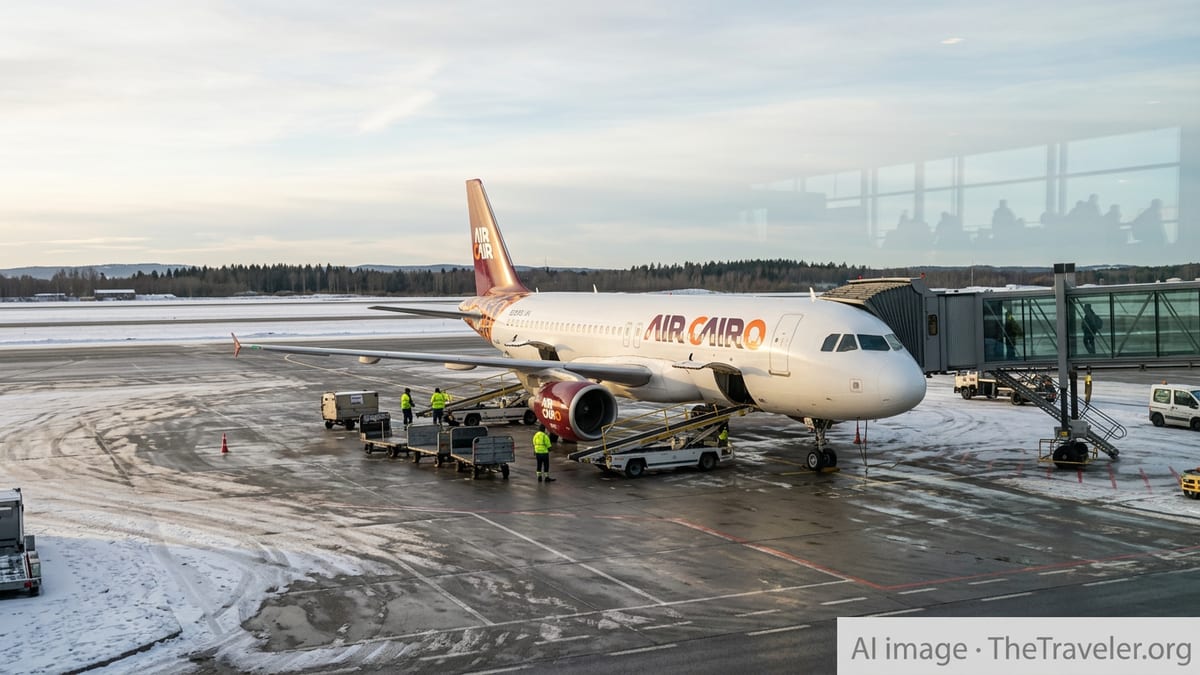
Egyptian carrier Air Cairo is set to enter the Nordic market from winter 2026–27, unveiling new direct routes linking Oslo with both Cairo and Hurghada in a move aimed at capturing growing leisure and cultural travel demand between Norway and Egypt.
Get the latest news straight to your inbox!
Details of the New Oslo Routes
Air Cairo will introduce two distinct links from Oslo Airport Gardermoen, adding the Norwegian capital to its expanding European network. According to recent route filings and airport announcements, the carrier plans twice-weekly flights between Oslo and Cairo and a weekly service between Oslo and Hurghada during the 2026–27 winter season. The schedule is designed around peak holiday demand, with departures timed to give travelers convenient same-day arrivals in Egypt’s capital and on the Red Sea coast.
The Oslo to Cairo route is expected to operate two times per week, on Mondays and Thursdays, while Oslo to Hurghada will run once weekly on Sundays. Services will be flown by Airbus A320-family aircraft configured for around 180 passengers, aligning capacity with the strong seasonal flows that typically characterize Nordic leisure travel to the sun belt.
Although final schedules and fares will be published closer to launch, industry sources indicate that the flights will form part of Air Cairo’s broader drive to balance tour-operator traffic with seat-only sales. This will give both package holidaymakers and independent travelers in Norway new nonstop access to Egyptian destinations that previously required at least one connection via European or Middle Eastern hubs.
Air Cairo has confirmed that the new routes are planned to commence with the start of the IATA winter season in late October 2026, continuing through the core northern winter months when demand for warm-weather escapes is highest.
Boost for Egypt’s Cultural and Red Sea Tourism
The addition of Oslo to Air Cairo’s network is expected to provide a direct lift to Egypt’s tourism sector, which has been working to diversify its source markets and lengthen visitor stays. Cairo remains the primary gateway to the country’s Pharaonic heritage, with most itineraries built around the Pyramids of Giza, the Egyptian Museum and Nile cruises. Direct access from Norway is likely to appeal to culturally driven travelers who previously faced longer, more cumbersome itineraries.
At the same time, Hurghada has evolved into one of Egypt’s most important resort cities, known for year-round sunshine, diving and family-oriented Red Sea tourism. Nordics have long been a key market for Red Sea resorts, and the new once-weekly Oslo–Hurghada service is expected to feed both traditional package holidays and newer segments such as long-stay digital nomads and winter remote workers.
Egyptian tourism officials and local industry stakeholders anticipate that the twin Oslo routes will also encourage multi-center trips. Travelers will be able to combine several nights in Cairo with a beach stay in Hurghada on a single ticket, using domestic connections or overland transfers. This kind of circuit has become increasingly popular among European visitors seeking to blend culture, nature and relaxation in one holiday.
The move aligns with Egypt’s strategy to push tourism beyond traditional source markets such as Germany, the United Kingdom and Russia, adding higher-yield travelers from Scandinavia who typically spend more per trip and favor organized excursions and activities.
Norway–Egypt Air Links Enter a New Phase
For Norway, Air Cairo’s arrival marks a fresh phase in direct connectivity to North Africa. Oslo Airport has seen growing interest from leisure carriers targeting winter sun destinations, but nonstop links to Egypt’s main gateways have been intermittent. The new Cairo and Hurghada services will give Norwegian travelers a regular, season-long option to reach Egypt without transiting other European cities.
Oslo Airport management has previously highlighted Cairo as a long-desired route, citing pent-up demand from both leisure and visiting-friends-and-relatives traffic. The addition of Hurghada further broadens the offer, positioning the Red Sea as a direct competitor to more established winter destinations like the Canary Islands, Madeira and the Gulf.
The launch also illustrates how smaller and hybrid carriers are increasingly filling gaps left by larger legacy airlines, some of which have scaled back or reshaped their networks in recent years. By entering the market with a focused, high-demand seasonal schedule, Air Cairo aims to secure a foothold in the Nordic region while limiting exposure to off-peak volatility.
Travel trade partners in Norway are expected to play a central role, with package tour operators, specialist dive agencies and online travel agencies likely to take blocks of seats in advance of the first winter season. This model is familiar in the Nordic market, where charter-style operations have long underpinned direct links to sun-and-sea destinations.
Part of Air Cairo’s Wider Expansion Strategy
The Oslo services form one strand of a broader network expansion strategy for Air Cairo, which has been steadily adding regional and medium-haul routes as its fleet grows. The airline, which positions itself as a value-focused carrier supporting Egypt’s national tourism objectives, has been using narrowbody aircraft to connect secondary cities and holiday markets to Egyptian hubs.
Recent years have seen Air Cairo launch more flights linking Egyptian resort cities with European capitals, alongside new domestic and niche routes within Egypt. The company has stated that it aims to reach a fleet of around 40 aircraft by the mid-2020s, with the additional capacity directed toward both inbound tourism flows and regional connectivity across the Middle East and North Africa.
By targeting Oslo, Air Cairo is entering a market where awareness of Egypt as a holiday destination is already high, thanks to decades of charter operations and packaged Red Sea trips. However, by placing its own brand on the tail rather than relying solely on wet-leased or codeshare capacity, the airline gains greater control over scheduling, pricing and ancillary revenue opportunities.
The new routes are also likely to integrate with Air Cairo’s growing network beyond Cairo and Hurghada, offering one-stop itineraries to other Egyptian cities and select destinations in neighboring regions. This will be particularly relevant for Norwegian travelers interested in combining Egypt with additional stops in North Africa or the Middle East.
What Travelers Can Expect for Winter 2026–27
While detailed timetables and fares will only be finalized closer to launch, early information suggests that Air Cairo will position its Oslo flights to maximize daylight operations and minimize layovers for connecting passengers. Midday or early-afternoon departures are expected, enabling same-day hotel check-in in both Cairo and Hurghada.
Onboard, travelers can anticipate a standard single-aisle cabin layout on Airbus A320-family aircraft, with a mix of pre-bookable and tour-operator allocated seating. Air Cairo has been gradually modernizing its onboard product, and industry observers expect a competitive combination of buy-on-board catering, seat selection options and checked-baggage packages tailored to the leisure market.
Travel planners advise that, as with any new seasonal route, early-booking promotions are likely as soon as ticket sales open, with the most attractive fares targeting the shoulders of the winter peak. Families tied to school holidays and divers eyeing specific Red Sea conditions may find that prime weeks command higher prices, but the presence of direct capacity from Oslo could still undercut existing one-stop options via other European hubs.
For both Norwegian and Egyptian tourism partners, the 2026–27 winter season will serve as a test of long-term demand on the new Oslo–Cairo and Oslo–Hurghada corridors. Strong load factors could pave the way for additional frequencies in subsequent winters, or even limited summer operations, further tightening the emerging air bridge between Scandinavia and the Nile valley and Red Sea shores.