

More news on this day
Air Canada is deepening its footprint in Mexico with the launch of a new non-stop route between Montréal and Guadalajara for the Summer 2026 season, adding fresh capacity to one of Latin America’s fastest-growing aviation markets.
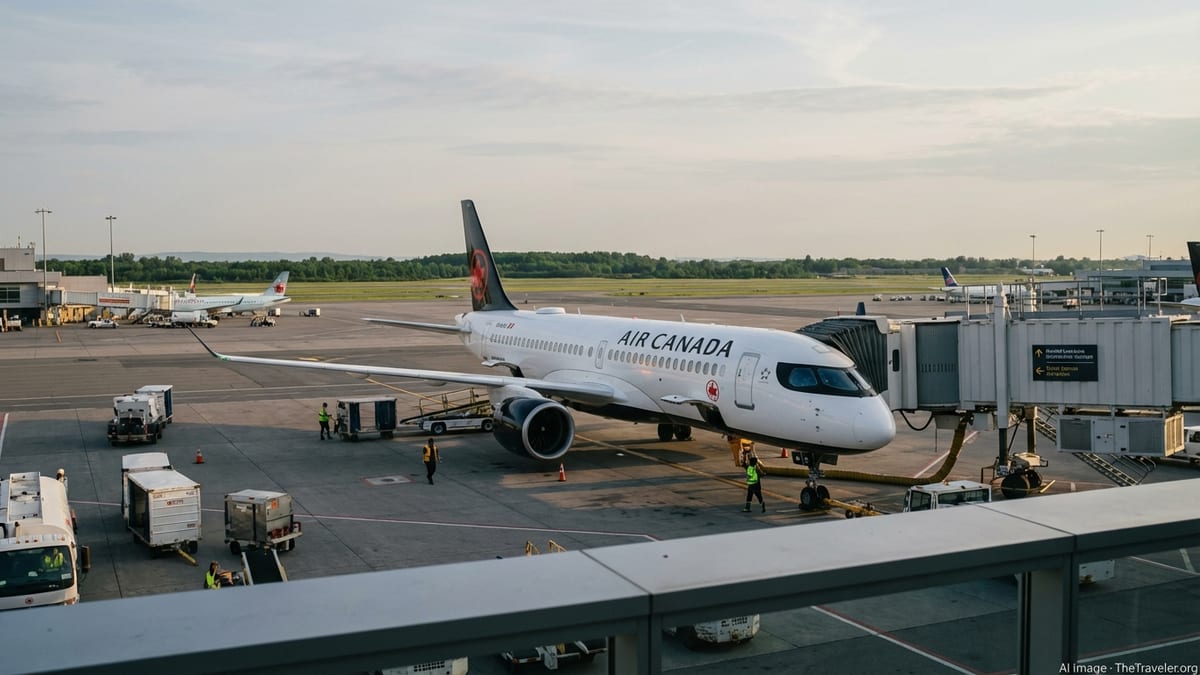
New Non-stop Link Between Quebec and Mexico’s Second City
The new Montréal–Guadalajara flights are part of Air Canada’s broader strategy to expand in Mexico, a country the carrier has served since the 1950s and where it is steadily increasing capacity. Guadalajara, the capital of Jalisco state and Mexico’s second-largest metropolitan area, has emerged as a key business and cultural hub, making it an attractive addition to the airline’s network.
Industry schedules indicate that Guadalajara is already being integrated more closely with Canadian markets, with new Canadian routes into the city ramping up through the 2025–2026 winter season. Building on this trend, the Montréal–Guadalajara link for summer 2026 will give Quebec travelers a direct gateway into western Mexico while offering Mexican passengers one-stop access to a wide range of destinations in Europe and across Canada via Air Canada’s Montréal hub.
The route underscores how mid-continental hubs are being used to connect secondary but fast-growing cities rather than focusing solely on traditional North American trunk routes. For Montréal, Guadalajara joins an expanding roster of long-haul leisure and business destinations that now includes several cities in Europe and Latin America.
While exact seasonal launch dates and weekly frequencies are typically finalized closer to departure, the carrier’s pattern with recent Mexico additions suggests a multi-weekly operation calibrated to capture both summer holiday traffic and visiting-friends-and-relatives travel.
Boost for Trade, Tech and Tourism Corridors
Guadalajara has long been known as a cultural heavyweight, the birthplace of mariachi and tequila, but in recent years it has also branded itself as Mexico’s Silicon Valley. Global technology firms, startups and manufacturing operations have clustered around the city, driving sustained business demand on international routes. A direct Montréal connection will give Quebec-based technology, aerospace and creative industries faster access to Jalisco’s innovation ecosystem.
For Mexico, the route is equally significant. Montréal is not only a major financial and cultural center, but also the headquarters city for several global aviation institutions. Better connectivity with Montréal supports broader trade diversification efforts between Canada and Mexico, in line with both countries’ emphasis on nearshoring and North American supply-chain integration.
Tourism flows are expected to benefit on both ends of the route. Canadian travelers gain easier access to Guadalajara’s historic center, nearby colonial towns such as Tequila and Tlaquepaque, and the Pacific coast resorts reachable by short domestic hops. Mexican visitors, meanwhile, will have a non-stop option to experience Montréal’s festivals, culinary scene and summer events without transiting through Toronto or Vancouver.
Travel analysts note that point-to-point links like Montréal–Guadalajara often perform well when they tap into both strong ethnic travel segments and emerging business ties. The Summer 2026 schedule is positioned to capitalize on this dual demand profile at a time when overall Canada–Mexico traffic is climbing.
Part of a Wider Latin America and Mexico Build-up
The Montréal–Guadalajara route forms one piece of Air Canada’s broader expansion in Latin America, which includes a substantial build-up in capacity across the region for the 2025–2026 period. The airline has previously highlighted new cities in Brazil, Colombia and Central America, and has steadily added flights to Mexican destinations from multiple Canadian hubs.
Recent schedule updates show growing frequencies from Canada into major Mexican markets and coastal resorts, supported by year-round services and seasonal peaks. By the time Summer 2026 begins, Air Canada aims to be operating dozens of non-stop flights each week between Canada and Mexico, connecting travelers from cities such as Montréal, Toronto and Vancouver to a widening list of Mexican gateways.
Guadalajara’s inclusion reflects a shift from a purely sun-and-sand focus toward a more diversified Mexican portfolio that includes industrial, cultural and tech centers. That approach also helps airlines smooth seasonal swings in demand by attracting corporate and cargo traffic that is less dependent on traditional winter holiday peaks.
With competitors from both Canada and Mexico also announcing fresh links to secondary cities, the new Montréal–Guadalajara connection is part of a competitive scramble to lock in market share as cross-border travel rebounds and business ties deepen under the framework of the Canada–United States–Mexico Agreement.
What Travelers Can Expect on the New Route
Although final aircraft type and timings for the Montréal–Guadalajara service in Summer 2026 will be confirmed closer to launch, observers expect Air Canada to deploy narrowbody jets with modern cabins, in line with its other mid-haul North America routes. These typically feature a choice of business and economy cabins, in-seat power, inflight entertainment and access to Wi-Fi on many services.
The non-stop flight time between Montréal and Guadalajara is expected to be in the range of five to six hours, depending on routing and winds. By eliminating a connection through another Canadian or U.S. hub, the new service should cut total journey times for many travelers by several hours compared with current one-stop itineraries.
Schedule details will likely be structured to enable same-day onward connections over Montréal to and from key European and domestic destinations. That connectivity is a critical selling point for the route, positioning Guadalajara not only as a point-to-point market from Quebec, but also as a node in a wider transatlantic and transcontinental network.
Passengers originating in Mexico will benefit from streamlined access to destinations such as Paris, London, Frankfurt and several major Canadian cities on a single Air Canada itinerary, while travelers from Europe can reach western Mexico with just one connection in Montréal.
Implications for Airports in Montréal and Guadalajara
For Montréal–Trudeau International Airport, the new Guadalajara service adds to an already expanding route map as operators invest in infrastructure and capacity. Airport planners have been working with carriers to accommodate growing transatlantic and Latin American demand, and another Mexican route helps cement Montréal’s role as a key connecting hub within the Air Canada system.
At Guadalajara International Airport, the route supports a broader expansion strategy that includes new international links and terminal improvements to handle rising passenger volumes. Authorities there have highlighted the importance of direct flights to North America’s major cities, both to support tourism and to serve the manufacturing and technology sectors clustered around the city.
Local tourism and business organizations in both cities are expected to mount joint marketing campaigns ahead of the launch to stimulate demand. These efforts typically showcase cultural events, gastronomy, and regional attractions, as well as emphasize the ease of travel on new non-stop services.
With Summer 2026 shaping up to be one of the busiest travel periods yet for routes between Canada and Mexico, the Montréal–Guadalajara link is positioned to become a high-profile addition for Air Canada, reflecting the carrier’s confidence in the long-term potential of this cross-border corridor.