

More news on this day
Air Canada is extending its growing network of luxury motorcoach links to Ontario’s cottage country, unveiling a new Landline-operated service that will connect Muskoka to Toronto Pearson International Airport with through-ticketing, baggage handling and, initially, no added fee compared with journeys starting at Pearson.
Get the latest news straight to your inbox!
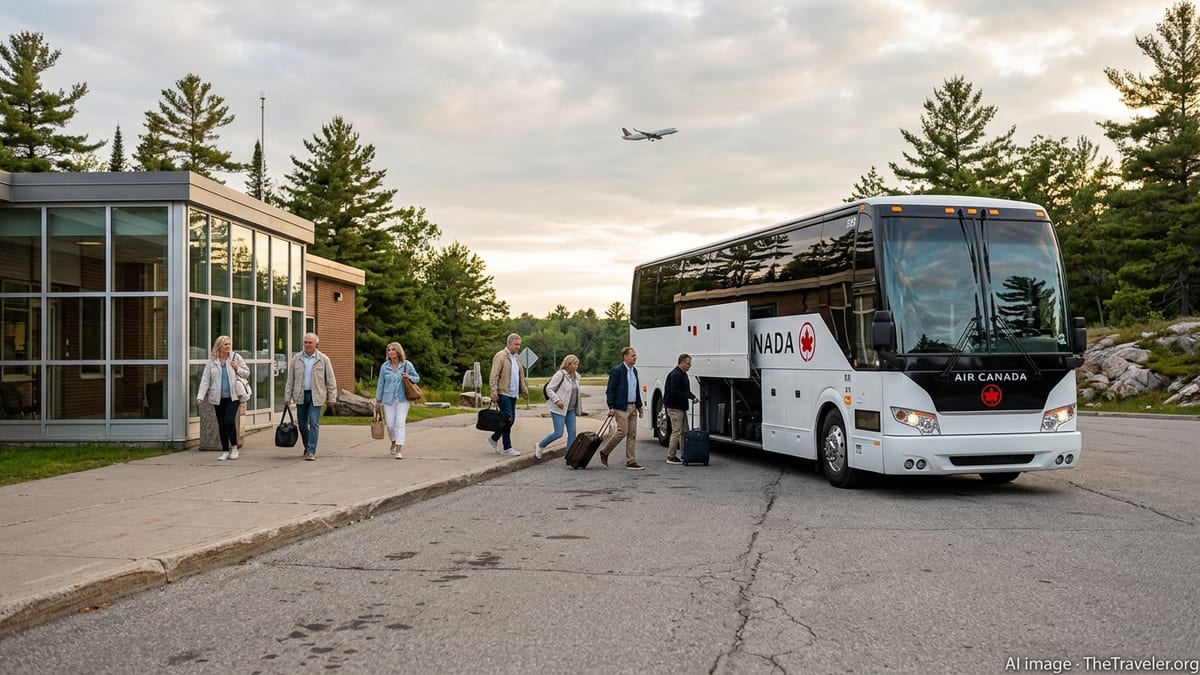
New Muskoka Link Joins Air Canada’s Landline Network
The Muskoka route is the latest addition to Air Canada’s multi-modal partnership with Colorado-based The Landline Company, which integrates motorcoach legs into airline itineraries as if they were short regional flights. Publicly available information on the program indicates that similar services are already operating between Toronto Pearson and regional airports in Hamilton, Waterloo and Kingston, with more Ontario communities now being added as the concept gains traction.
The new Muskoka connection is expected to follow the same model, offering scheduled, Air Canada-branded coaches running between a designated facility in the Muskoka region and Pearson’s Terminal 1. Travellers will book the motorcoach segment under an Air Canada flight number as part of a single itinerary, allowing them to check bags once, earn Aeroplan points on the ground sector and receive the same disruption protections as air-only journeys.
Reports on other Landline routes suggest that departure times are typically coordinated with peak bank flights at Pearson, enabling same-day connections to North American and international destinations. A comparable Kingston service, for example, operates two daily round trips that meet early-morning transcontinental departures and evening inbound waves, and industry observers expect a similar pattern for Muskoka.
The expansion into cottage country underscores Air Canada’s broader strategy of using high-end coaches to extend the reach of its Toronto hub into smaller markets where traditional regional jet service would be difficult to sustain. Transportation analysts note that the approach can lower operating costs while maintaining schedule breadth for communities outside major metropolitan areas.
Luxury Motorcoach Experience Targets Cottage Country Travellers
As on existing Landline routes, the Muskoka coaches are expected to prioritize comfort and amenities aimed at travelers who might otherwise drive themselves to Toronto. Published descriptions of the fleet highlight fully accessible vehicles equipped with spacious leather seating, generous legroom and individual power outlets at each seat.
Fast, complimentary Wi-Fi, overhead storage and underfloor baggage compartments are standard, positioning the service as an upgrade over typical intercity buses and a potentially more relaxing alternative to navigating Highway 400 traffic. Large windows and elevated seating are also likely to appeal to leisure passengers heading to and from lakefront properties and resorts, providing panoramic views of the Muskoka landscape en route to the airport.
The luxury positioning aligns with Muskoka’s reputation as a high-end seasonal destination for Toronto-area residents and international visitors. Travel industry commentary suggests that pairing premium ground transportation with Air Canada’s global network could make it easier for overseas guests to reach cottage rentals and lodges without arranging a separate car service or rental vehicle out of Pearson.
Accessibility has been a core feature of the Landline rollout elsewhere in Ontario, with motorcoaches designed to accommodate passengers with reduced mobility. The same standards are expected on the Muskoka route, which could broaden airport access for residents who may find long highway drives or multiple transfers challenging.
Seamless Check-In, Protected Connections and No Added Fees
One of the main selling points of Air Canada’s coach links is the promise of a single, protected journey, and the Muskoka service is set to mirror that approach. On comparable routes, passengers check in for their full itinerary at the regional airport or departure facility, receive boarding passes for all segments and have their checked baggage tagged directly through to the final destination.
Operational details released for prior Landline launches indicate that, on arrival at Pearson, customers disembark at a dedicated area, proceed to bag drop if necessary and then move through security. In the event of delays to either the coach or a connecting flight, passengers booked on a through-ticketed itinerary are rebooked under the same protections that apply to air-only trips, reducing the risk associated with separate bus and flight bookings.
A notable draw for the Muskoka route is the pricing strategy. When similar services have debuted, Air Canada has highlighted that many coach segments can initially be booked at no extra cost compared with starting a trip at Pearson itself. In some cases, published materials also describe temporary fee waivers for customers adding the ground leg to existing bookings via the airline’s contact channels.
For Muskoka residents and cottage owners, that structure means they may be able to substitute a highway drive and Toronto-area parking fees with a luxury coach ride that is effectively bundled into the airfare. Travel commentators suggest that, as long as journey times remain competitive with self-driving, the absence of a surcharge could be decisive for frequent flyers.
Strengthening Toronto Pearson’s Regional Catchment Area
By plugging Muskoka directly into Pearson’s network, Air Canada is also working to reinforce Toronto’s position as a dominant North American hub. Aviation industry data shows the carrier already controls a significant share of seat capacity at Pearson, and incremental feeder traffic from surrounding regions can help sustain frequencies on long-haul routes.
Analysts note that motorcoach-linked itineraries can be particularly attractive on transatlantic and transpacific services, where passengers are more likely to accept an extended total journey time in exchange for a simple, one-ticket experience from their home region. Muskoka’s strong summer travel patterns, combined with year-round residents who commute regularly for business, give the route a potentially diverse demand base.
The partnership model also allows Air Canada to test new regional markets at relatively low risk. Instead of committing a dedicated aircraft to a short-haul sector, the airline can start with a limited number of daily coach trips and adjust schedules as demand evolves. If the Muskoka service proves as popular as the initial Hamilton and Waterloo links, observers expect the frequency and seasonal capacity to increase over time.
Local tourism operators in cottage country are likely to watch the rollout closely, as easier access from Pearson could influence booking patterns for resorts, rental properties and events. More streamlined connections may encourage international visitors to include a Muskoka stay as part of a broader Canadian itinerary that starts or ends in Toronto.
Competition with Car, Rail and Independent Shuttle Providers
The new Muskoka coach adds another option to a corridor already served by private shuttles, limousine firms and personal vehicles. Existing providers in the region market direct transfers to Pearson using sedans, SUVs and small coaches, often emphasizing door-to-door convenience and custom departure times tailored to individual flights.
In contrast, Air Canada’s Muskoka service is expected to focus on integration rather than bespoke routing. Departures will likely run from a single pickup point on a fixed schedule, optimized around aircraft banks rather than individual customer preferences. However, bundled pricing, Aeroplan accrual and the reassurance of through-ticket protection may help differentiate the product from standalone shuttle and car services.
From a traveler’s perspective, the choice may come down to trade-offs between flexibility and simplicity. Those seeking a fully customized itinerary or direct service from a cottage driveway to Pearson may continue to favor private transfers. Passengers prioritizing a single booking, coordinated connections and the ability to earn and redeem loyalty points could gravitate toward the Air Canada-branded coach.
Transportation observers suggest that the broader expansion of Landline routes in Ontario, including Muskoka, points to a gradual reshaping of how regional communities interface with Toronto’s primary airport. If the model continues to perform well, similar luxury motorcoach links may emerge from other leisure and secondary markets across the province, further blurring the traditional line between ground and air travel.