

More news on this day
Air Canada is set to add four new nonstop routes from Toronto’s Billy Bishop Toronto City Airport to New York LaGuardia, Chicago O’Hare, Washington Dulles and Boston Logan beginning in spring and summer 2026, a move widely viewed as a strategic push to strengthen cross-border connectivity and stimulate tourism flows into Canada.
Get the latest news straight to your inbox!
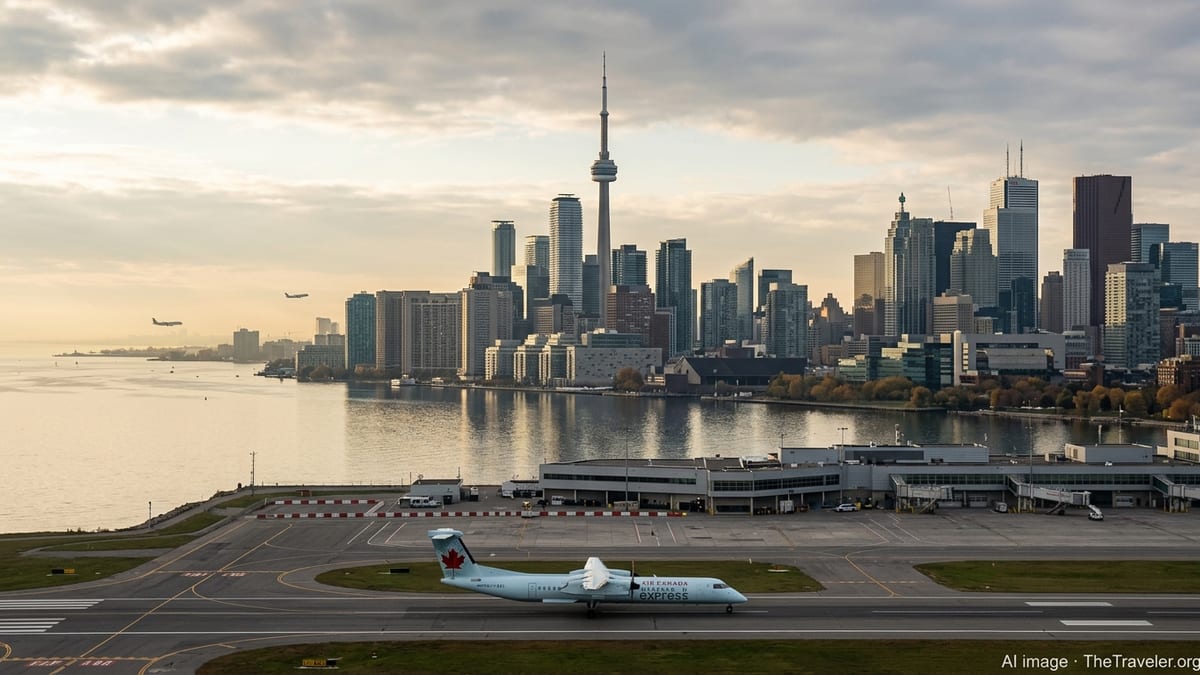
LaGuardia Leads New Wave of U.S. Connections from Downtown Toronto
According to published information from Air Canada and industry reports, the first of the new U.S. routes from Billy Bishop Toronto City Airport will link downtown Toronto with New York’s LaGuardia Airport starting March 29, 2026. The carrier plans to operate four daily return flights on the route, positioning LaGuardia as the highest-frequency of the new services.
These additions mark the first transborder flights operated by Air Canada from Toronto’s downtown airport, timed to follow the opening of a long-planned U.S. customs pre-clearance facility. Publicly available details indicate that pre-clearance is expected to simplify the travel experience for U.S.-bound passengers, allowing them to complete immigration and customs formalities before departure rather than on arrival in the United States.
The new LaGuardia service will complement Air Canada’s existing network from Toronto Pearson International Airport, where the airline already connects Canada’s largest city with multiple New York–area airports. Industry observers note that spreading New York capacity between Pearson and Billy Bishop could appeal to both business travellers seeking quick access to Manhattan and leisure passengers looking for more flight options and schedules.
Chicago O’Hare and Washington Dulles Join the Network in June 2026
Shortly after the LaGuardia launch, Air Canada intends to add two more major U.S. hubs to the Billy Bishop schedule. Beginning June 1, 2026, published schedules show that the airline will introduce twice-daily flights between downtown Toronto and Chicago O’Hare International Airport, along with a daily service to Washington Dulles International Airport.
Both O’Hare and Dulles are significant connecting points within the broader North American and global aviation networks. By linking Billy Bishop to these airports, Air Canada is expected to create additional one-stop itineraries for passengers traveling beyond the U.S. capital and Midwest to destinations across the United States and overseas.
Travel industry coverage suggests that these new connections will particularly resonate with business travellers moving between financial, political and technology centres in Canada and the United States. Frequent schedules and short flight times from a centrally located Toronto airport are viewed as key components of the carrier’s strategy.
Boston Logan Service Rounds Out the Four-City U.S. Expansion
The final piece of the new U.S. portfolio from Billy Bishop is a planned route to Boston Logan International Airport. Available route announcements indicate that Air Canada will introduce three daily flights between Toronto’s downtown airport and Boston beginning July 1, 2026.
Boston has long been an important market for Canadian carriers due to strong ties in education, healthcare, technology and tourism. The new downtown-to-downtown style connection, pairing Toronto’s island airport with Boston’s primary international gateway, is expected to appeal to passengers seeking shorter ground transfers on both ends of their journey.
Together with New York, Chicago and Washington, the addition of Boston creates a compact but strategically chosen set of U.S. destinations that link Toronto directly with key corridors in the American Northeast and Mid-Atlantic. These cities also act as gateways for visitors heading north to explore Canadian destinations beyond Toronto.
Boosting Canadian Tourism Through Easier Cross-Border Access
Tourism and aviation analysts point out that the expanded Billy Bishop network is likely to support Canada’s broader tourism objectives. Easier air access from major U.S. cities reduces travel time and friction for visitors considering trips to Toronto and other Canadian destinations reachable via Air Canada’s domestic network.
The airline has framed the new routes as part of a strategy to make Canada more accessible to U.S. travellers by offering additional frequencies and more convenient downtown connections. Observers note that passengers arriving at Billy Bishop can quickly reach Toronto’s hotels, convention centres, sports venues and cultural attractions, which may encourage more short stays and weekend trips.
In addition, the new routes are expected to feed traffic into Air Canada’s domestic and regional services, as travellers use Toronto as a jumping-off point to explore other parts of Ontario, Quebec and Western Canada. This potential for onward travel is seen as an important factor in spreading the economic benefits of increased tourism beyond the gateway city.
Competitive Dynamics and Capacity Growth at Billy Bishop
The move into transborder flights from Billy Bishop also adds a new dimension to competition at the airport. The facility has historically focused on short-haul regional services, and Air Canada’s expansion arrives at a time when other carriers are also reassessing their presence in downtown Toronto following infrastructure upgrades and evolving passenger demand.
Transportation bulletins and aviation trade coverage indicate that regulators and airport stakeholders have sought to balance noise, slot allocations and regional connectivity with opportunities for growth. The introduction of multiple daily flights to four high-profile U.S. destinations represents a notable increase in capacity from the island airport, albeit one that remains constrained compared with Toronto Pearson.
For travellers, the changes translate into more choice on key cross-border routes, with options to depart either from Pearson or Billy Bishop depending on their location and priorities. For the tourism sector, the added visibility of downtown-to-downtown air links is expected to reinforce Toronto’s position as a convenient, urban gateway for U.S. visitors while supporting Air Canada’s goal of driving more inbound traffic across the country.