

More news on this day
Growing interest from Air Canada and aircraft lessor Azorra is helping to crystalize market confidence in Airbus’s proposed A220-500, a stretched variant that industry coverage indicates could be launched as early as this year and positioned to compete directly with larger single-aisle jets in North America and global markets.
Get the latest news straight to your inbox!
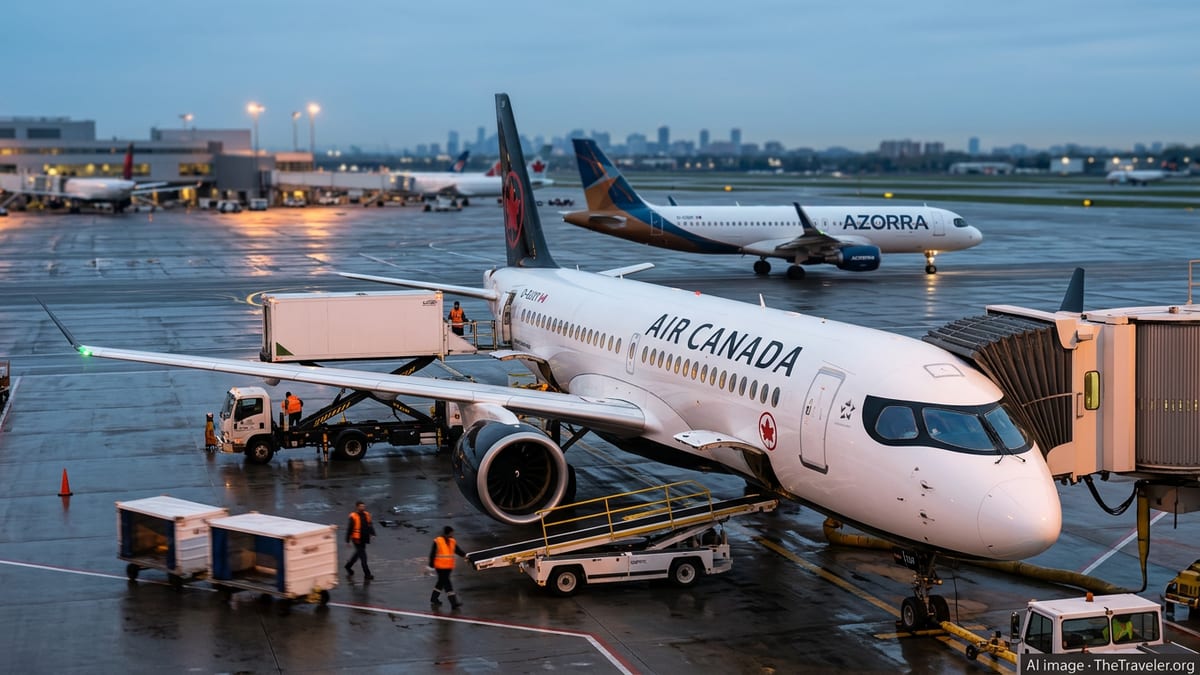
A220-500 Moves Closer to Launch as Market Testing Intensifies
Publicly available reporting indicates that Airbus is actively sizing up demand for the A220-500, with a launch decision widely expected to hinge on securing a critical mass of airline and lessor commitments. Industry coverage suggests that a formal announcement is being targeted for a major air show later in 2026, underlining how pivotal this variant is becoming to Airbus’s narrowbody strategy.
The A220-500 is described as a simple stretch of the current A220-300, keeping the existing Pratt & Whitney geared turbofan engines and wing while extending the fuselage to seat roughly 170 passengers in a typical two-class configuration, with higher-density layouts potentially approaching 190 to 200 seats. This approach is intended to shorten development timelines and certification complexity while still producing an aircraft that overlaps much of the capacity now served by Airbus A320 and Boeing 737-8 fleets.
Analysts note that this strategy aligns with an environment of constrained production slots for larger single-aisle types. With the A320neo family heavily booked and rival programs facing supply chain constraints, a stretched A220 could give Airbus additional flexibility to meet airline growth and replacement needs in the back half of the decade and beyond.
The emerging consensus in trade coverage is that the success of the A220-500 will depend less on its technical merits, which build on an already efficient platform, and more on how quickly Airbus can line up cornerstone customers in North America and Europe. In that context, signals from Air Canada and Azorra carry particular weight.
Air Canada Deepens its A220 Commitment and Points to Growth
Air Canada has steadily expanded its A220-300 fleet and order book in recent years, reinforcing its role as a flagship operator for the type in North America. Airbus data published in late 2024 and updated fleet listings in early 2026 show the carrier holding firm orders for 65 A220-300s, with more than 40 already in service. These aircraft are being used to replace Embraer 190s and older narrowbodies while supporting new route development.
The airline has also been closely associated with product upgrades on the A220. At the Aircraft Interiors Expo in 2025, Airbus unveiled a new Airspace cabin for the A220, with reports identifying Air Canada as the launch customer and indicating that its first aircraft with the refreshed interior is scheduled to enter service in 2026. The move underscores Air Canada’s intent to position the A220 not only as a cost-efficient workhorse but also as a passenger-pleasing centerpiece of its narrowbody fleet.
Industry analyses frequently list Air Canada among the leading candidates for an eventual A220-500 order. The airline’s existing investment in pilot training, maintenance infrastructure and cabin branding around the A220-300 makes a stretched variant a logical next step for future growth, particularly on transcontinental Canadian routes and high-density U.S. transborder services where additional capacity is valuable but widebody aircraft would be excessive.
While there has been no public confirmation of a firm A220-500 order, repeated references in aviation trade coverage to Air Canada’s interest in a larger member of the A220 family are viewed by analysts as an important part of the emerging business case. Any early commitment from the carrier would send a strong signal to other North American airlines evaluating their own medium-term fleet renewal options.
Azorra’s Role as a Specialist Lessor Strengthens the Case
Azorra, a Florida-based lessor with a focus on regional and smaller mainline jets, has emerged as a key player in the A220 ecosystem. Airbus customer documentation and recent fleet disclosures list Azorra among A220 customers, highlighting its involvement both as an owner and as a provider of financing and leasing solutions to airlines operating the type.
Over the past two years, aviation industry coverage has detailed how Azorra has worked closely with airlines and maintenance providers to manage A220 asset values and component availability, including creative approaches to engine and parts sourcing. These activities have helped deepen market confidence in the long-term support environment for the aircraft family.
Analysts observe that Azorra’s publicly documented enthusiasm for the A220 platform, combined with its pattern of investing in the -300 variant, positions the company as a likely backer of an eventual A220-500. As a lessor, Azorra can play a strategic role by aggregating demand from multiple carriers, including mid-sized operators that may lack the scale for large direct orders but still require modern, fuel-efficient aircraft in the 160 to 190-seat segment.
Industry commentary suggests that having an experienced specialist lessor ready to take early positions in the A220-500 would give Airbus additional flexibility when structuring launch deals. Such backing can reduce perceived risk for launch airlines and smooth the path to a sufficient backlog that justifies opening a new production sub-variant.
North American Narrowbody Market Dynamics Favor a Stretch
The proposed A220-500 is arriving at a time when North American carriers are juggling aging fleets, rising fuel costs and ongoing delivery delays on existing narrowbody programs. Airlines across Canada and the United States are seeking ways to balance growth with greater efficiency, often by upgauging to larger single-aisle aircraft to capture more revenue per flight.
Current A220-300 operators such as Air Canada, Delta Air Lines and JetBlue already deploy the type on a mix of regional and longer domestic routes, where its fuel burn and passenger comfort have been positioned as competitive strengths. Trade publications frequently note that a stretched A220-500 could extend those advantages to routes that today rely on 150 to 180-seat aircraft, potentially offering double-digit percentage improvements in fuel efficiency per seat compared with older models.
The geographical spread of A220 final assembly facilities, located in Mirabel, Quebec, and Mobile, Alabama, is also seen as an advantage for North American customers. With both Canada and the United States involved in production, airlines in the region can emphasize domestic industrial participation while benefiting from shorter ferry distances for new deliveries.
Analysts highlight that a successful A220-500 launch could prompt fleet planners to rethink traditional narrowbody segmentation. Instead of viewing the A220 solely as a regional jet replacement, the family might increasingly be positioned as a full-fledged competitor in the heart of the narrowbody market, particularly where runway performance, cabin comfort and operating economics are more important than maximum range.
Global Opportunities and Competitive Pressures
Beyond North America, reports from Europe and other regions show a growing list of airlines that have either ordered the A220 or are seen as prospective customers for a stretched variant. Carriers such as Air France, airBaltic, ITA Airways and LOT Polish Airlines already operate or have committed to the A220-300, and industry coverage frequently cites them among the candidates for an eventual A220-500 order.
For these operators, a larger A220 would offer a way to standardize around a single family while covering a broader spectrum of route profiles, from thinner regional services to busier intra-European or intra-Asian city pairs. A higher-capacity stretch could also serve as a hedge against future environmental regulations by allowing airlines to consolidate frequencies into fewer, fuller flights with lower emissions per passenger.
At the same time, the emergence of the A220-500 would intensify competition in the segment currently dominated by larger variants of the A320neo family and Boeing’s 737 MAX. Analysts note that Airbus would be partially competing with its own product line, but suggest that production constraints and diversified customer needs may make such overlap manageable. In this scenario, the A220-500 would complement, rather than replace, the A320neo by serving airlines that prioritize cabin comfort and short to medium-haul efficiency over maximum range or commonality with older Airbus models.
The degree to which Air Canada and Azorra ultimately commit to the A220-500 is expected to influence how quickly other airlines and lessors move. For now, their expanding involvement with the existing A220 family, and the growing volume of public reporting linking both names to the proposed stretch, are being interpreted across the industry as meaningful signals that Airbus’s “Super A220” is edging closer to reality.