

More news on this day
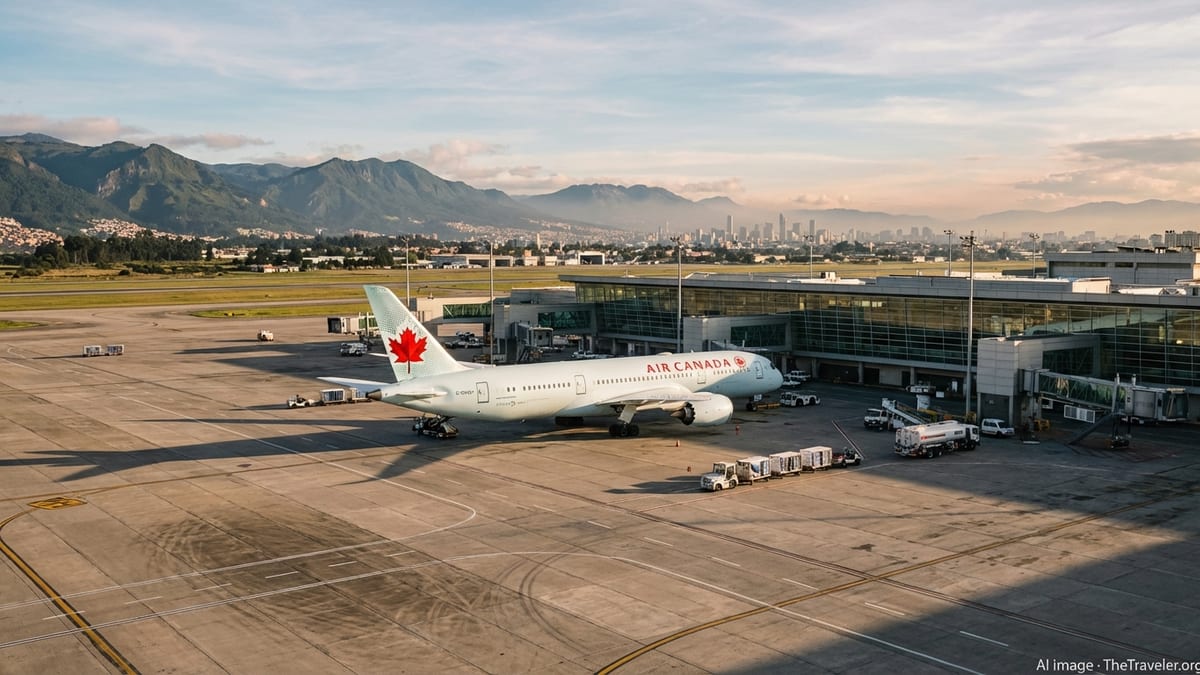
Air Canada is set to significantly deepen air links between Colombia and Canada, confirming the introduction of Boeing 787-8 Dreamliner aircraft on its nonstop Bogotá–Toronto and Bogotá–Montreal routes from late October 2026, a move that boosts capacity and cements the Colombian capital as a key South American hub in the carrier’s network.
Dreamliner Upgrade Targets Growing Colombia–Canada Demand
The deployment of Boeing 787-8 Dreamliners on Air Canada’s Bogotá services marks a strategic response to steadily rising two-way traffic between Colombia and Canada for tourism, business and VFR (visiting friends and relatives) travel. The airline will shift its current narrowbody operation on the Bogotá routes to widebody Dreamliner aircraft, raising its total seat offer in Colombia by an estimated 2.25 percent.
The 787-8 that will be based on the Bogotá operation is configured for 255 passengers in three cabins: 20 seats in Signature Class with lie-flat pods, 21 in Premium Economy and 214 in Economy. The upgrade aligns Bogotá with Air Canada’s long-haul product standard from its main hubs, offering Colombian travelers a comparable onboard experience to routes across the Atlantic and Pacific.
For the airline, the move is also a capacity play that allows it to consolidate flows from Colombia into its broader global network. By pairing a long-haul aircraft with strong local demand, Air Canada can better capture connecting traffic while offering more comfort and amenities on overnight and long sector timings.
Industry observers note that the decision underscores confidence in Colombia’s aviation recovery and long-term market potential. Bogotá’s El Dorado International Airport continues to rank among the busiest in Latin America, and securing additional widebody service from a Star Alliance carrier is seen as a competitive advantage in attracting both leisure and corporate accounts.
New Schedule Links Bogotá With Toronto and Montreal Hubs
Under the updated schedule, Air Canada will operate Bogotá–Montreal as flight AC099 and Bogotá–Toronto as flight AC095, with the Dreamliner entering regular service as the northern winter season begins in October 2026. The Bogotá–Montreal route is planned to run four times weekly on Tuesdays, Wednesdays, Fridays and Sundays from 25 October 2026.
A day later, on 26 October 2026, the Bogotá–Toronto Dreamliner service will commence, also at four weekly frequencies, operating on Mondays, Tuesdays, Thursdays and Saturdays. The pattern is designed to provide consistent connectivity throughout the week while concentrating capacity on days with strongest demand from corporate and connecting passengers.
One notable feature of the new schedule is the Tuesday overlap, when Air Canada will operate simultaneous departures from Bogotá to both Toronto and Montreal. That arrangement is expected to provide added flexibility for business travelers and those making onward connections in Canada, effectively turning Tuesdays into a high-capacity gateway day between the two countries.
From Toronto Pearson and Montreal-Trudeau, passengers will have seamless access to Air Canada’s extensive domestic and transborder network, as well as long-haul flights to Europe and Asia. Travel planners say the redesigned pattern should make same-day connections more practical in both directions, enhancing Bogotá’s desirability as a starting point for multi-stop itineraries.
Enhanced Passenger Experience With Three-Cabin Dreamliner
The introduction of the 787-8 brings a noticeable upgrade in comfort and onboard services for travelers on the Colombia–Canada corridor. Signature Class will feature fully flat beds in a 1-2-1 layout, giving direct aisle access to every passenger, a product more typically associated with intercontinental flights. This is aimed squarely at the premium corporate and high-yield leisure segments that rely on overnight travel and arrive needing to work or connect onward.
Premium Economy adds a differentiated middle tier for travelers seeking extra personal space, enhanced recline and elevated service without the full business-class price tag. In Economy, Air Canada will offer personal entertainment screens at every seat along with power outlets and USB ports, reflecting the shift toward digital, work-friendly cabins even on routes within the Americas.
Travel trade sources suggest that the Dreamliner’s modern cabin environment, including higher humidity and lower cabin altitude, could be a selling point for passengers combining Bogotá’s altitude with long flight times. The aircraft’s quieter interior and large windows are also expected to resonate with tourists heading to or from Canada’s major cities and resort destinations.
By standardizing the product on Bogotá flights with other long-haul services, Air Canada is positioning the route as part of its core intercontinental offering rather than a peripheral regional link. This, in turn, could influence corporate travel policies, which often favor carriers that deliver consistent cabin products across multiple markets.
Bogotá’s Hub Role Grows as Tourism and Trade Deepen
Local tourism authorities in Bogotá have framed the Dreamliner announcement as a vote of confidence in the city’s role as a regional connector. Officials highlight that additional widebody capacity from a North American carrier strengthens Bogotá’s case as a preferred entry point to Colombia and neighboring markets for both investors and visitors.
The reinforced links to Toronto and Montreal coincide with broader growth in Colombian outbound tourism and heightened Canadian interest in South American destinations. Tour operators expect the improved connectivity to facilitate more multi-city itineraries combining Bogotá with coastal cities such as Cartagena, and with nature-focused experiences in Colombia’s coffee region and national parks.
On the trade front, the enhanced schedule and cargo capacity on the 787-8 could support increased movement of high-value goods between the two countries. Sectors such as pharmaceuticals, perishables and technology rely on reliable, frequent widebody lift, and stakeholders anticipate that the Dreamliner’s belly capacity will be leveraged for both exports and imports.
Diplomatic representatives have also pointed to the role of air connectivity in sustaining educational exchanges and migration flows. With more long-haul seats and improved schedules, universities, language schools and immigration-linked travel are expected to benefit from smoother, more predictable air links.
Strategic Fit Within Air Canada’s Latin America Expansion
The Bogotá Dreamliner deployment dovetails with a broader push by Air Canada to strengthen its footprint across Latin America. The carrier has been gradually reinforcing services to key South American markets including Brazil, Peru, Chile and Ecuador, often pairing schedule expansions with upgraded aircraft and enhanced cabin products.
Positioning Bogotá alongside cities such as São Paulo, Santiago and Lima in terms of aircraft type and connectivity allows Air Canada to build a more cohesive regional network. For itinerary builders and alliance partners, the use of the 787-8 across multiple South American gateways simplifies connection planning and marketing of multi-country trips from Canada and beyond.
Analysts view Colombia as a logical pillar in this strategy, given its large population, dynamic economy and growing profile as a tourism destination. By committing Dreamliner capacity to Bogotá on a year-round basis, Air Canada is effectively signaling that Colombia is a core, not seasonal, market in its long-term plan.
For travelers, the practical impact will be greater choice and a more comfortable journey on one of the newest widebody types in Air Canada’s fleet. As bookings open for the late-2026 season, both leisure and corporate customers are likely to find more itinerary options that combine Colombia with Canada’s major cities and onward intercontinental routes, reinforcing a corridor that is set to gain importance in the coming years.