

More news on this day
Air Canada chief executive Michael Rousseau is once again at the center of Canada’s language debate after releasing an almost exclusively English video message following a deadly crash of an Air Canada Express flight at New York’s LaGuardia Airport.
Get the latest news straight to your inbox!
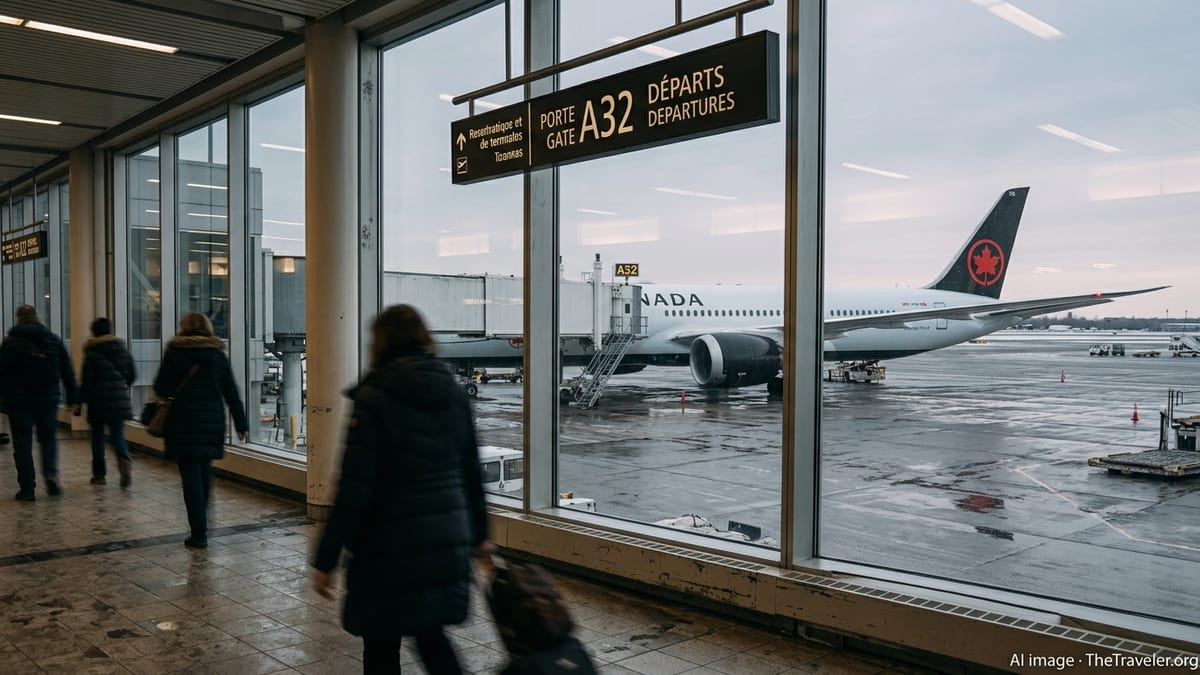
Condolence Video Rekindles Anger in Quebec
The latest controversy erupted after the March 22 crash of Air Canada Express Flight 8646, which collided with an airport fire truck during landing at LaGuardia, killing both pilots. The regional jet had departed from Montreal, a predominantly French-speaking city and a core market for Air Canada. In the days that followed, Rousseau published a four‑minute video offering condolences and updates on the airline’s response.
The message, however, was delivered in English, apart from a brief greeting and closing in French. French subtitles were added, but many viewers in Quebec and other francophone communities viewed the approach as insufficient, particularly because one of the pilots who died was a Quebec-born French speaker. Critics argue that, in a moment of national mourning, the leader of Canada’s flag carrier should have addressed grieving families and passengers directly in both official languages.
The reaction has been especially intense given Air Canada’s headquarters in Montreal and the company’s long-standing legal obligations as a federally regulated carrier to serve the public in both English and French. Commentators in Quebec media describe the video as a missed opportunity for Rousseau to demonstrate that he had learned from earlier language controversies that have dogged his tenure.
Political Pressure Mounts on Air Canada Leadership
Political fallout has been swift. According to recent coverage in Canadian outlets, Prime Minister Mark Carney described the English-only substance of Rousseau’s statement as lacking compassion and judgment, emphasizing that a company of Air Canada’s stature is expected to communicate in both official languages. He highlighted that the airline occupies a special position in a country that formally recognizes English and French, particularly at a moment when families of victims are seeking reassurance and solidarity.
In Quebec City, Premier François Legault went further, publicly questioning Rousseau’s future at the airline. Legault recalled that Rousseau pledged to learn French when he became president and chief executive in 2021, a commitment reiterated when he appeared before a parliamentary committee on official languages in 2022. Reports indicate that Legault now views the latest video as evidence that little progress has been made and has suggested that a unilingual chief executive may no longer be acceptable for a Montreal-based carrier with a large francophone workforce and customer base.
Federal opposition parties have seized on the episode as well. Published commentary from Bloc Québécois and other MPs frames the issue as one of respect for Quebec society, not simply personal linguistic preference. Parliament’s official languages committee has summoned Rousseau to testify, and the Office of the Commissioner of Official Languages has reportedly received hundreds of new complaints related to the video.
A History of Language Tensions at Air Canada
This is not the first time Rousseau’s French skills have attracted national scrutiny. In 2021, he delivered a speech in Montreal that was almost entirely in English and later suggested to a reporter that he did not need to learn French to live in the city, despite having been based there for many years. That episode triggered complaints, a formal investigation by the official languages commissioner, and an earlier summons to Parliament.
Following that backlash, Rousseau expressed regret and told MPs in 2022 that he had made a mistake by not learning French sooner, pledging to improve his language abilities. Air Canada at the time framed his efforts as part of a broader internal push to bolster bilingual service. The latest crisis has prompted critics to question how much progress has been achieved since that pledge, and whether the airline’s own governance has adequately enforced its commitments.
Air Canada has faced periodic complaints over French service for decades, including disputes about in-flight announcements, airport signage, and the availability of French-speaking staff. The airline is subject to specific language obligations under federal law that go beyond those of many private-sector employers. Advocates for French in Quebec say this long record means that senior executives should be especially sensitive to how their personal language choices are perceived.
National Debate Over Bilingualism and Corporate Responsibility
The latest controversy has re-energized Canada’s wider debate over bilingualism in the corporate sphere. Supporters of Rousseau note that he leads an airline competing in a global marketplace and argue that his time is better spent on operational safety and reliability than on mastering a second language. Some commentators point out that the video was available with French subtitles and that poorly delivered spoken French might itself have drawn criticism.
Yet many francophones counter that the issue is not linguistic perfection, but a willingness to address citizens in their own language during moments of crisis. For families of the victims of Flight 8646, hearing the chief executive speak at least part of his message in French is seen as a basic sign of empathy. Editorials in Quebec media stress that Air Canada, as a national symbol and a company originally created by the federal government, must meet a higher standard than other private firms headquartered elsewhere in Canada.
The debate comes at a time when concerns over the vitality of French in Montreal and across Quebec are already heightened. Provincial leaders have recently advanced new language measures in other sectors, and the Rousseau episode has become a touchstone in arguments about how far such expectations should extend into the boardroom. For many observers, it illustrates how corporate communications after a safety incident can quickly become entangled with broader cultural and political anxieties.
Implications for Air Canada’s Reputation and Travelers
For travelers, the controversy does not alter the immediate operational realities following the LaGuardia crash, where investigators in Canada and the United States are still examining how a regional jet came to strike an emergency vehicle on the runway. However, the episode could influence how francophone passengers, especially in Quebec and eastern Canada, perceive the brand at a time when airlines are under pressure to rebuild trust after years of disruptions.
Analysts note that Air Canada has worked to position Montreal as a major hub for transatlantic and leisure traffic, marketing the city’s French character as part of its appeal. Persistent questions about whether its top executive embraces that same linguistic identity risk undermining these efforts. Industry observers suggest that, beyond any personal consequences for Rousseau, the airline’s board may face growing calls to demonstrate more clearly how bilingualism is embedded in its crisis communications and corporate culture.
For now, Air Canada has not announced changes to its leadership or communication policies. But with political scrutiny intensifying in Ottawa and Quebec City, and with public reaction still unfolding in the days after the crash, the company’s response to this renewed language storm may shape its relationship with francophone travelers long after the accident investigation is complete.