

More news on this day
Air Canada chief executive Michael Rousseau will retire by the end of the third quarter of 2026, following a fresh wave of criticism over his English-only condolence message after a deadly crash in New York and renewed scrutiny of his limited command of French.
Get the latest news straight to your inbox!
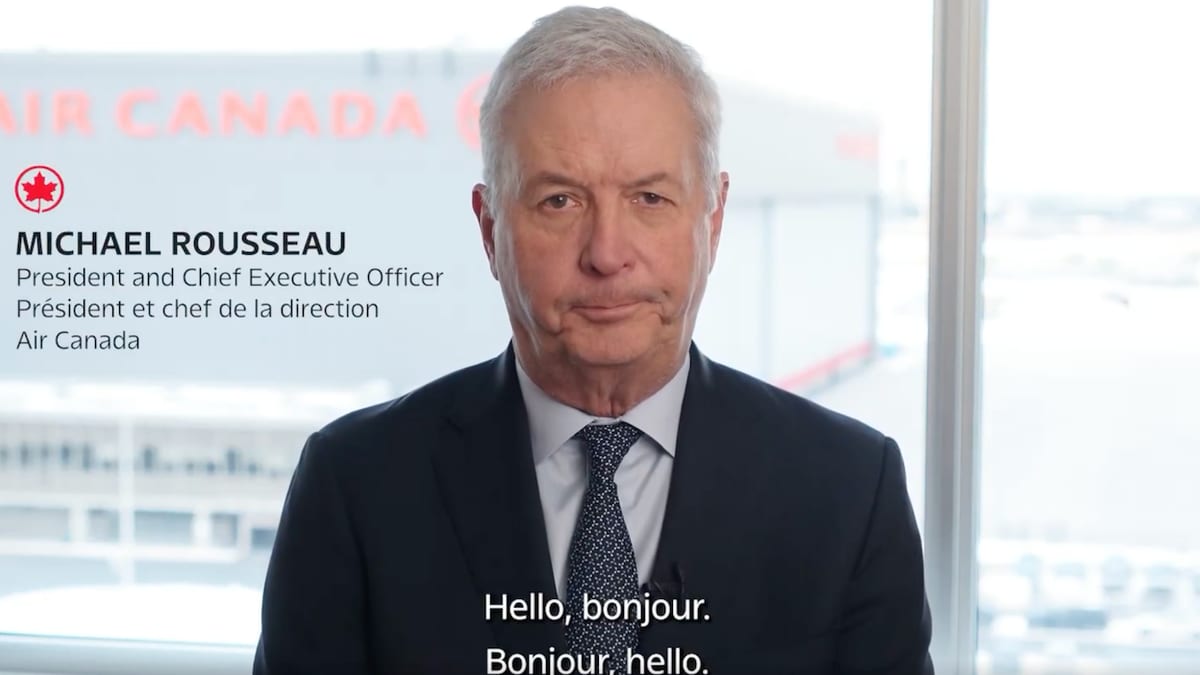
Image by LoyaltyLobby
A Retirement Announcement Framed by Tragedy
Air Canada announced on March 30 that Michael Rousseau has informed the board he will retire later this year, bringing an end to a tenure defined as much by operational challenges as by language politics. Publicly available information indicates that the decision follows intense controversy over an English-only video message he recorded after a fatal Air Canada Jazz collision at New York’s LaGuardia Airport earlier this month.
In that crash, two crew members were killed when a regional jet arriving from Montreal struck a fire truck on the runway shortly after landing. Rousseau’s four-minute video of condolences, delivered in English with French subtitles and only brief use of French words, drew sharp criticism from political leaders and advocacy groups in Quebec, where Air Canada is headquartered and French is the dominant language.
Reports indicate that the Office of the Commissioner of Official Languages received hundreds, and later thousands, of complaints about the message, echoing earlier grievances over Rousseau’s language use. The backlash intensified calls from Quebec politicians and federal party leaders for a leadership change at the airline, which is legally required to operate in both of Canada’s official languages.
According to published coverage, Air Canada said Rousseau will remain in his role during a transition period and step down by the end of the third quarter, giving the board several months to finalize succession plans at a time when the carrier is facing scrutiny over safety, service reliability and its cultural footprint as Canada’s flagship airline.
Long-Running Debate Over a Unilingual CEO
Rousseau’s retirement caps years of debate over whether the chief executive of a Montreal-based, officially bilingual airline must be functionally bilingual. The issue first exploded into national headlines in November 2021, when Rousseau delivered a major speech in Montreal that was almost entirely in English and then remarked to reporters that he had lived in the city for more than a decade without needing to learn French.
Those comments drew condemnation from Quebec political leaders and advocacy groups, who framed the episode as a symbol of what they saw as a lack of respect for the province’s francophone majority. Air Canada, as a former Crown corporation subject to the Official Languages Act, has long carried a special symbolic weight in Canada’s language politics, and the controversy quickly moved from the business pages to the broader national conversation.
Rousseau apologized at the time and pledged publicly to improve his French, describing the language as central to Quebec society and committing to set a better tone inside the company. Subsequent parliamentary hearings and media coverage showed that his language training continued for several years, with internal correspondence referenced in press reports indicating hundreds of hours of one-on-one lessons and homework.
Yet francophone advocates argued that his spoken French remained limited even after that investment, and that this undercut Air Canada’s assurances about its commitment to serving passengers and employees in both official languages. The new uproar over his English-only condolences after the LaGuardia crash revived memories of the 2021 speech and raised questions about whether the earlier promise to learn French had ever been fully met.
French Lessons, Performance Reviews and Public Perception
The question of Rousseau’s French proficiency gradually evolved from a personal criticism into a broader debate about corporate governance. According to previously reported correspondence, federal officials had urged Air Canada’s board as early as 2021 to treat bilingualism as a core criterion for top leadership roles. Some political figures suggested that progress in French should be explicitly written into Rousseau’s performance objectives.
Media coverage in late 2023 and 2024 documented repeated discussions in parliamentary committees about Air Canada’s language record, with Rousseau called to explain what concrete steps he was taking to learn French and how the airline measured compliance with the Official Languages Act. Analysts noted that, for many critics, his personal language skills had become a stand-in for larger concerns about systemic gaps in French-language service across the carrier’s network.
More recently, documents cited in Quebec media described Rousseau as still “limited” in French despite extensive tutoring hours since 2021. For supporters of stricter language requirements, this was evidence that Air Canada’s top job demands an already bilingual leader rather than a unilingual executive trying to catch up. Others in the business community countered that an airline CEO should be judged primarily on safety, reliability and financial performance, arguing that intensive language expectations could narrow the talent pool.
Rousseau himself acknowledged in earlier committee testimony, as reported by Canadian outlets, that he should have begun learning French much earlier in his career at Air Canada. The latest controversy over his condolence video, and the speed with which it reignited public anger, highlighted how little space remained for further missteps on language at the country’s largest airline.
Succession Stakes for Air Canada and Ottawa
Air Canada’s board now faces the task of selecting a successor who can address both operational and cultural demands. The airline has spent the past several years navigating pandemic recovery, labour disputes including a major flight attendants’ strike in 2025, capacity constraints and global competition on key transatlantic and transpacific routes. At the same time, it operates under federal language rules that make it a frequent subject of political scrutiny in Ottawa and Quebec City.
Industry observers expect that bilingualism will feature prominently in the search criteria for the next chief executive. Reports on earlier political correspondence suggested that federal officials strongly encouraged Air Canada to embed language skills into its top-level competency requirements, and the latest uproar is likely to reinforce that view. Any incoming CEO who is already comfortable in both English and French may find it easier to defuse a recurring source of tension and focus attention on the airline’s strategic priorities.
The retirement timeline also matters for regulators and investors. By staying on through the third quarter, Rousseau will oversee the peak summer travel season, a period when the airline will remain under pressure to maintain on-time performance and avoid the disruptions that have marred previous summers. His successor will likely inherit a company that has moved beyond the worst of the pandemic-era crisis but is still managing high expectations from governments, customers and employees.
For Ottawa, the transition presents an opportunity to signal how strongly it intends to enforce language obligations at federally regulated companies. While regulators operate at arm’s length, public debates around Rousseau’s tenure have already prompted calls for tougher penalties and clearer rules. The choice of Air Canada’s next leader will be watched closely as a test of how those pressures translate into concrete corporate governance decisions.
A Symbolic Case in Canada’s Language Future
Rousseau’s departure resonates beyond the airline industry because it touches on foundational questions about bilingualism in Canada. For Quebec nationalists and many francophone advocates, his struggles with French at the helm of an iconic Montreal-based company encapsulated ongoing fears about the erosion of the French language in North America.
Commentary in Canadian media over the past several years has repeatedly linked the Air Canada controversy to wider policy debates, including proposed changes to language laws in Quebec and at the federal level. The repeated flare-ups over Rousseau’s speeches, apologies and French lessons provided concrete stories that language activists could point to when arguing that existing protections were not sufficient.
At the same time, some business commentators and former policymakers have questioned whether the focus on an individual executive’s language abilities risks overshadowing urgent issues such as aviation safety, climate strategy and labour relations. They argue that while respect for official languages is essential, it must be balanced against the complex operational realities of running a global carrier in a volatile market.
With Rousseau set to retire later this year, Air Canada now has an opportunity to reset both its leadership and its relationship with francophone communities. How the airline navigates that transition, and whether it chooses a successor who embodies a more clearly bilingual profile, will influence not only its brand but also the evolving national conversation about what bilingualism means in practice at the highest levels of corporate Canada.