

More news on this day
Air Canada is heading into a turbulent leadership transition after chief executive Michael Rousseau was pushed out in the wake of a firestorm over his English-only response to a deadly crash in New York, leaving Canada’s largest carrier scrambling to identify a successor who can calm markets, reassure travelers and navigate the country’s fraught language politics.
Get the latest news straight to your inbox!
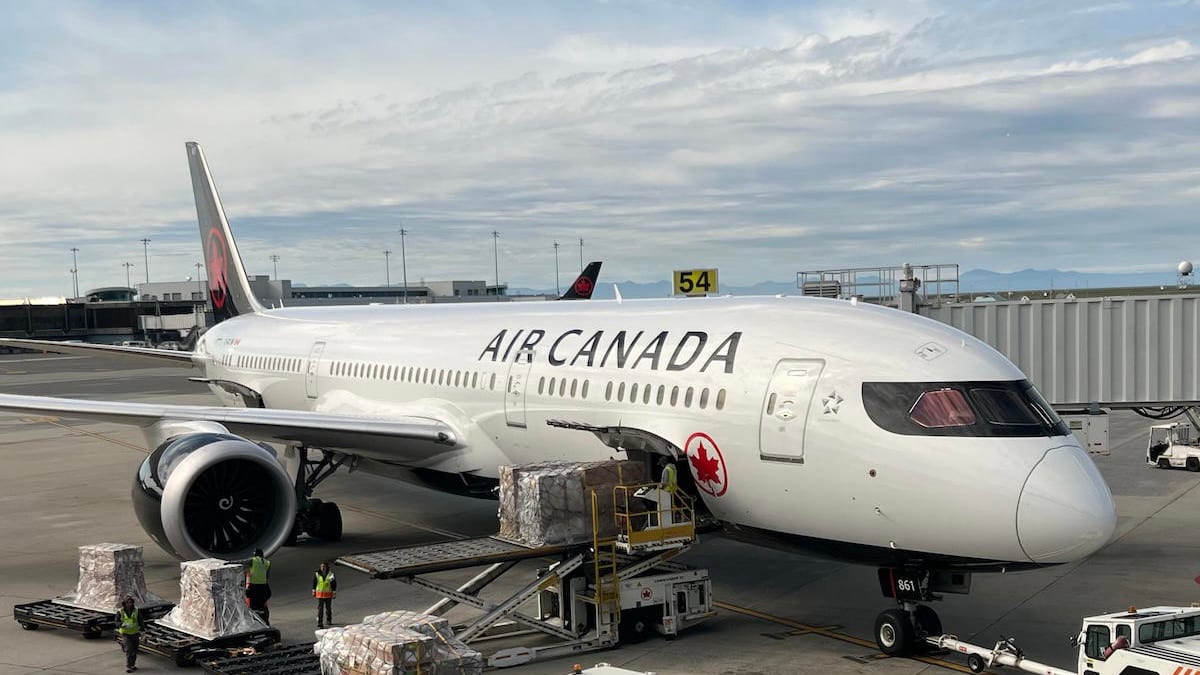
Image by One Mile at a Time
From Condolence Video to Boardroom Fallout
The chain of events that culminated in Rousseau’s ouster began on March 22, 2026, when an Air Canada Express flight collided with a fire truck on the runway at New York’s LaGuardia Airport, killing two crew members and injuring passengers. In the days that followed, Rousseau released a four-minute condolence video that was largely in English, with only brief French phrases and subtitles provided for francophone viewers.
Publicly available information shows that the message quickly became a lightning rod in Quebec and across Canada, where bilingualism is written into law and identity. Commentators highlighted Rousseau’s long-documented difficulty speaking French despite leading a Montreal-based flag carrier that markets itself as a symbol of a bilingual nation.
According to published coverage, criticism escalated rapidly as the families of the victims were mourning and federal politicians were pressed to respond. The video drew condemnation for appearing detached from the linguistic realities of Quebec, where roughly four out of five residents are francophone, and it reopened older debates about whether the airline’s senior leadership reflects the country it serves.
As the backlash grew, attention shifted from the crash itself to Rousseau’s record at the helm of Air Canada, including previous scrutiny over his language skills and service issues that had dogged the carrier’s recovery from the pandemic. That mounting pressure set the stage for the board’s decision to remove him and accelerate a leadership change.
Board Acts After Political and Public Pressure Mounts
Reports indicate that political reaction in Ottawa and Quebec City played a significant role in how quickly the situation evolved. The prime minister publicly criticized the English-only condolences as lacking judgment, while Quebec’s premier renewed calls for Rousseau to step aside, arguing that the head of Air Canada must be able to communicate comfortably in both official languages.
Rousseau initially attempted to weather the storm, issuing a written apology and acknowledging that, despite years of lessons, he remained unable to express himself adequately in French. However, the apology did little to quiet public anger. Parliamentary committees sought to examine Air Canada’s language practices, and the company faced a surge of complaints to language watchdogs.
In that context, board directors were forced to weigh not just the optics of Rousseau’s leadership, but also the potential impact on Air Canada’s regulatory environment and brand value in Quebec, a critical market for both domestic and transatlantic traffic. Corporate governance specialists note that, for a publicly traded airline with narrow margins and heavy regulation, prolonged political friction can translate quickly into financial and operational constraints.
Ultimately, the board opted for a clean break, signaling that Rousseau would depart and that a search process for a new chief executive would begin immediately. Public statements framed the move as a retirement, but the timing and circumstances have been widely interpreted as a dismissal driven by reputational risk.
The Shortlist: Insiders, Alliance Veterans and Dark Horses
With Rousseau on his way out, industry observers are now focused on who could plausibly take the controls at Air Canada. The most obvious contenders sit within the airline’s existing executive ranks. Recent internal management reshuffles elevated figures such as Craig Landry, an executive with deep experience in operations, innovation and the Aeroplan loyalty program, making him a potential frontrunner if the board favors continuity and a rapid handover.
Another line of speculation centers on leaders who already have close ties to Air Canada through global alliances and partnerships. Rousseau has chaired the Star Alliance chief executive board, and that network gives the board a clear view of seasoned airline chiefs who understand complex hub systems, joint ventures and transatlantic competition. A bilingual executive from within the alliance, particularly one familiar with the Canadian market, would be well placed to reassure both investors and regulators.
There is also talk of external candidates from adjacent transportation and aerospace sectors. Canada’s aviation ecosystem includes former airline chiefs now active in aircraft manufacturing, training and infrastructure. Drawing on that pool would let the board reset the narrative with a fresh face who can credibly claim distance from recent controversies while still offering sector expertise.
At the same time, travel analysts caution that any candidate will be measured not only on operational track record and financial discipline, but on language ability and cultural fluency. The next CEO is widely expected to be fully bilingual or very close to it, reflecting lessons the board has been forced to learn in a very public way.
What Is at Stake for Travelers and Investors
The leadership shake-up comes at a delicate moment for Air Canada’s business. The carrier has been restoring capacity toward pre-pandemic levels and has outlined fleet and route expansion plans tied to new aircraft deliveries in the second half of the decade. A prolonged leadership vacuum could complicate long-term fleet negotiations and partnership discussions just as international travel demand stabilizes.
For passengers, the near-term concern is whether internal turbulence will spill over into the day-to-day experience. Travel industry coverage notes that large network airlines typically manage CEO transitions without major schedule disruptions. However, decisions on customer-facing investments, such as cabin refits, lounge upgrades and digital tools, can be delayed if incoming leaders want to revisit spending priorities.
On the financial side, investors will parse each new disclosure for hints about strategic shifts. Under Rousseau, Air Canada emphasized cost discipline, loyalty revenue growth and widebody expansion on long-haul routes. A new chief executive could recalibrate that mix, perhaps leaning more heavily into premium leisure markets, regional connectivity or sustainability commitments, depending on their background and mandate from the board.
Analysts also point out that Air Canada’s share price has been sensitive to headline risk, including labor disputes and operational bottlenecks. A decisive appointment of a credible, bilingual CEO could help cap the downside by signaling stability and responsiveness to political concerns, especially in Quebec.
Language, Identity and the Future of Canada’s Flag Carrier
Beyond the immediate question of who replaces Rousseau lies a broader debate about what Canadians expect from their national airline. Air Canada has long served as a visible symbol of the country abroad, with red-and-white branding and a maple leaf logo on aircraft that land on every continent. For many travelers, the airline is one of the first places where Canada’s commitment to dual official languages is put to the test.
The recent controversy has underscored how fragile that symbolism can be. For francophone communities, a CEO who struggles in French can be perceived as a sign that their language, and by extension their culture, is secondary within a company headquartered in a French-speaking province. For others, the focus on language raises questions about how to balance symbolic representation with performance metrics such as on-time reliability, pricing and network reach.
Whoever steps into the top job will be judged on both fronts. The next CEO will inherit the technical challenges facing every global airline, from decarbonization and fuel volatility to labor relations and airport congestion. At Air Canada, those pressures now intersect with heightened expectations around linguistic competence and cultural sensitivity.
As the board narrows its shortlist, the decision will resonate far beyond Bay Street and the airline’s Montreal headquarters. It will signal to travelers, employees and politicians what kind of leadership Air Canada believes is necessary for the next phase of its journey, and whether the company can turn a reputational crisis into an opportunity to more closely align its executive suite with the country it represents.