

More news on this day
Air Canada President and Chief Executive Michael Rousseau will retire by the end of the third quarter of 2026, following intense criticism of his English-only condolence message after a deadly crash involving an Air Canada Express flight at New York’s LaGuardia Airport.
Get the latest news straight to your inbox!
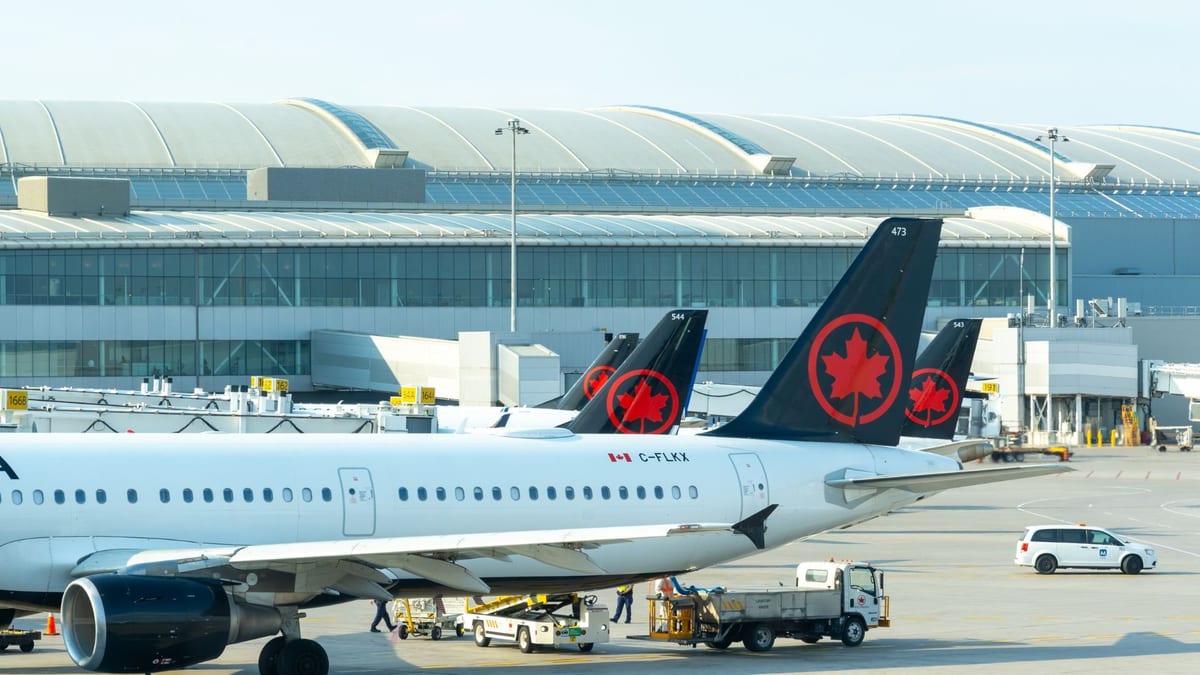
Image by Simple Flying
Retirement Announced After Weeks of Scrutiny
The airline’s board of directors announced on March 30 that Rousseau has informed directors of his decision to retire by the end of the third quarter, closing nearly two decades in senior leadership roles at the carrier. Publicly available corporate statements describe the move as a planned retirement that follows a long period of succession planning at Canada’s largest airline.
The timing, however, comes just days after a March 22 collision at LaGuardia Airport, where Air Canada Express Flight AC8646 from Montreal struck a fire truck on the runway while landing. Two pilots, including Quebec-born captain Antoine Forest, were killed in the crash, and dozens of passengers and crew were injured.
Rousseau’s video message paying tribute to the victims, released in the aftermath of the accident, quickly became the focal point of a broader political and cultural debate in Canada. The four-minute address was delivered almost entirely in English, with only brief French words, despite the flight originating in French-speaking Montreal and Air Canada being headquartered in Quebec.
Published coverage in Canadian and international outlets indicates that, as criticism of the video intensified, Rousseau faced mounting calls for his resignation from political leaders, language advocates and commentators in Quebec, who questioned his sensitivity to the country’s bilingual character and to the victims’ families.
Language Controversy Revives Long-Running Tensions
The controversy surrounding the condolence message tapped into long-standing tensions over language at Air Canada and within Canadian public life. Canada is officially bilingual at the federal level, and Air Canada, as the national flag carrier and a company with deep roots in Quebec, has specific obligations to provide services in both French and English.
Reports note that Rousseau had already faced criticism in 2021, shortly after becoming CEO, when he delivered a business speech in Montreal almost entirely in English and remarked that he had lived in the city for more than a decade without needing to speak French. That earlier episode prompted apologies and a pledge to improve his French, but critics argue the LaGuardia condolence video showed that little progress had been made.
Following the crash, politicians at both the federal and provincial levels publicly condemned the English-only nature of the address. According to recent Canadian news coverage, the prime minister described the message as lacking compassion and judgment, while Quebec’s premier publicly urged Rousseau to step aside. Language-rights advocates framed the issue as emblematic of what they view as chronic failures by the airline to fully respect francophone passengers and employees.
For many in Quebec, the fact that one of the pilots killed was a francophone from the province amplified the emotional impact of the CEO’s choice of language. Commentators stressed that, in a moment of national mourning, they expected the head of a bilingual national carrier to speak directly to bereaved families and colleagues in their mother tongue.
Board Cites Succession Planning as Public Backlash Grows
In its retirement announcement, Air Canada’s board emphasized Rousseau’s long tenure and framed the transition as part of ongoing renewal and succession planning. Public filings and a newly released proxy circular highlight that the board has been reviewing CEO succession for some time, including discussions of leadership renewal at the top of the company.
Nonetheless, analysts and aviation observers note that the retirement timeline closely follows one of the most difficult public relations crises of Rousseau’s tenure. In the days before the announcement, he was summoned to Ottawa to answer questions from federal parliamentarians about the condolence video, and he issued a written apology acknowledging that his inability to speak French had overshadowed the grief of families and colleagues.
Commentary in business and aviation publications suggests that Rousseau’s exit is likely the result of a convergence of factors: the LaGuardia crash and its aftermath, longstanding criticism over language, pressure from political leaders, and broader concerns over customer satisfaction and corporate reputation. The retirement, these reports suggest, provides the board with an opportunity to reset its relationship with both regulators and the travelling public.
Investor-oriented coverage also points out that Air Canada has been working to stabilize operations and rebuild finances after the pandemic, while facing scrutiny over service complaints and labor relations. Leadership continuity remains important to financial markets, but reputational issues have increasingly become a material concern for large airlines.
LaGuardia Crash Adds Safety and Governance Questions
The tragedy at LaGuardia remains under active investigation by U.S. authorities, who are examining how an Air Canada regional jet came to collide with a Port Authority fire truck that had been cleared to cross the runway shortly before the aircraft landed. Preliminary information released by investigators suggests that the crossing clearance and the timing of the landing created a critical conflict on the runway.
Two pilots were killed in the collision, while passengers and cabin crew evacuated the aircraft amid debris and emergency response activity. Images from the scene showed significant damage to the aircraft’s fuselage and wing area, while the fire truck was left heavily damaged near the runway intersection.
Legal experts cited in recent analysis note that multiple entities, including airport operators, government agencies and the airline, may face lawsuits as facts emerge. Survivors and families of those killed may seek compensation for physical and psychological harm, and the incident is expected to prompt renewed scrutiny of runway safety protocols at one of New York’s busiest airports.
For Air Canada, the crash has raised difficult questions not only about operational safety and crisis response, but also about executive communication during a tragedy. Rousseau’s retirement announcement, coming so soon after the event, underscores how closely leadership reputations are tied to the handling of rare but highly visible aviation disasters.
Search for a Bilingual Successor and the Future of the Carrier
Attention now turns to who will succeed Rousseau at the helm of Air Canada. Public statements from political leaders make clear that there will be strong expectations for the next CEO to be fluently bilingual in French and English, and capable of communicating effectively with stakeholders across Canada’s linguistic communities.
Analysts predict that the board will weigh not only traditional leadership criteria such as operational experience, financial performance and global network strategy, but also a demonstrable ability to navigate Canada’s linguistic and cultural landscape. The recent controversy has highlighted how language and symbolism can carry significant weight for a national carrier whose identity is closely tied to the country it represents.
The leadership change comes at a time when Air Canada is still recovering from years of pandemic disruption and working to manage high demand, constrained capacity and ongoing cost pressures. Industry watchers suggest that the new chief executive will inherit both opportunities for growth in international markets and persistent challenges around reliability, customer satisfaction and workforce morale.
As the investigation into the LaGuardia crash proceeds and the airline prepares for a new chief executive, travelers and employees alike will be watching to see whether the next phase of leadership at Air Canada brings not only operational stability, but also a different tone and approach to how the national flag carrier speaks to all its passengers and communities.