

More news on this day
Air Canada chief executive Michael Rousseau will retire by the end of the third quarter of 2026, following weeks of mounting criticism over his English-only response to a deadly Air Canada Express crash at New York’s LaGuardia Airport that has reignited debate over bilingualism at Canada’s flag carrier.
Get the latest news straight to your inbox!
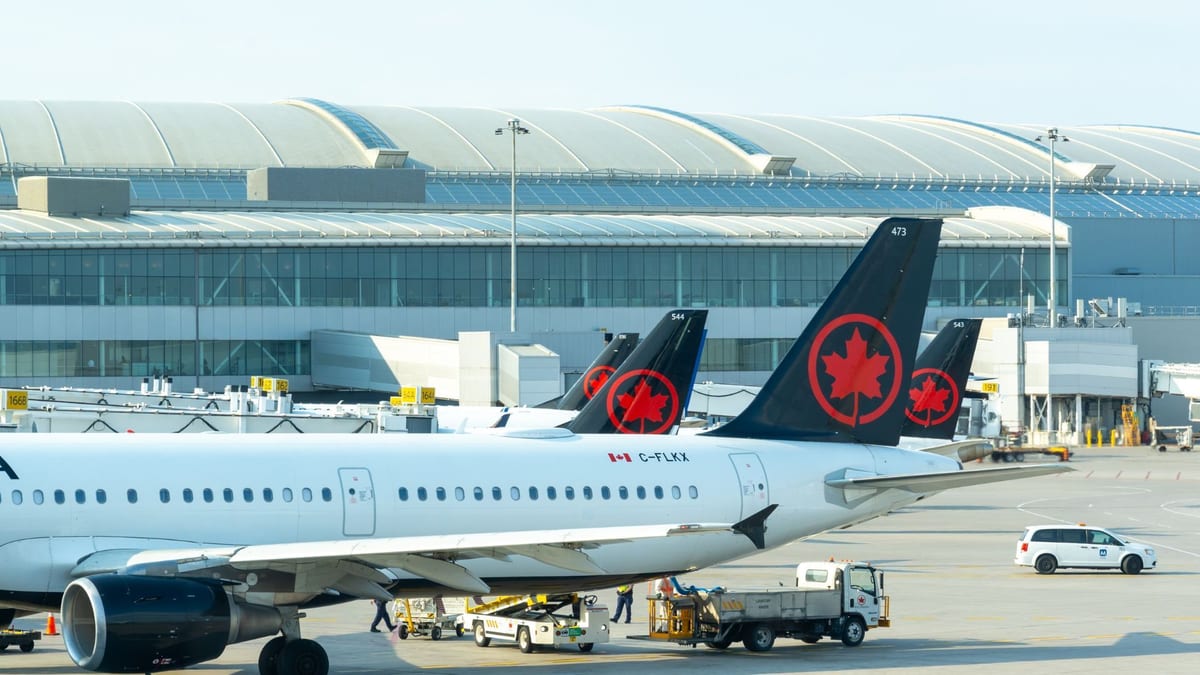
Image by Simple Flying - Aviation News
Retirement Timeline Announced After Crisis Storm
Air Canada’s board of directors announced that Rousseau has informed the company of his decision to retire by the end of the third quarter of 2026, closing nearly two decades in senior leadership roles at the airline. Publicly available corporate statements describe the transition as part of ongoing succession planning, with the board highlighting his contribution to strengthening Air Canada’s position in global aviation.
The announcement comes just days after the March 22 Air Canada Express Flight 8646 crash at LaGuardia, in which the regional jet collided with an airport fire truck on the runway after landing. Two pilots were killed and several passengers and crew were injured, prompting investigations into what United States safety officials have described in public briefings as multiple failures in runway safety systems.
Air Canada communications emphasize that Rousseau’s retirement is framed as a planned leadership transition rather than a direct response to the public backlash. However, the timing, arriving in the immediate aftermath of the LaGuardia tragedy and the language controversy that followed, has fueled widespread discussion about whether the pressure surrounding his handling of the crisis left his position untenable.
Investor and governance materials released in recent days show that board renewal and CEO succession had been identified as priorities well before the LaGuardia crash, suggesting that a handover was already on the agenda. The collision and the reaction to Rousseau’s message appear to have accelerated scrutiny of that process and intensified calls for a different leadership profile at the top of the airline.
English-Only Condolence Message Triggers Outcry
The immediate spark for the controversy was Rousseau’s four minute video message of condolence, released in the days after the LaGuardia crash and addressed to families of victims, customers, and employees. According to published coverage and transcripts, the recording contained only two French words, a brief greeting and thanks, despite Air Canada being headquartered in Montreal and serving a large francophone customer base.
Public reaction in Quebec and across Canada was swift. Commentators pointed out that one of the pilots killed in the crash, Antoine Forest, was a French speaking Quebecer, and that the airline has long been at the center of debates about the status of the French language in federal institutions. The perception that the chief executive could not or did not choose to speak to grieving families in their own language became a flashpoint.
Rousseau later issued a written apology, acknowledging his inability to express himself adequately in French despite years of lessons and stating that he regretted diverting attention from the grief of families and the resilience of Air Canada employees. He reiterated that he was continuing efforts to improve his French, but the apology did little to quell political and public frustration.
For many critics, the language used at such a sensitive moment was about more than symbolism. The incident revived long standing questions over whether the leadership of Canada’s largest airline reflects the country’s bilingual character, and whether senior executives fully understand the expectations that come with operating a national carrier based in a predominantly French speaking province.
Political Pressure Mounts Over Bilingualism at the Flag Carrier
The fallout from the video quickly moved from social media to Parliament Hill and Quebec City. According to national news reports, Prime Minister Mark Carney publicly described the English only message as lacking compassion and judgment, stating that in his view it is essential for the next CEO of Air Canada to be bilingual. The comments placed rare direct political focus on the linguistic profile of a private sector chief executive.
Quebec Premier François Legault went further, declaring in a statement reported by Canadian outlets that he welcomed Rousseau’s decision to step aside and that the board must ensure the next leader speaks French. Several members of Parliament and advocacy groups for French language rights echoed the call, arguing that the role of leading Air Canada carries special responsibilities in an officially bilingual country.
The airline has long been subject to federal official languages obligations in its customer facing operations, requiring services in both English and French. However, legal experts and commentators have noted in recent coverage that there is no statutory requirement for the CEO to be bilingual. The current debate instead centers on political expectations, reputational risk and the message sent by the person who serves as the public face of the carrier.
The clash has exposed a broader tension between Canada’s evolving corporate culture and persistent concerns about the vitality of French, particularly in Quebec. For some observers, the LaGuardia tragedy and its aftermath have become a case study in how corporate communication missteps can inflame long running cultural sensitivities, with consequences that reach the C-suite.
LaGuardia Crash Investigation Continues in the Background
While the language controversy has dominated Canadian headlines, investigators in the United States continue to probe the sequence of events that led to the deadly collision on LaGuardia’s runway. Public briefings from the National Transportation Safety Board describe an Air Canada Express regional jet with 72 passengers on board striking a Port Authority fire truck that was crossing the runway shortly after the aircraft had landed.
Early information released by safety officials points to a combination of air traffic control clearances and an apparent failure of ground safety systems intended to alert vehicles and aircraft of potential conflicts. Embedded red lights that should illuminate to warn drivers of an approaching airplane reportedly did not activate in time, and recordings of radio communications are being analyzed to understand how the fire truck came to cross the active runway.
The crash has raised fresh questions about runway incursion prevention at one of the United States’ busiest airports, as well as about regional jet operations in congested airspace. For Air Canada and its regional affiliates, the incident has become both a human tragedy and an operational crisis, with crews, passengers and families grappling with the shock of a rare but devastating event.
As the investigation proceeds, Air Canada’s public statements have emphasized cooperation with authorities and support for affected families and employees. However, the intense focus on Rousseau’s language skills has, in the eyes of some analysts, complicated the narrative around the crash, shifting attention from technical safety issues to questions of corporate culture and national identity.
What Rousseau’s Exit Means for Air Canada’s Future
Rousseau, who became CEO in 2021 after serving as chief financial officer and deputy CEO, helped steer the airline through the severe disruption of the pandemic and the gradual recovery of global air travel. Company filings show his compensation rose in 2025 as Air Canada returned to profitability, an increase that has been cited in commentary about public perceptions of the crisis and the subsequent retirement announcement.
With his exit now on the horizon, attention is turning to the profile of his successor. Analysts quoted in Canadian business coverage suggest the board is likely to prioritize candidates with strong operational credentials, international experience and clear proficiency in both of Canada’s official languages. Some expect the selection process itself to be closely scrutinized as a signal of how seriously the airline is responding to the latest controversy.
The leadership transition also coincides with a challenging period for the wider airline industry, as carriers face pressure to maintain reliability, invest in fleet renewal and meet climate commitments while managing volatile demand and high costs. Air Canada’s next chief executive will inherit the ongoing safety and reputational repercussions of the LaGuardia crash along with longer term strategic decisions on routes, alliances and customer service.
For travelers, the immediate impact of the retirement announcement is limited, with flight operations continuing under existing schedules. Yet the episode underscores how quickly public sentiment can shift when corporate communications around tragedies fall short of expectations, particularly in markets where language and identity are deeply intertwined. Whoever leads Air Canada next will have to navigate not only operational complexity but also a renewed spotlight on the symbolic role of the country’s largest airline.