

More news on this day
Air Canada has been named one of Canada’s Best Diversity Employers for 2026, marking the eighth time in a decade that the national carrier has received the distinction and reinforcing its position as a leading inclusive employer in the country’s travel sector.
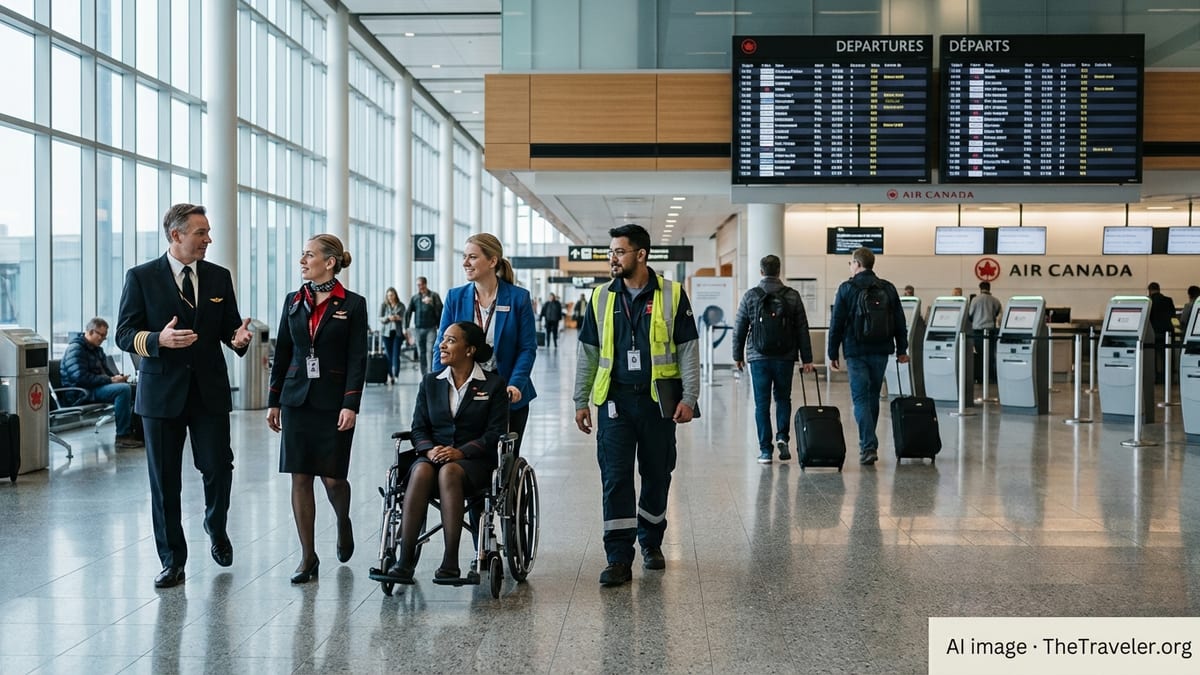
National Carrier Extends Its Diversity Track Record
Announced on February 24, 2026, the recognition comes through the Canada’s Best Diversity Employers competition, which spotlights organizations with standout programs for women, visible minorities, persons with disabilities, Indigenous peoples and 2SLGBTQIA+ communities. For Air Canada, it is the latest in a string of workplace accolades that are increasingly central to its brand as a global airline headquartered in Montreal.
The airline’s latest honour reflects a ten year period in which diversity and inclusion have moved from side initiatives to strategic pillars. Executives describe the award as validation that internal efforts, from governance to grassroots employee initiatives, are not only sustaining momentum but evolving in line with changing expectations around equity and representation.
Industry observers note that competition for talent in aviation remains intense as travel demand continues to normalize and grow. Recognition as a diversity leader is viewed as an important differentiator for carriers seeking to attract skilled workers in areas ranging from flight operations and maintenance to digital, customer service and corporate roles.
As Canada’s flag carrier with a network that spans more than 180 airports on six continents, Air Canada also faces heightened scrutiny from travelers and investors who are increasingly weighing social impact alongside price and schedule. The diversity designation helps the airline signal to stakeholders that its internal culture is aligning with broader environmental, social and governance commitments.
Programs Target Underrepresented Talent Across the Airline
According to the company, recent diversity, equity and inclusion efforts have focused on structured outreach to underrepresented groups, particularly in technical and front line roles where representation gaps have historically been pronounced. Air Canada has partnered with Canadian organizations and specialty colleges to support scholarships and pathways for aspiring pilots and aircraft maintenance engineers from communities that have traditionally been excluded from aviation careers.
Recruitment teams are working directly with community groups, educational institutions and professional associations to highlight opportunities in the airline sector. Those campaigns emphasize not only flying and engineering roles, but also positions in customer experience, operational control, technology and corporate services, where diverse perspectives are increasingly seen as essential to serving a global customer base.
Inside the company, Air Canada has built what it describes as a robust internal governance structure designed to embed inclusion into policies, performance objectives and leadership accountabilities. Diversity councils and steering groups bring together executives and employee representatives to review data, monitor progress on goals and guide new initiatives in areas such as accessible workplace design, inclusive leadership training and bias aware recruitment practices.
The recognition also highlights initiatives tailored to specific equity seeking communities, including mentoring programs, career development workshops and leadership pipelines. These are intended to ensure representation is not only broad at entry level but also reflected through middle management and senior leadership, where decision making power is concentrated.
Employee Resource Groups Anchor Everyday Inclusion
Central to Air Canada’s bid for the Best Diversity Employers designation is the role of its Employee Resource Groups, which bring together colleagues around shared identities, experiences and allyship. These groups, supported by senior leadership champions, have become key drivers of cultural change within the airline, shaping everything from internal education campaigns to customer facing initiatives.
The resource groups organize events that celebrate cultural heritage, raise awareness on disability inclusion and create space for conversations about race, gender identity and sexual orientation in the workplace. They also serve as sounding boards on policy changes, uniforms, facilities and service design, helping to identify unintended barriers that may affect both employees and customers.
These networks have been particularly influential in highlighting the experiences of employees who belong to more than one underrepresented group, such as women of colour or Indigenous team members living with disabilities. By surfacing intersectional perspectives, the groups aim to ensure that new policies or benefits do not inadvertently leave some communities behind.
For many participants, the visibility of resource group leaders and champions across the organization is itself a signal of progress. Their presence in frontline operations, maintenance hangars, airport stations and corporate offices demonstrates that inclusion is not confined to head office programs, but is gradually becoming part of everyday working life throughout the network.
Travel Industry Context and Competitive Signal
Air Canada’s renewed recognition comes as Canadian employers across multiple sectors, including universities, regional airlines and engineering firms, also announce honours in the Canada’s Best Diversity Employers list for 2026. Within travel and aviation, this environment is reinforcing a benchmark for inclusive practices that goes beyond compliance and toward comprehensive strategies around equity, accessibility and belonging.
For travelers, especially younger and more socially conscious passengers, the distinction can be a factor in airline choice alongside safety record, route network and loyalty programs. A diverse and engaged workforce is often associated with better customer service, more culturally aware communication and an improved ability to respond to the needs of passengers from a wide variety of backgrounds.
Analysts suggest that, while awards themselves are not a guarantee of lived experience, repeated recognition over a decade can indicate a degree of consistency in programs and governance. In Air Canada’s case, the diversity accolade joins other workplace honours, such as listings among top employers for young people and regional top employer rankings, which together shape perceptions of the carrier as a long term, people focused employer.
In a global aviation market still navigating economic uncertainty and evolving traveler expectations, Air Canada is positioning its diversity strategy as part of its broader value proposition. By tying inclusion efforts to safety, service quality and innovation objectives, the airline is aiming to show that its progress on equity is not separate from its core business, but a driver of resilience and competitiveness.
Looking Ahead: Embedding Inclusion in Future Growth
With the 2026 honour secured, Air Canada is signaling that the next phase of its diversity journey will focus on deepening accountability and transparency. That includes continued reporting on representation, pay equity and leadership demographics, as well as sharing progress on accessibility and inclusive design for both employees and customers.
As the airline invests in fleet renewal, digital platforms and new routes, there is growing emphasis on ensuring that diverse employee voices are involved in shaping future projects. From cabin interiors and in flight entertainment to airport lounge design and mobile app usability, inclusion is being framed as a factor that will determine how welcoming and intuitive the travel experience feels to a wide range of passengers.
For workers considering careers in aviation, the recognition as one of Canada’s Best Diversity Employers sends a signal that the country’s largest carrier is serious about building a workforce that reflects the communities it serves. The ongoing challenge for Air Canada will be to translate awards into everyday experiences where employees feel they belong, have equitable access to opportunity and see themselves represented at every level of the organization.
As the travel industry continues to rebuild and reinvent itself, the airline’s eighth diversity honour in ten years offers a snapshot of how legacy carriers are seeking to align their internal cultures with the changing expectations of travelers, regulators and employees alike.