

More news on this day
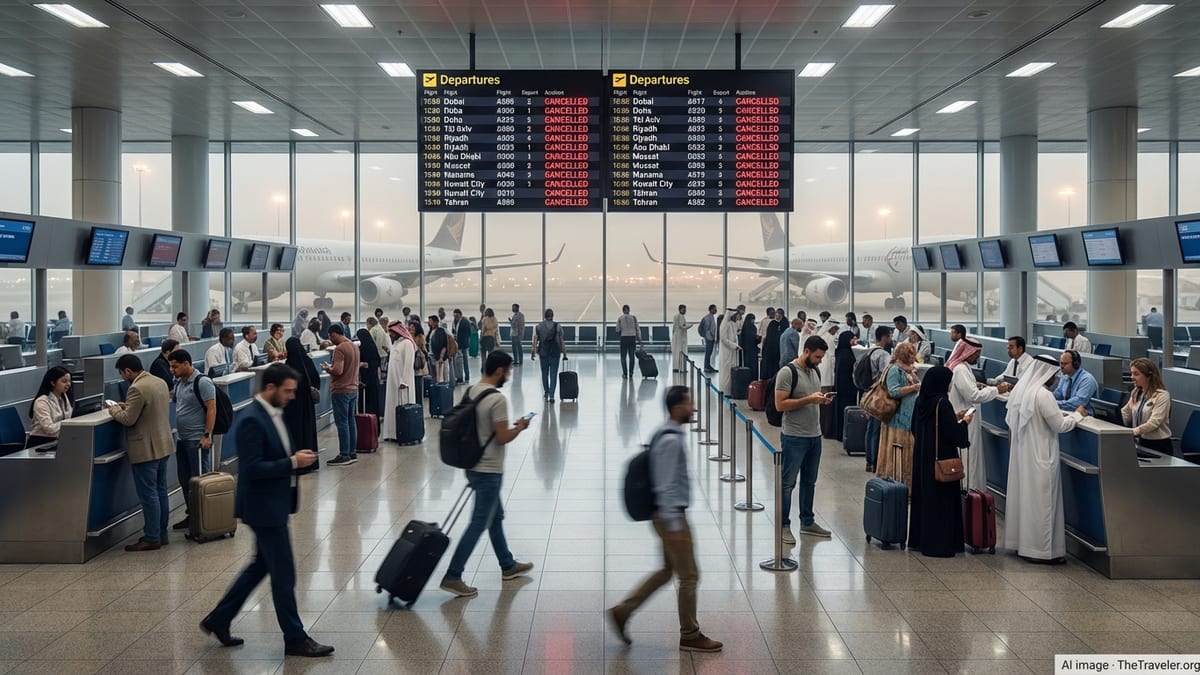
Air Canada has further extended the suspension of its flights to Tel Aviv and Dubai as the security situation across parts of the Middle East deteriorates, leaving thousands of travelers scrambling to rebook spring and early summer journeys.
Suspensions to Tel Aviv and Dubai Pushed Deeper Into 2026
In its latest operational update, Air Canada confirmed that flights between Canada and Tel Aviv, as well as Toronto and Dubai, will remain suspended longer than previously announced. Earlier guidance had extended cancellations through late March, but the carrier has now pushed its planned restart dates into late March and beyond, citing the evolving military situation and associated airspace risks.
According to industry bulletins and an update carried by Canadian trade outlets, services to Dubai are now cancelled until at least March 28, 2026, while flights to Tel Aviv are off the schedule until at least May 2, 2026. The airline has framed the move as a precautionary measure driven by safety assessments made in consultation with government authorities and international aviation bodies.
The strategic extensions effectively remove key Middle East routes from Air Canada’s network for much of the spring travel period. The carrier had already suspended Tel Aviv flights at various points over the past two years, resuming and then halting operations as security conditions shifted around Israel and neighboring airspace.
These latest changes come just months after Air Canada and several competitors had been working toward a phased restoration of capacity into Israel and the Gulf, highlighting the volatility airlines face when trying to serve markets touched directly or indirectly by armed conflict.
Military Tensions and Airspace Restrictions Drive Decisions
Air Canada’s decision is part of a broader global recalibration of air traffic over the Middle East, as governments expand advisories and airlines respond to renewed attacks and counterstrikes affecting multiple countries. Heightened tensions involving Israel, Iran, Lebanon and other regional actors have led to intermittent closures or restrictions of key flight corridors traditionally used for routes linking North America, Europe and Asia.
Carriers must weigh the safety of flying near potential conflict zones against the commercial importance of routes that connect major hubs to destinations such as Tel Aviv, Dubai, Riyadh and Doha. Aviation experts say that even when airports remain technically open, the presence of missiles, drones or heightened military activity in surrounding regions can prompt airlines to voluntarily withdraw service for extended periods.
For Air Canada, the calculus is complicated by the long-haul nature of its Middle East services. Flights from Toronto to Tel Aviv and Dubai rely on stable overflight permissions and predictable risk profiles for airspace over multiple countries. When those conditions can no longer be assured, route suspensions quickly become the default option, even if governments stop short of formally closing airports.
International safety frameworks, including guidance from the International Civil Aviation Organization and national aviation regulators, place primary responsibility on airlines to avoid known or suspected conflict areas. Analysts note that these standards increasingly lead to conservative decisions, particularly after past incidents in which civilian aircraft were caught in crossfire.
Travel Waivers and Limited Alternatives for Affected Passengers
As cancellations deepen, Air Canada has expanded its flexibility policies, offering rebooking and refund options to customers holding tickets on the affected routes. Passengers scheduled to travel during the suspension window can typically change to alternative dates or destinations without additional change fees, or opt for refunds if their plans no longer make sense in light of the uncertainty.
Travel agents report that some customers are being re-routed through European or U.S. hubs served by other airlines that continue to operate adjusted schedules into the region. However, capacity is limited and constantly shifting as more carriers announce their own extensions or reductions in service. This has made securing replacement itineraries more challenging, particularly for departures in the second half of March and April.
For leisure travelers, the extended suspensions often mean abandoning or significantly altering itineraries that included Israel or the United Arab Emirates as core destinations. Business travelers and those with family ties in the region face harder choices, balancing the urgency of travel against safety considerations and the likelihood of abrupt last-minute changes.
Industry observers advise passengers to maintain active communication with airlines or travel advisors, monitor departure status frequently and consider flexible accommodation and ground transport arrangements, as even cities not directly under flight suspensions can experience knock-on disruptions.
Ripple Effects Across Airline Networks and Global Connectivity
The strategic withdrawal of Air Canada from Tel Aviv and Dubai for an extended period has knock-on effects far beyond the two routes themselves. Both destinations serve as important connection points for traffic flowing between North America, the Middle East, Africa and South Asia, and the absence of direct services reshapes how travelers move across continents.
With Air Canada stepping back, a larger share of Canada–Middle East demand is being channeled through European and U.S. hubs, concentrating traffic on a shrinking number of operating flights into the region. This can exacerbate crowding on alternative routes and make revenue management more complex for airlines attempting to balance safety, demand and profitability.
Other international carriers, including major European groups, have simultaneously announced their own extensions of cancellations or temporary suspensions on selected Middle East routes. Industry data show waves of day-to-day adjustments as operators cancel individual flights, trim frequencies or temporarily suspend specific city pairs, resulting in a patchwork of service that can change with little notice.
Airport authorities and tourism boards in affected destinations are watching developments closely, as prolonged reductions in air service can weigh on visitor arrivals and economic activity. While some markets may see partial recovery via alternative carriers or circuitous routings, direct long-haul connections are often critical for sustaining high-yield corporate and premium leisure travel.
Uncertain Outlook for Restoring Full Middle East Service
Air Canada has not provided a firm timeline for when regular Middle East operations might fully resume beyond the new target dates. Executives have emphasized that any restoration of service will depend on an improved security environment and a sustained easing of airspace restrictions, rather than short-lived lulls in regional tensions.
Analysts note that airlines burned by repeated cycles of restarting and then re-suspending routes are increasingly reluctant to commit to aggressive timelines. Instead, carriers are favoring incremental capacity returns, often starting with a limited number of weekly flights and scaling up only after several weeks of stability.
For now, the carrier’s extended cancellations underscore how quickly geopolitical shifts can reshape global air networks. Even as other parts of the world see renewed growth in long-haul travel, the Middle East has reemerged as a zone of elevated aviation risk, complicating route planning for global airlines and injecting fresh uncertainty into travelers’ plans.
Until conditions on the ground and in regional airspace improve, Canadian travelers seeking to reach Tel Aviv, Dubai and neighboring destinations will remain dependent on indirect routings and a fragile patchwork of remaining services. For Air Canada, the strategic extensions of cancellations represent a clear signal that safety and operational predictability are taking precedence over the commercial appeal of some of its most prominent long-haul markets.