

More news on this day
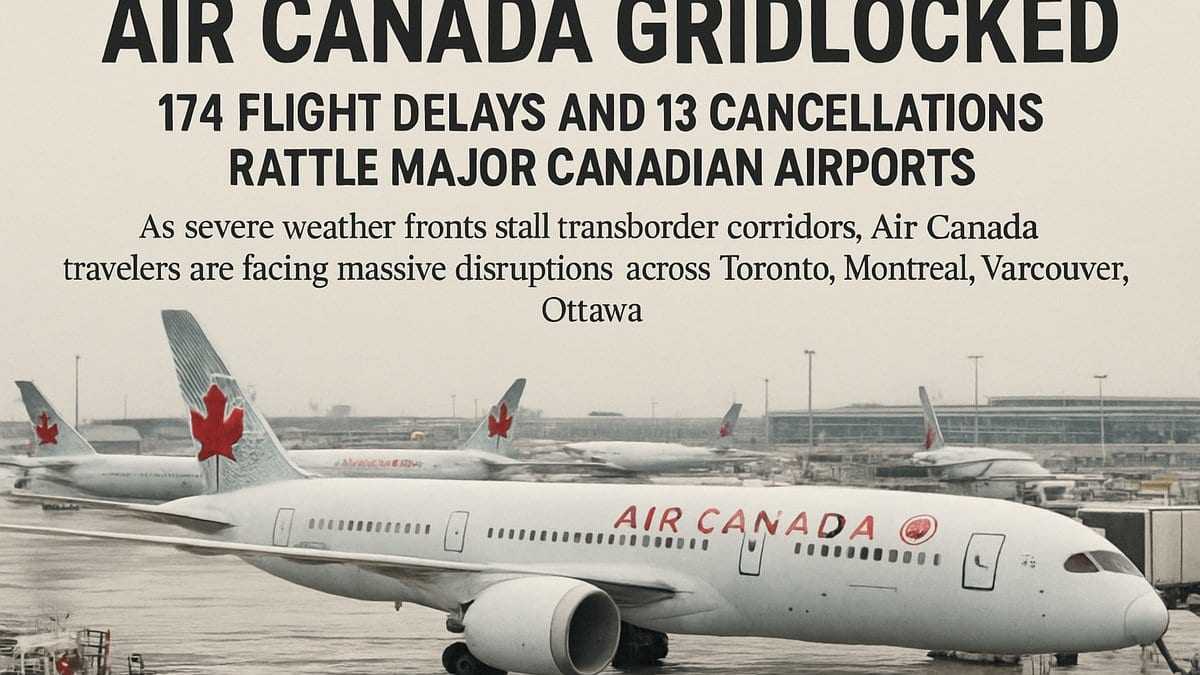
Air Canada passengers across the country are facing another day of disruption as 174 flight delays and 13 cancellations ripple through the carrier’s network, creating bottlenecks at Canada’s busiest airports and further straining an already fragile travel system.
Get the latest news straight to your inbox!
Major Hubs Bear the Brunt of Disruptions
Publicly available tracking data for early April shows Air Canada struggling to keep its schedule on time, with Toronto Pearson, Montreal Trudeau and Vancouver International among the hardest hit. The tally of 174 delayed departures and arrivals, alongside 13 outright cancellations, reflects mounting operational pressure at the country’s key hubs, where delays on a handful of key routes can quickly cascade through the network.
At Toronto Pearson, Canada’s largest airport and Air Canada’s primary hub, rolling knock-on delays stretched through peak morning and afternoon banks, leaving passengers queuing at rebooking counters and crowding departure gates as revised departure times slipped later into the day. Similar patterns emerged in Montreal and Vancouver, where congested taxiways and gate shortages compounded the effects of earlier disruptions.
Smaller airports linked to the major hubs also reported issues as aircraft and crews arrived late, narrowing turnaround windows and forcing schedule adjustments. Regional services in and out of cities such as Ottawa, Halifax and Winnipeg experienced secondary delays as the airline shuffled resources to protect long-haul and transcontinental flights.
The gridlock has been amplified by heavy spring travel demand, with load factors already high on many domestic and transborder routes. When flights do depart, they are often near full, leaving limited spare capacity to accommodate disrupted passengers on subsequent services.
Weather, Safety Scrutiny and Operational Strain
The latest wave of delays comes as Canadian aviation contends with an unsettled spring weather pattern and heightened scrutiny of safety and air traffic capacity. Powerful March storms and late-season snow and wind events across North America have repeatedly disrupted schedules, forcing airlines to slow operations, adjust routings and occasionally suspend flights altogether.
In addition, a recent fatal collision involving an Air Canada Express jet and a fire truck at New York’s LaGuardia Airport has drawn fresh attention to runway operations and ground traffic procedures. Published coverage of the incident indicates that the crash closed a key runway and caused widespread disruption at the busy New York hub, triggering diversions and downstream delays across several airline networks, including Canadian carriers.
While the current tally of 174 delays and 13 cancellations for Air Canada in Canada is modest compared with the thousands of disruptions often seen during major storms, it underscores how a combination of localized weather, congested airspace and infrastructure constraints can quickly choke the system. Aviation analysts have repeatedly pointed to chronic shortages of air traffic controllers in North America, as well as tight staffing at airlines, as underlying vulnerabilities that magnify the impact of even routine operational challenges.
Air Canada has previously cited adverse weather, air traffic restrictions and resource constraints as key drivers of irregular operations, and recent travel advisories from the airline encourage customers to monitor their itineraries closely and avoid heading to the airport before confirming that flights are operating.
Passenger Frustration and Ripple Effects Across the Network
For travelers, the numbers translate into long lines, missed connections and uncertain arrival times. Airports in Toronto, Montreal and Vancouver saw busy check-in halls and security queues as disrupted passengers attempted to rebook, secure meal vouchers or obtain hotel accommodation when overnight stays became unavoidable.
Reports from passenger forums and social media describe tight connections evaporating as inbound flights wait for release slots into crowded hubs, forcing travelers to navigate complex rebooking processes. Some domestic passengers have reported being pushed to flights departing many hours later, while international travelers have faced the risk of losing onward long-haul connections that operate only once per day.
The ripple effect extends well beyond the city pairs directly affected by cancellations. When an early-morning rotation from a hub is delayed or scrubbed, the aircraft and crew that were scheduled to operate later flights may remain out of position for the rest of the day. This can lead to a chain of additional delays on routes that are not directly affected by weather or technical issues but are nonetheless caught in the knock-on effect.
Travel advocacy groups note that such patterns have become more common as airlines run tighter schedules with fewer spare aircraft and crews held in reserve. Once disruption begins, the lack of slack in the system means recovery can take longer and requires more aggressive schedule trimming or overnight aircraft repositioning.
What Travelers Can Expect in the Coming Days
Published travel outlooks from Air Canada indicate that operations remain subject to change on short notice, particularly on routes connecting through major hubs and regions where late-season storms are still possible. While the specific count of 174 delays and 13 cancellations reflects a snapshot in time, the underlying drivers suggest that volatility may persist in the near term.
Travel industry observers recommend that passengers build extra time into itineraries, especially when self-connecting between separate tickets or combining domestic and international legs. Early departures are often less exposed to cumulative daily delays, and travelers are encouraged to review same-day alternatives in case of last-minute schedule changes.
Consumer guidance published by government agencies and passenger rights groups stresses the importance of checking real-time flight status before leaving for the airport and understanding the rules around rebooking, refunds and compensation for delays within an airline’s control. With Canada’s air passenger protection regulations outlining specific entitlements depending on the cause and length of disruption, informed travelers are better positioned to navigate irregular operations.
For now, the gridlock affecting Air Canada illustrates the fragile balance in modern aviation between tightly optimized schedules and the realities of weather, infrastructure bottlenecks and intense demand. Even a relatively contained spike in delays and cancellations can snowball into a nationwide challenge when the country’s primary carrier and its biggest hubs are all under simultaneous strain.